Why some Bali families avoid white flowers outside of funerals
Explore the cultural reasons some Balinese families avoid white flowers for everyday occasions, and how funeral flower traditions shape broader gifting etiquette.
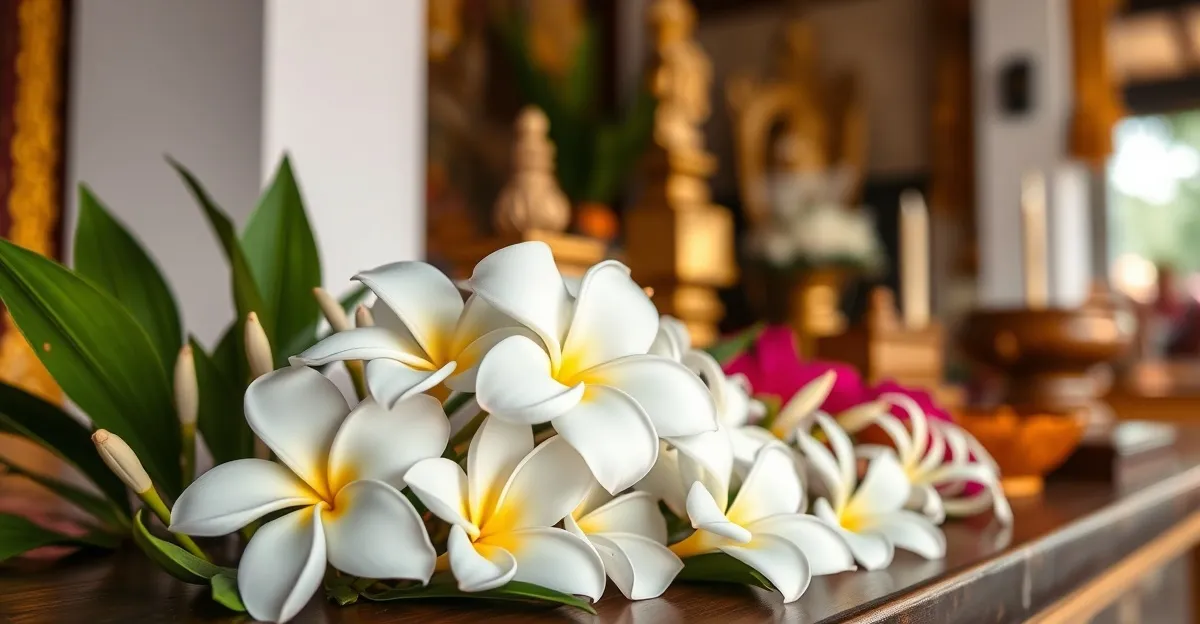
Gift a white bouquet to a Balinese friend without thinking about it, and you might notice a flicker of something cross their face — a slight pause, a careful response. They'll likely accept graciously and say nothing, because Balinese social culture values harmony and would not want to embarrass a well-meaning guest. But the hesitation is real, and understanding its source says a great deal about how Balinese Hinduism encodes meaning into colour, nature, and the everyday rituals of life and death.
The short explanation is that white, in Balinese funeral tradition, is the colour of death, purification, and the transition to the afterlife. But the longer explanation is more interesting — because white is also the colour of Iswara, a principal deity, and appears throughout daily offerings. The cultural avoidance of white flowers outside of funerals is therefore not absolute. It's contextual, family-specific, and far more nuanced than any simple rule can capture.
White flowers in Balinese Hindu death ceremonies
When someone dies in a Balinese family, the ritual sequence that follows is elaborate and can take years to complete fully. The immediate ngaben (cremation) ceremony, the nyekah (second ceremony releasing the spirit), and the final mukur (completion ceremony) each have specific requirements. Throughout these ceremonies, white is the dominant colour.
White flowers — white plumeria, white chrysanthemum, white frangipani, white alstroemeria when available — are used in the banten (offerings) specific to death ceremonies. The funeral pyre is often decorated with white flowers. The wadah (cremation tower) is wrapped in white fabric and adorned with white blooms. Family members sometimes wear white cloth, and the overall colour scheme of a funeral in Bali is stark: white, with some yellow and black.
The white flowers used in ngaben are therefore permanently associated, for families who have participated in multiple generations of Balinese funerals, with that specific ritual context. Bringing white flowers to a birthday, a housewarming, or as a gift to a healthy person activates those associations — even if the giver had no such intention.
How strongly is this belief held?
The answer varies significantly across Bali and across generations. It's important not to overstate the rule or present it as universal.
In more traditional areas — particularly villages in Klungkung, Karangasem, and Bangli, where Hindu practice tends to be more conservative and where families have maintained unbroken ceremonial traditions — the association between white flowers and death ceremonies is strong enough that white bouquets would genuinely be considered inappropriate gifts for living celebrations.
In more cosmopolitan areas — Seminyak, Canggu, the Bukit peninsula, parts of Ubud that have absorbed large international communities — attitudes are considerably more relaxed. Young Balinese people with regular exposure to Western or international flower culture are largely comfortable receiving white roses or white lilies as gifts. They understand that the giver means well and that the international flower vocabulary doesn't carry the same associations.
Between these poles is the majority of Bali: families who are aware of the tradition, who would personally still prefer not to receive white flower gifts outside of funerary contexts, but who won't necessarily correct a foreigner who doesn't know better.
The specific flowers with the strongest associations
Not all white flowers carry equal weight. Some are so specifically associated with death ceremonies that their use outside of that context is genuinely rare.
White chrysanthemum (seruni putih): This is perhaps the most strongly funeral-coded white flower in Bali. White chrysanthemums are extensively used in death offerings across many parts of Indonesia, not just Bali, and their association with mourning is consistent enough that offering them as a gift would be considered very inappropriate in most traditional Balinese households.
White plumeria from specific varieties: The connection here is more complex, since white plumeria is also used in daily offerings. The specific context of how it's presented matters — a loose arrangement in a funeral offering style reads differently than a cheerful bouquet.
White lily: Less traditional in Balinese ceremony (lilies aren't native to the region and are mostly imported), but as they've become more common, some families have absorbed the Western funeral association of white lilies as well.
White roses, interestingly, carry less funeral coding in Bali than white chrysanthemums because roses aren't deeply integrated into the traditional ceremonial system. A white rose bouquet is more likely to be read through an international gifting lens. For context on different flower colours and their symbolism, see colors in Balinese offerings: red, white, yellow, black, blue.
What to give instead
If you're gifting flowers to a Balinese friend, family, or host and want to avoid any possible misreading, the easiest approach is colour variety. Mixed bouquets with warm tones — pink, peach, yellow, orange, red — are universally celebratory in Bali's flower culture. Yellow flowers in particular carry positive associations, connected as they are to prosperity and divine blessing.
For specific occasions: pink flowers are associated with gentleness and are appropriate for personal celebrations. Orange and red carry energy and are suited to achievements, business openings, or housewarming gifts. Yellow is appropriate for almost any positive occasion. Purple flowers have their own nuanced associations — see purple flower bouquets: when to give them for more detail.
If you genuinely love white flowers and want to give them, a white-and-colour mixed arrangement reads much more unambiguously as a gift of beauty rather than a funerary gesture. White roses mixed with pink blooms, or white orchids in a tropical arrangement, carry none of the visual language of a purely white funeral offering.

The team
your florists
weekly subscription · Bali
We write about flowers because we love them. We deliver them because someone should — properly, weekly, across Bali.
— heyflowerPay once for 3, 6, or 12 months, no auto-renewal.
The broader principle: flowers as communication
What this tradition reveals is that flowers in Bali are always communicating something beyond mere aesthetics. The colour, the species, the arrangement style, and the occasion all contribute to a meaning that Balinese recipients read instinctively from a lifetime of exposure to the island's rich visual and ritual culture.
This is one reason that Balinese florists who work across both traditional and international markets develop a nuanced vocabulary for both worlds. Knowing that a Western client wants white lilies for a sympathy arrangement (where white is appropriate) versus a bridal shower (where it might be reconsidered for a Balinese bride) requires understanding both systems simultaneously.
The advice for visitors, expats, and anyone gifting flowers in Bali is not to become anxious but to become curious. Asking a local friend or a knowledgeable florist what would be most welcome for a specific occasion takes less than a minute and communicates genuine respect for the cultural context you're operating in.
Frequently asked questions
Is it rude to give white flowers in Bali? Not universally rude — the response depends on the recipient and the context. Traditional families in more conservative areas may find it uncomfortable. Younger, more cosmopolitan Balinese will generally not mind. When in doubt, choose a colourful mixed arrangement.
What about white flowers for a Balinese wedding? White is explicitly a death colour in Balinese Hindu ceremony, so all-white arrangements would typically be avoided for a traditional Balinese wedding. However, for weddings that blend international and Balinese elements, white flowers may appear in the international portions of the décor.
Are white chrysanthemums ever appropriate in Bali? For funeral offerings and condolence gestures, yes — white chrysanthemums are exactly right. For any celebratory occasion, they should be avoided if your recipient is traditionally Balinese.
Does the same logic apply to white fabric or white clothes as gifts? White fabric has ceremonial associations (it's used to wrap cremation towers) but white clothes are worn in many temple ceremony contexts and don't carry the same automatic funeral association as white flowers. Context matters.
What flowers are safest for gifting to a traditional Balinese family? Warm-toned mixed bouquets — yellows, oranges, pinks, and reds — are always safe. Roses in pink or red are well-understood as gifts of celebration. Tropical flowers like heliconia, ginger flower, and bird of paradise read as festive and are deeply connected to Bali's own natural abundance.
Ready to bring fresh flowers to your Bali home or event? Explore our weekly flower subscription and get handpicked blooms delivered to your door every week.



