Why frangipani falls off the tree still fresh in Bali
Frangipani blooms fall from the tree while still perfectly fresh. Here's the botanical reason why, and why this matters for Balinese ceremony and daily life.
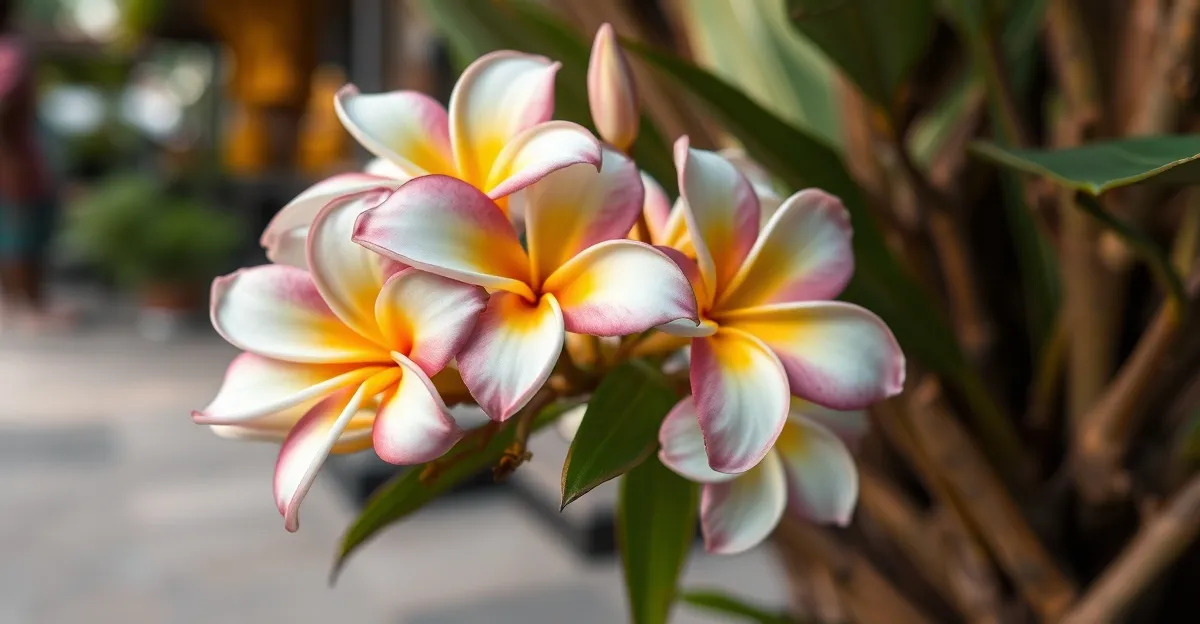
If you've spent any time in Bali — at a villa, wandering temple courtyards, walking past any compound with a frangipani tree — you've noticed something unusual. The ground beneath a frangipani tree is carpeted with flowers. Not wilted, brown, or decayed. Fresh. Perfumed. Still carrying the full beauty they had on the branch.
This is strange if you think about it. Most flowers that fall from plants do so because something is wrong: they're finished blooming, an insect has cut the stem, or the plant is stressed. But frangipani flowers fall when they're in peak condition, landing perfect and intact, sometimes carrying their scent for days after they drop.
Why does this happen? And why does it matter so much to Balinese culture?
The botanical explanation
Frangipani (Plumeria species) drops its flowers through a process called programmed abscission — essentially a controlled process by which the plant severs the connection between the flower and the branch at a predetermined moment in the flower's life cycle.
In most plants, abscission happens at the end of a flower's life, triggered by the declining production of hormones like auxin and increasing production of ethylene (which promotes aging and shedding). The flower is already declining before it falls.
In frangipani, the abscission timing is different. The flower is shed while it's still producing fragrance and maintaining its structure — while, botanically speaking, the flower is still "young." The timing appears to be controlled by the plant's pollination strategy rather than purely by flower age.
Why does frangipani do this? The prevailing hypothesis among botanists is that frangipani uses fragrance dispersal from fallen flowers as part of its pollination strategy. Fallen flowers on the ground continue to produce scent, which attracts specific pollinators — particularly moths and hawk moths that are active at night. The scent from multiple fallen flowers concentrated on the ground creates a more powerful attractant than the flowers on the branch could manage alone.
In a sense, frangipani "pre-harvests" its own flowers to create better pollinator conditions at ground level.
Why fallen frangipani looks and smells so fresh
The flower looks fresh because it is fresh. The abscission process doesn't damage the flower — it simply cuts the hormonal connection between the flower and the branch. The flower continues to produce fragrance compounds, maintain its cell structure, and perform its biological functions (attracting pollinators) for some time after falling.
Frangipani flowers contain a waxy compound in their petals that helps them resist dehydration. This is part of why they're so distinctive to the touch — that slight waxy resistance you feel when you handle a frangipani petal. This wax coating means that even in Bali's 30°C heat, a fallen frangipani flower retains its shape and colour significantly longer than a more delicate flower would.
In practice, a fresh frangipani fallen in the morning will typically look beautiful for six to twelve hours. Some flowers remain fresh in appearance for up to 24 hours after falling, depending on conditions.
The spiritual resonance of the fallen flower
In Balinese culture, the continuous shedding of fresh flowers is understood as generosity — the tree giving of itself freely. This is part of why frangipani trees are so valued in household compounds and temple grounds. A well-established tree (which can live for decades or centuries) provides a constant, self-renewing supply of ceremony flowers simply by existing.
The practice of gathering fallen frangipani from the ground is traditional and honoured — it's not considered second-rate to picked flowers. In some ceremony contexts, gathering from the ground is actually preferred as the tree's natural gift rather than something taken.
This also connects to a broader Balinese philosophical point: nature's abundance is meant to be received with gratitude, not extracted through force. The frangipani gives its flowers freely; you receive them freely. The relationship between the tree and the ceremony culture it supplies is one of mutual respect.
Morning collection and the ceremony supply chain
In Balinese households where frangipani grows, the morning routine often includes walking the compound to gather fallen flowers. This happens before the morning's first offerings are prepared — typically early, while it's still cool, before 7am.
The collected flowers go into small baskets or trays and are sorted by colour and freshness. The freshest, most perfect flowers go to the household shrine or family temple. Slightly less perfect ones go to gate offerings and canang sari placed throughout the day. Petals from flowers that fell the previous day, still fragrant, may be scattered or used in water offerings.
This daily ritual of collection and use means that a single mature frangipani tree can supply a significant portion of a household's daily ceremony flower needs throughout the year — not just when the tree is "in bloom" (frangipani trees in Bali often flower year-round in the tropical warmth) but as a consistent, daily practice.
The commercial use of naturally fallen frangipani
Bali's ceremony flower market handles enormous quantities of frangipani. Much of what you see in markets — the bundles of white frangipani sold for ceremony use — has been gathered from the ground at large plantation trees or picked from high-volume producing trees.
White frangipani (jepun putih) is the most widely used ceremony variety. Pink frangipani (jepun bali) is also traded but less common commercially. Yellow-centred varieties (Plumeria obtusa, usually slightly more fragrant) are valued for high ceremony and high-end floral use.
In cut flower arrangements for non-ceremony purposes, frangipani's fallen-flower characteristic is a mild limitation — there's no stem to put in water. Frangipani in vase arrangements is usually floated in water or placed in shallow dishes. For home decor in Bali, a broad flat bowl with water and fresh frangipani floating on the surface is one of the most naturally elegant arrangements imaginable — and it takes advantage of the flower's biological behaviour rather than fighting it.

The team
your florists
weekly subscription · Bali
We write about flowers because we love them. We deliver them because someone should — properly, weekly, across Bali.
— heyflowerPay once for 3, 6, or 12 months, no auto-renewal.
How long does a fallen frangipani last indoors?
Indoors in Bali's climate (with air conditioning, assuming 22–24°C):
- On first day of falling: Perfect, fragrant, full colour
- Day two: Still looking good, fragrance beginning to lighten
- Day three: Petals may begin to show slight browning at edges
- Day four and beyond: Scent diminished, colour fading, structure softening
Without air conditioning in full tropical conditions, this timeline accelerates: a flower fallen in the morning may show signs of decline by evening of the same day.
For tips on extending the freshness of any tropical flowers in Bali's climate, how to keep tropical flowers fresh in 30°C Bali heat has practical care advice.
FAQ
Is it okay to pick frangipani flowers from a tree rather than gather fallen ones? Yes, picking is also fine, particularly for personal use or arrangements. For ceremony flowers, gathering fallen flowers is the traditional approach, but picking is not considered disrespectful.
Why don't frangipani stems work in vases the way other flowers do? Frangipani produces a milky latex sap from cut stems (visible when you break or cut a branch). This sap can clog the water-uptake channels. Flowers are best used floating in water rather than in traditional vases.
Do frangipani trees flower year-round in Bali? Most mature Plumeria trees in Bali's equatorial climate flower through most of the year. There may be periods of reduced flowering, but unlike temperate climates where frangipani goes completely dormant, Bali trees usually produce flowers in most months.
What makes Balinese frangipani smell so strong? The fragrance intensity varies by variety. Plumeria obtusa (white with yellow centre, called jepun kampung) is particularly fragrant. Plumeria rubra varieties range from lightly to intensely scented. In Bali's warm, humid air, volatile fragrance compounds evaporate readily, making the scent seem particularly strong compared to frangipani grown in cooler climates.
Can I plant a frangipani from a cutting in Bali? Very easily. Frangipani cuttings propagate readily in Bali's climate. Take a cutting at least 30cm long, let the cut end dry for a few days (this seals the latex and prevents rot), then plant directly into soil. With Bali's warmth, cuttings root and begin growing within a month or two.
Ready to bring fresh flowers to your Bali home or event? Explore our weekly flower subscription and get handpicked blooms delivered to your door every week.



