Wax-dipping roses for long-lasting keepsakes
Wax-dipped roses hold their shape for months and make beautiful keepsakes. Here's a step-by-step guide to the technique, with tips for working in Bali's humid climate.
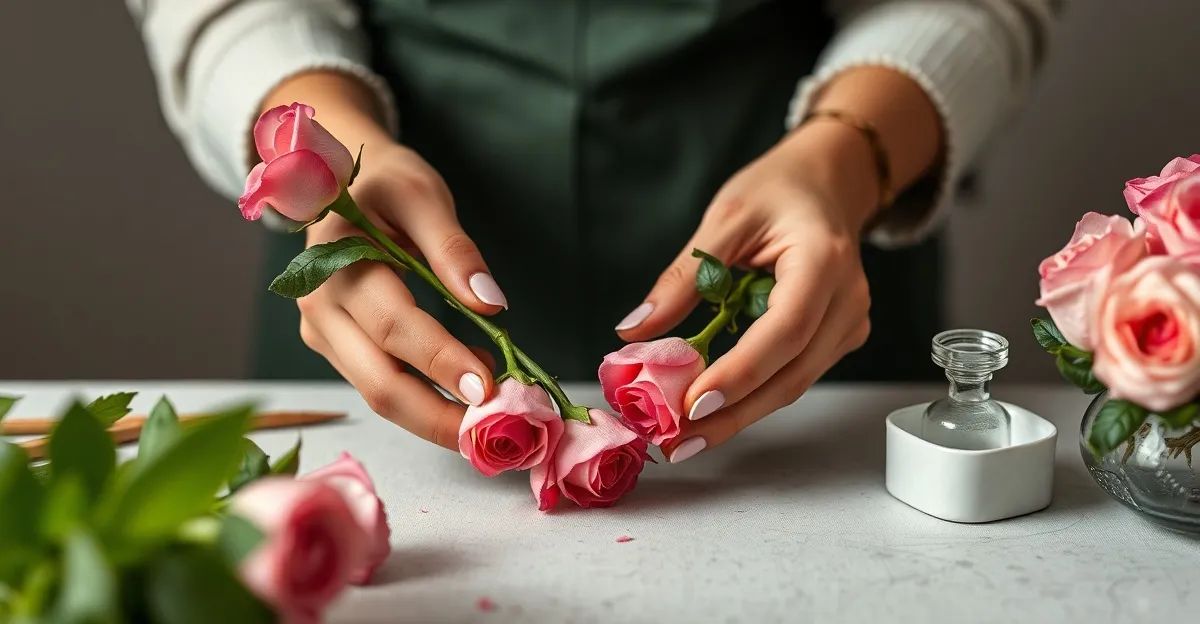
Wax-dipping is one of those flower preservation techniques that looks far more complex than it actually is. The result — a rose that holds its shape, catches light with a soft sheen, and can sit on a shelf for six months or more without losing its form — is genuinely impressive. The process is essentially: melt wax, dip flower, let it set.
There's more nuance than that in practice, especially in Bali's climate where ambient temperature and humidity affect how the wax behaves. But the core is simple, and the results are worth the effort.
Why wax-dipping works
When you dip a flower in liquid wax, the wax coats every surface of the petals with a thin, continuous film. As the wax cools and sets, it creates a rigid-yet-delicate shell that physically supports the petal structure and seals out moisture. This seal is what makes wax-dipped roses so effective in tropical humidity — the wax film prevents the bloom from absorbing the environmental moisture that causes wilting, mold, and color loss.
Wax-dipped flowers aren't truly "dried" — if you broke the wax seal, you'd find the flower inside still slightly moist, in a kind of suspended state. This is also why wax-dipped flowers don't last forever: eventually, the wax develops micro-cracks, moisture enters, and decay begins. But with a good technique and proper care, six to twelve months is entirely achievable. Some carefully handled wax-dipped roses last longer.
The method works best on roses (open to medium-open blooms are ideal), peonies when available, and sturdy tropical flowers like anthuriums. Very delicate flowers like ranunculus can work but require more care with temperature. Thin-petaled flowers like frangipani can be wax-dipped, though the result is more fragile.
The right wax for tropical climates
Wax choice matters more in Bali than in temperate climates because the ambient temperature is higher. Many waxes that work perfectly in a 20°C European workshop will be too soft at Bali's typical 28–34°C indoor temperatures, leading to a finish that stays slightly tacky or that leaves wax residue on surfaces the flower touches.
Paraffin wax with a high melt point (52–58°C): This is the most reliable choice for tropical conditions. Harder paraffin sets firmly and stays firm at room temperature. It's available at candle-making supply stores in Denpasar and from some art supply shops. Look for pillar candle wax rather than container wax — pillar formulas are specifically made to be harder at room temperature.
Beeswax: More beautiful than paraffin — the slight honey color and organic texture look wonderful on flowers. However, beeswax has a lower melt point and stays slightly flexible even when set, which can be a challenge in Bali's heat. Pure beeswax works better for flowers kept in air-conditioned spaces.
Paraffin-beeswax blend (roughly 70:30): The most practical option for Bali. The paraffin provides firmness; the beeswax adds a natural, beautiful quality to the finish. Experiment with ratios depending on your conditions — if the finished wax feels too soft at room temperature, increase the paraffin proportion.
Avoid candle waxes with added fragrance or dye if you want to show the flower's natural color. A clear, unscented wax shows the flower best.
Preparing your roses
Roses for wax-dipping should be at a specific stage of openness: past tightly closed bud (the petals won't coat properly), but not fully open to the point where petals are beginning to loosen. A rose that's about half to two-thirds open is ideal — the petals are firmly attached and the bloom is at its most visually interesting.
Cut stems to about 15–20cm — long enough to hold comfortably during dipping, short enough to fit in a container of manageable depth.
Gently remove any damaged outer petals and check for pests. Let the rose sit at room temperature in a cool, dry spot for 30 to 60 minutes before dipping — a very slightly less hydrated petal holds wax better than a maximally turgid one.
Do not refrigerate roses before wax-dipping. The temperature shock of going from fridge to hot wax can cause petals to drop.
The dipping process
Step one — Set up your workstation: You need a heat-proof container deep enough to accommodate your rose bloom — a tall metal candle tin or an old saucepan works well. Melt wax in a double boiler (a metal bowl over a saucepan of simmering water) to the temperature at which it's fully liquid but not so hot it damages the flower. For paraffin, this is typically 70–80°C. A kitchen thermometer makes this accurate and repeatable.
Step two — Test the temperature: Dip a small piece of paper in the wax. It should coat cleanly and set quickly when you remove it. If the wax is too hot, the flower may scorch; too cool and it won't coat evenly.
Step three — Dip quickly and smoothly: Hold the rose by the stem, turn it upside down, and submerge the bloom completely in the wax in a single continuous motion. Keep it submerged for two to three seconds, then lift it out, still inverted, and hold it inverted while the excess wax drips back into the container. Don't rush this — allow five to ten seconds for drips to stop.
Step four — Rotate and set: As the wax begins to cool on the flower, very gently rotate the stem between your fingers to help the wax coat evenly and prevent pooling at the bottom petals. Within thirty to sixty seconds, the wax will be set enough to place the stem in a holder or vase.
Step five — Second coat (optional): A second dip after the first coat has fully cooled creates a thicker, more protective shell. This is worth doing for roses intended as long-term keepsakes or gifts. Allow the first coat to cool completely (fifteen minutes) before the second dip.
Bali-specific considerations
Working in a hot Bali kitchen means the wax cools more slowly than in a cooler environment. This can be an advantage — you have slightly more time to rotate the flower before the wax sets. It can also mean pooling, where wax gathers at the lowest petal before it can set. Working near an air-conditioner (not directly in the airflow, which creates uneven cooling, but in a cooler room) helps.
Store finished wax-dipped roses away from heat sources and out of direct sunlight. A temperature above 35°C can soften the wax. In most air-conditioned spaces in Bali — hotel rooms, villas, homes in Seminyak or Canggu — this isn't an issue, but outdoor displays in Balinese heat are not suitable for wax-dipped flowers.

The team
your florists
weekly subscription · Bali
We write about flowers because we love them. We deliver them because someone should — properly, weekly, across Bali.
— heyflowerPay once for 3, 6, or 12 months, no auto-renewal.
Display ideas for wax-dipped roses
Single stem in a bud vase: The simplest and most elegant display. A single wax-dipped rose in a small terracotta or ceramic vase makes a beautiful bedside or desk accent.
Grouped cluster: Three to five wax-dipped roses of different degrees of openness, grouped together in a wide-mouthed bowl with some dried foliage, creates something more abundant and decorative.
Gift presentation: A wax-dipped rose in a small gift box lined with dried petals and wrapped in tissue makes a genuinely special gift — particularly for Valentine's Day, anniversaries, or for expressing sentiment after a significant moment. Unlike fresh flowers, the recipient doesn't need to rush to put it in water.
Hanging display: Dried and wax-dipped roses hung upside down on a cord or decorative branch create a ceiling display that suits the natural aesthetics of many Bali villa interiors.
For other preservation ideas with flowers from meaningful occasions, preserving flowers as a keepsake after a loss covers the emotional and practical dimensions of memorial preservation. If you'd like to try other preservation techniques, dried flower bouquets that last two years covers air-drying and silica gel methods for building long-lasting arrangements.
FAQ
How long do wax-dipped roses last? With good technique and appropriate storage (away from heat and direct light), wax-dipped roses typically last 6–12 months in Bali's climate. In consistently air-conditioned environments, some last longer.
Can I wax-dip flowers other than roses? Yes. Orchids, peonies, carnations, and anthuriums all work well. Very delicate flowers require lower wax temperatures and faster dipping. Avoid flowers with significant moisture in the stem-to-bloom connection point — the heat can cause them to drop.
Does wax-dipping preserve color? Yes — the wax seal significantly slows UV fading and the oxidation-based color change that occurs in exposed dried flowers. The color at the time of dipping is largely preserved.
Can I add fragrance to the wax? A few drops of essential oil can be added to the melted wax before dipping. The scent infuses the wax shell and creates a lightly fragrant keepsake. Frangipani, ylang-ylang, or rose essential oils all work beautifully.
Is wax-dipping safe to do at home? Yes with standard kitchen safety. Use a double boiler rather than direct heat to melt wax, keep water away from the hot wax (splatter risk), work near ventilation, and have a fire extinguisher accessible. Never leave melting wax unattended.
Wax-dipping roses gives you something the florist shop doesn't: a flower that keeps its moment. Whether it's a rose from a significant occasion or simply the most beautiful bloom from this week's subscription delivery, wax-dipping is a way to slow time around it — preserving not just the flower but the feeling it carried when it was given.
Ready to bring fresh flowers to your Bali home or event? Explore our weekly flower subscription and get handpicked blooms delivered to your door every week.



