Vinegar and sugar in flower water: does it help?
Does adding vinegar and sugar to vase water actually extend flower life in Bali's tropical heat? Here's what the science says and how to use this trick correctly.
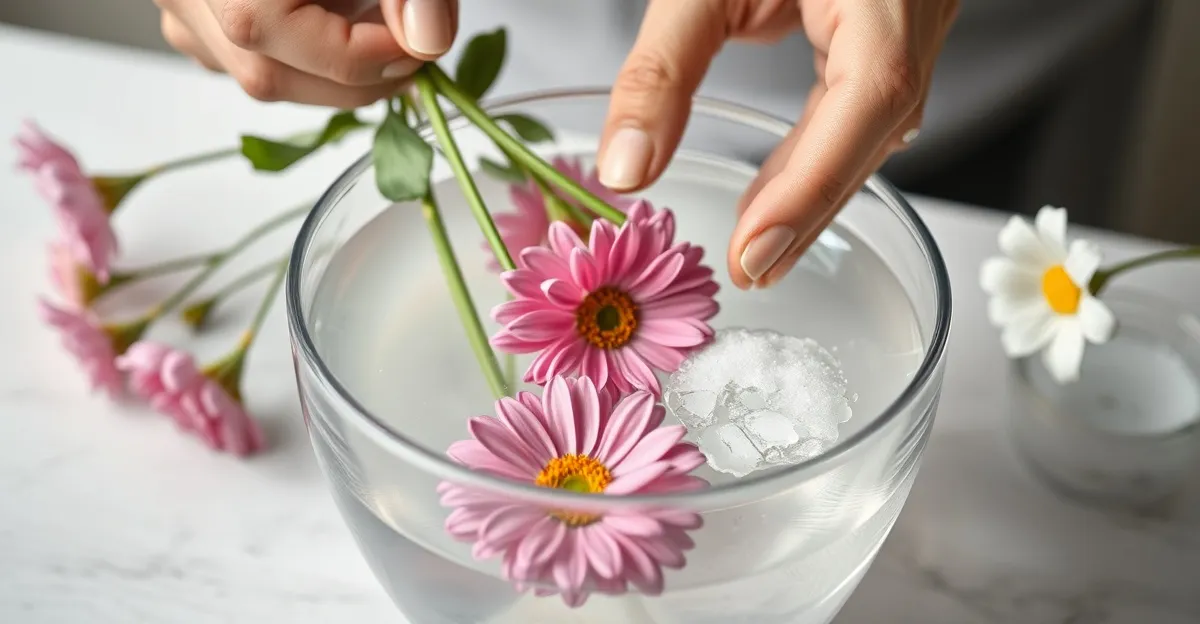
Walk into almost any home in Bali where someone has fresh flowers on the table and ask what's in the vase water, and you might be surprised by the answers. Coconut sugar and rice vinegar? Apple cider vinegar and cane sugar? Plain water with nothing at all? Flower care folk wisdom runs deep, and vinegar-and-sugar is one of the most commonly cited tricks.
Unlike some flower care myths that have no scientific basis whatsoever, this one actually works. The vinegar-and-sugar combination addresses two real problems that cut flowers face: bacterial growth and energy supply. Understanding why it works helps you use it correctly and understand its limits.
The science behind it
Commercial flower food — those little sachets that come with delivered bouquets — contains three active components: a biocide (to kill bacteria), an acidifier (to lower water pH and improve stem uptake), and sugar (as an energy source). The vinegar-and-sugar trick approximates two of these three components.
Vinegar (acetic acid diluted in water) acidifies the vase water, lowering the pH to somewhere around 5–6 depending on the concentration. This mild acidity does two things: it slows bacterial growth, and it improves the efficiency with which the xylem (the vascular tissue in the stem) conducts water upward to the flower head. The xylem works better in slightly acidic conditions — the same principle used by commercial flower food, which uses citric acid rather than acetic acid.
Sugar provides carbohydrates. Cut flowers are separated from the plant's photosynthetic energy supply, and the petals and tissues continue metabolising. Sugar in the water extends the flower's energy reserves, keeping petals turgid, colourful, and open longer. This is particularly important for flowers that haven't fully opened when cut — they need energy to complete the opening process.
Together, the combination meaningfully extends vase life compared to plain water. Multiple informal and scientific comparisons have shown flowers lasting two to four days longer with a vinegar-and-sugar solution than with plain water alone.
How much to use
The correct ratio matters. Too much vinegar will harm the flowers. Too much sugar will feed bacteria faster than the vinegar inhibits them, resulting in rapid water fouling.
Recommended ratio per litre of water:
- 1 teaspoon of white vinegar or apple cider vinegar
- 1 teaspoon of sugar
Some guides suggest up to a tablespoon of sugar, but in Bali's warm water this higher sugar level accelerates bacterial growth enough to cause problems. Start conservatively with one teaspoon of each and adjust based on your results.
White vinegar vs. apple cider vinegar: Both work. White vinegar is more pure acetic acid with fewer added compounds, making it a cleaner choice. Apple cider vinegar has trace minerals and is a bit milder in acidity, which some people prefer for delicate flowers. Either is widely available in Bali supermarkets.
What about rice vinegar? Available in most Bali markets and supermarkets, rice vinegar is milder still. It can work but you may need a slightly higher quantity to achieve the same pH effect.
What it doesn't do
The one thing vinegar-and-sugar doesn't replicate is the biocide in commercial flower food. White vinegar inhibits bacterial growth through acidification alone — this is meaningful but less potent than an actual antimicrobial agent.
In Bali's heat, water temperatures in a vase can reach 28–30°C, which is ideal for bacterial proliferation. This means even with vinegar's antibacterial effect, you need to change the water more frequently than you would in a cooler climate. Every two days is the correct interval here.
If you want to add a biocide component, add a single drop (not a teaspoon) of household bleach to the vinegar-and-sugar mixture. This completes the three-part flower food equation at minimal cost.
Flowers that respond especially well
The sugar component of this mixture is particularly helpful for:
Flowers that need to fully open: Roses, peonies, ranunculus, and many tropical varieties are often cut before they're fully open and need the energy supply to complete blooming. Vinegar-and-sugar helps significantly here.
Long-stemmed flowers: The acidified water helps long-stemmed varieties like roses and lilies draw water up efficiently over greater stem lengths.
Carnations: Carnations respond very well to acidified water and can have their vase life extended notably with this treatment.
Flowers that benefit less: Orchids and anthuriums have evolved to be efficient water transporters and don't show as dramatic a response to vase additives. They benefit from clean water and stem care more than from additives.
Comparing the options
If you're weighing up your flower water additives:
| Method | Antibacterial | Energy Supply | Ease in Bali | Effectiveness | | ---------------------- | ------------- | ------------- | --------------------- | ----------------- | | Plain water | None | None | Very easy | Baseline | | Aspirin | Mild | None | Moderate | Better than plain | | Vinegar + sugar | Mild | Yes | Easy | Good | | Bleach drop + sugar | Strong | Yes | Easy | Very good | | Commercial flower food | Strong | Yes | Easy (if you have it) | Best |
In practice, vinegar and sugar is a reliable, cheap alternative when you don't have commercial flower food sachets. Keep both ingredients in your kitchen — white vinegar is useful for dozens of other purposes anyway — and you always have a flower food substitute on hand.
See our companion article using aspirin in flower water for a comparison of other common additives.

The team
your florists
weekly subscription · Bali
We write about flowers because we love them. We deliver them because someone should — properly, weekly, across Bali.
— heyflowerPay once for 3, 6, or 12 months, no auto-renewal.
Practical tips for using this in Bali
Change water every two days. In Bali's heat, this is non-negotiable whether you use additives or not. Each water change means fresh vinegar-and-sugar mixture.
Always recut stems at water changes. A fresh diagonal cut with a clean knife re-opens blocked vascular tissue. This combined with fresh acidified water has a compounding effect.
Use filtered or quality water. If your tap water is high in minerals or chlorine (common in some Bali areas), filtering or using bottled water for the vase gives a cleaner baseline.
Keep the vase clean. Even perfect water chemistry can't overcome a dirty vase full of bacterial biofilm from a previous bouquet. See our guide on how to prepare a vase for a new bouquet for the full vase cleaning process.
FAQ
Can I use balsamic vinegar or malt vinegar? Technically yes, but they contain complex compounds beyond just acetic acid that may have unintended effects. Stick to white or apple cider vinegar for predictable results.
Will the smell of vinegar in the vase affect the room? At one teaspoon per litre, the vinegar smell is very faint and unlikely to be noticeable in most rooms. If you're sensitive to it, use the slightly milder apple cider vinegar.
Can I use the same mixture for all flower types? Yes, the one-teaspoon-of-each ratio is safe for virtually all cut flowers. Some sources recommend higher sugar for specific varieties like sunflowers or gerbera daisies — you can experiment.
Does it matter if I use cane sugar, refined white sugar, or brown sugar? White refined sugar is the cleanest choice. Brown sugar and raw sugar work but contain more impurities that can add to bacterial load in the water. Cane sugar available throughout Bali is fine.
What if I accidentally add too much sugar? Your water will cloud quickly and smell unpleasant. Change the water immediately with a correctly proportioned mixture. Excess sugar dramatically accelerates bacterial growth.
Ready to give your flowers the best possible care from the moment they arrive? Explore our weekly flower subscription and get handpicked blooms delivered to your door every week.



