Traditional Balinese bridal bouquets: what's included
A traditional Balinese bridal bouquet is nothing like a Western arrangement. Here's what flowers are used, what they mean, and how a Balinese bride carries flowers on her wedding day.
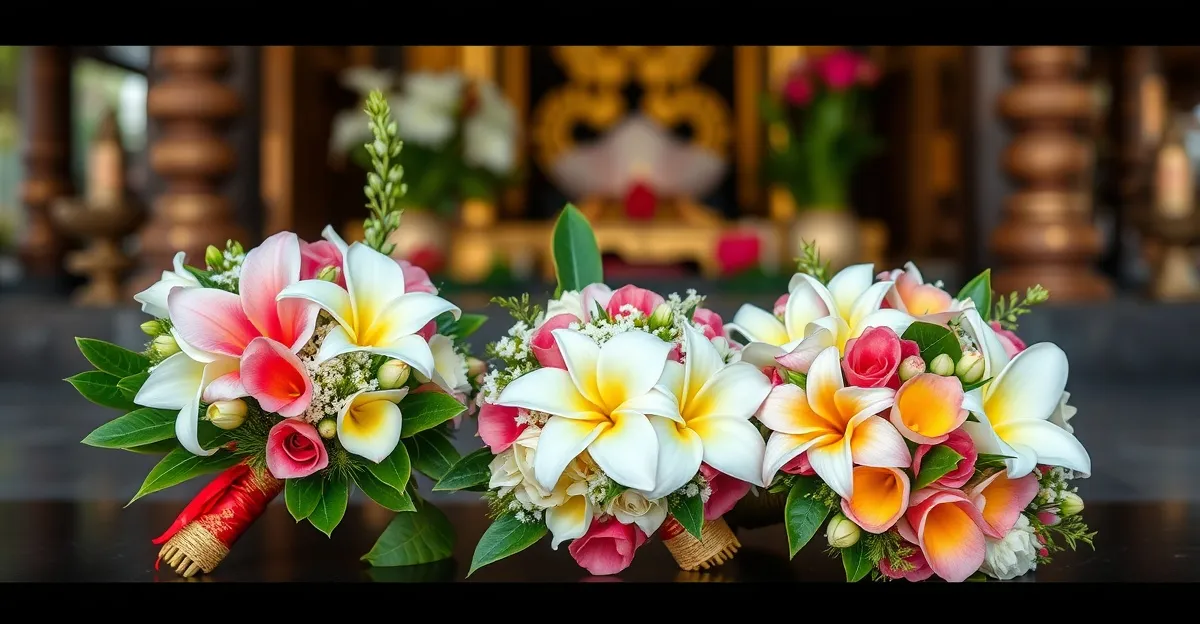
When most people think of a bridal bouquet, they picture a hand-tied bundle of roses or peonies carried down an aisle. In a traditional Balinese Hindu wedding ceremony (pawiwahan), the floral picture is completely different — and far more layered. Flowers in a Balinese wedding aren't primarily about the bouquet. They're woven into the bride's headpiece, pinned into her hair, layered through her costume, placed on the ceremony altar, and offered to the deities presiding over the union.
Understanding what a traditional Balinese bridal bouquet actually includes means understanding how flowers function across the whole ceremony — not just what the bride holds, but what she wears and what's offered on her behalf.
Does a Balinese bride carry a bouquet?
In the Western sense, not traditionally. A Balinese Hindu wedding ceremony has the bride and groom seated during the core ritual, with a priest conducting prayers and offerings. There's no "walking down the aisle" moment in the way a Christian or civil ceremony has one. The visual focus is on the altar arrangement, the ceremonial offerings, and the couple's full costume and adornment.
That said, many modern Balinese weddings incorporate a processional moment — whether to the ceremony location, to a pavilion, or for photography — and in these contexts, brides often carry a bouquet. The bouquet may be a blend of traditional ceremony flowers and contemporary styling, depending on the couple's preferences and the florist they work with.
For international weddings held at Bali venues — which may incorporate Balinese blessing elements without following the full Hindu ceremony — the bride typically does carry a bouquet, and this is where the traditional flower choices become important for creating something authentic to the setting.
Flowers in a traditional Balinese bridal arrangement
White frangipani (jepun putih): The most important flower in any Balinese ceremony context, and especially in a wedding. White frangipani represents purity and divine blessing. It appears in the bride's hair, in the altar offerings, and often in any bouquet element carried by the bride or attendants.
Pink frangipani (jepun bali): Pink is associated with romantic love and beauty in many Balinese contexts. Pink frangipani is used in bridal hair adornments, woven alongside white frangipani in the elaborate floral headpieces (gelung agung) that Balinese brides wear.
White orchids: Dendrobium orchids in white appear in bridal headdresses and floral accessories. They're also used to drape along the altar and in the hand-carried arrangements.
Marigolds (gumitir): Yellow marigolds appear in the ceremony offerings (banten) rather than in the bridal bouquet itself, but they're a constant visual presence at every Balinese wedding ceremony. The altar will be densely decorated with marigolds.
White champak (kemoning): The sweet, intense scent of white champak is considered appropriate for wedding ceremonies — it invites divine presence during the sacred union. Often threaded into the bridal headdress.
Red hibiscus (pucuk bang): In some traditional wedding aesthetics, red hibiscus accents appear in the broader ceremony florals, associated with prosperity and the energy of creation.
Gardenias (sandat): Not always available commercially but grown in gardens across Bali's highlands. When available, gardenia appears in bridal headdresses for its intense fragrance and white purity.
The gelung agung: the flower headdress
The most dramatic floral element of a traditional Balinese bride's look isn't what she holds — it's what she wears on her head. The gelung agung is an elaborate tiered headdress, traditionally made from real flowers and gilded or black lacquered frames, that can stand 40–60 centimetres above the bride's head.
A gelung agung typically includes:
- Fresh frangipani (white and pink) arranged in precise patterns
- Orchid sprays
- Champak and other fragrant blooms
- Marigold accents in some regional styles
- Gold or gilded ornaments (emas) woven between the flowers
- Sometimes jasmine or tuberose garlands framing the face
Making a gelung agung is a skilled craft requiring several hours of work and many dozens of individual flowers. It's created on the wedding day itself — often starting at dawn if the ceremony is in the morning — because fresh flowers are essential. The headdress is pinned and bound to the bride's styled hair by experienced hands, often a combination of hair stylist and traditional costume specialist (penata rias).
For more on what these headdresses signify, flower headdresses at Bali weddings: symbolism and making goes deeper.
If you want a modern bouquet with traditional flowers
Many brides marrying in Bali — whether Balinese, Indonesian, or international — want a bouquet that honours the setting and culture while being practical to carry and photograph. Some approaches that work:
Tropical-traditional: A hand-tied arrangement of white frangipani, dendrobium orchids, and tropical foliage. Simple, elegant, and deeply Balinese in its flower choices. Works well for open-air ceremonies.
Full traditional with contemporary form: A structured round bouquet (rather than a loose hand-tied) using traditional Balinese ceremony flowers — frangipani, orchids, marigold accents, champak — in a contemporary florist's construction. This approach lets the bride hold something polished and photogenic while using flowers that resonate with the ceremony context.
Cascading orchid: A waterfall-style bouquet using dendrobium orchids (white or purple) with trailing tropical foliage. Very popular for Bali villa weddings. The cascading form photographs beautifully against rice fields, ocean, or stone temple backgrounds.
For brides wanting to know how to keep their bouquet fresh through a full outdoor ceremony in Bali's climate, how to keep a wedding bouquet fresh through the ceremony has practical advice.

The team
your florists
weekly subscription · Bali
We write about flowers because we love them. We deliver them because someone should — properly, weekly, across Bali.
— heyflowerPay once for 3, 6, or 12 months, no auto-renewal.
Regional variations across Bali
Balinese wedding traditions vary by region. North Bali (Singaraja area) has some different traditional flower and costume elements from South Bali (Denpasar, Badung) and the highland areas around Ubud and Bangli. The specific flowers used in headdresses and ceremony offerings can differ based on local availability and family tradition.
Tabanan regency, known as Bali's rice bowl and heartland of traditional arts, tends toward particularly elaborate ceremony aesthetics. Gianyar, home to many of Bali's most accomplished craftspeople, has strong traditions in decorative flower arrangement for ceremony. Any florist working on a traditional Balinese wedding should understand the regional context of the family they're working with.
FAQ
Do Balinese brides always wear a flower headdress? For traditional Hindu wedding ceremonies, yes — the gelung agung or a version of it is standard. For contemporary civil or mixed ceremonies at Bali venues, brides may opt for a simpler hair arrangement with fresh flowers.
How long does it take to make a Balinese bridal headdress with real flowers? A full gelung agung takes two to four hours to construct. The bride typically sits for dressing and hair very early in the morning on the wedding day.
Can a non-Balinese bride incorporate traditional Balinese flowers into her bouquet? Yes, and it's often beautiful. A bouquet of frangipani, orchids, and tropical foliage with champak accents is stunning in a Bali setting and respectfully honours the culture without mimicking a ceremony that has specific religious meaning.
Are dried or silk flowers ever used in traditional Balinese weddings? No. Balinese ceremony flowers are always fresh. The living flower is the offering. Dried or artificial flowers carry no spiritual weight in this context.
What's the typical cost of floral headdress-making for a traditional Balinese wedding? A full gelung agung made with real flowers costs approximately Rp 800,000–Rp 2,000,000 depending on the flowers used and the maker's skill. Hair and costume specialists who also construct the headdress charge separately for their time.
Ready to bring fresh flowers to your Bali home or event? Explore our weekly flower subscription and get handpicked blooms delivered to your door every week.



