Flower headdresses at Bali weddings: symbolism and making
The Balinese bridal headdress (gelung agung) is a masterpiece of fresh flowers and goldwork. Here's what it symbolises, how it's made, and what brides need to know.
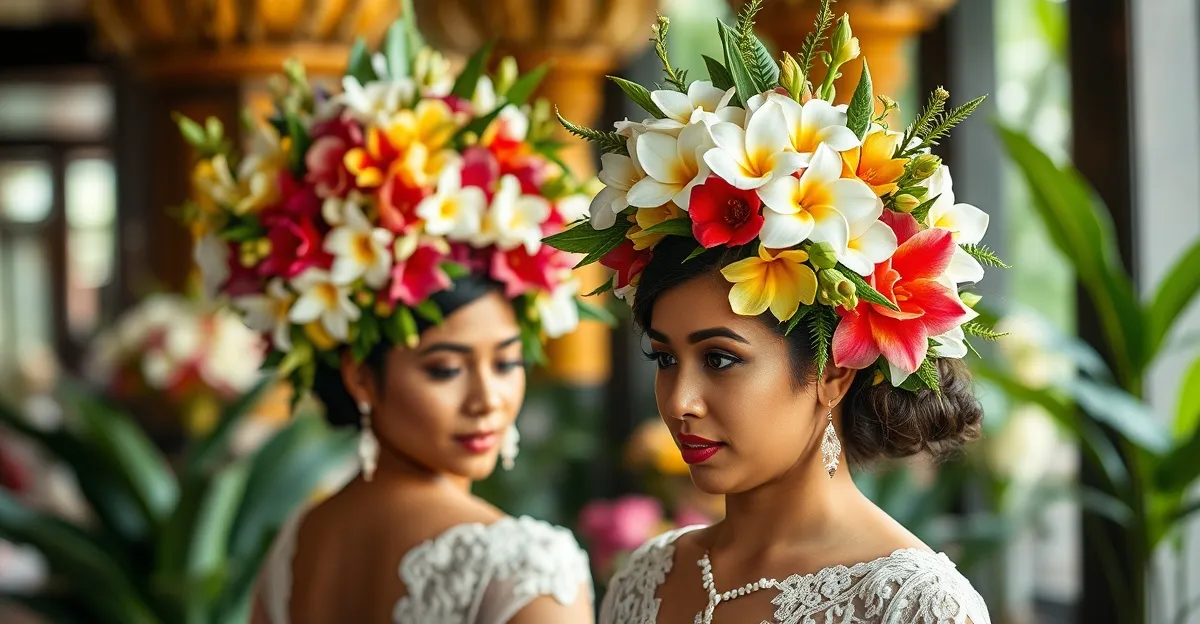
The first thing that usually catches people's attention about a Balinese bride isn't her dress — it's her head. The gelung agung, the traditional Balinese bridal headdress, rises 40 to 60 centimetres above the bride's hairline in a cascade of gilded ornaments, mirror pieces, and fresh flowers. It's elaborate in a way that photographs can't fully capture, because it moves with the bride and because the flowers are real.
Understanding this headdress — what it's made of, what each element means, and how it's constructed — is one of the most interesting rabbit holes in Balinese material culture.
What gelung agung means
"Gelung" refers to the coiled or wrapped hair style that forms the base of many traditional Balinese hair arrangements. "Agung" means great, large, or exalted. So gelung agung is the great headdress — worn for the highest ceremonial occasions. Brides, female performers in major ceremony-context dances, and high-ceremony participants wear versions of the gelung agung.
The headdress is understood as the crown of a sacred moment. In Balinese cosmology, the top of the head is the most spiritually elevated part of the body — the closest point to the divine. Adorning it with the most elaborate and sacred decoration possible is both a ritual act and an aesthetic one.
The structure and materials
A full gelung agung is built on a base frame — traditionally made from a black-painted pressed coconut shell base or a firm foundation fabric. The frame anchors to the bride's hair through a combination of pins, wire bindings, and the structure of the hair itself (which is styled and secured before the headdress is applied).
Gold ornaments (perada): The most structurally significant element. Gilded ornaments — traditionally made from beaten tin or, for wealthier families, from gold alloy — form the skeleton of the visible headdress above the hairline. These include layered panels, curved scrollwork, and petal-like shapes. Most are heirlooms or rented pieces passed through generations or through ceremony specialists.
Mirror pieces (kaca): Small square or circular mirrors are set into the ornamental framework. In ceremony context, mirrors have spiritual significance — they reflect negative energy away from the wearer. In aesthetic terms, they catch and scatter light in the way sequins do.
Painted or gilded panels: Between the ornamental elements, panels of painted or gilded cardboard or thin wood fill the visual field of the headdress. Traditional Balinese motifs — flame patterns (api), floral patterns, and mythological figures — are painted in gold and red.
Fresh flowers: This is the element that makes the gelung agung a living thing. Fresh frangipani, orchids, champak, and sometimes marigolds or other ceremony flowers are woven and pinned into the headdress structure at specific positions.
The flowers and their positions
Flower placement in the gelung agung is not random — each position has traditional significance:
Crown position (puncak): At the very top of the headdress, a single cluster of white frangipani or a spray of orchids is typically placed. This position, being the highest, is associated with divine connection. White frangipani's purity association makes it traditional here.
Side panels: Orchid sprays — usually white Dendrobium orchids — fan out from the sides of the headdress, extending its visual width. Pink frangipani may also appear at the sides, associated with romantic love and beauty.
Face frame (ambang): The flowers closest to the bride's face — those that frame her forehead and temples — are typically the most fragrant: champak (kemoning) for its intense floral scent, or frangipani. The idea is that divine fragrance should be closest to the bride's face as she participates in the ceremony.
Base garland: At the base of the headdress where it meets the bride's forehead, a small garland of tightly placed flowers (sometimes jasmine, sometimes champak) can create a fragrant headband effect.
How a gelung agung is made
The construction of a gelung agung on the wedding day is typically done by a penata rias — a Balinese hair, makeup, and costume specialist who knows traditional ceremony aesthetics. Many penata rias have been apprenticed to senior practitioners for years. The skill of building a beautiful, structurally stable gelung agung that will last through hours of ceremony and photography is real expertise.
The process on the wedding day:
Hair styling: The bride's hair is first styled and secured. Traditional Balinese hairstyles for wedding involve the hair being pulled back and formed into a coiled arrangement (gelung) at the back of the head. Extensions are commonly used for volume.
Foundation attachment: The headdress base frame is attached to the coiled hair structure using pins and wire. It must be secure enough to remain stable through movement and photography but comfortable enough to wear for hours.
Ornament building: The gold ornamental elements are assembled and added in sequence from the foundation upward. This part of the process requires knowing which pieces go where — experienced penata rias often work from memory and long familiarity with specific sets of ornaments.
Flower placement: Fresh flowers are the final element. White frangipani is tucked in around the crown, orchid sprays positioned in the lateral positions, champak placed near the face. Each flower is secured individually — by its stem end into a small wire loop or by carefully threading it into gaps in the ornamental structure.
The full process takes two to four hours, sometimes longer for very elaborate headdresses or when the penata rias is working on multiple members of the wedding party.
Regional variations
Balinese wedding headdresses vary between different regions and between different caste levels. High-caste (Brahmin and Ksatria) weddings have the most elaborate headdresses, often with more goldwork, more ornamental pieces, and more flowers. Sudra (commoner caste) weddings follow the same principles but with proportionally simpler construction.
Regional differences:
- South Bali (Denpasar, Badung): Tends toward formality and adherence to established patterns
- Ubud and Gianyar: Often incorporates artistic refinement — the area's strong arts tradition extends to headdress craftsmanship
- North Bali (Singaraja area): Some distinctive ornamental motifs and flower choices that differ from southern styles
- Tabanan: Known for elaborate traditional arts generally; headdresses reflect this

The team
your florists
weekly subscription · Bali
We write about flowers because we love them. We deliver them because someone should — properly, weekly, across Bali.
— heyflowerPay once for 3, 6, or 12 months, no auto-renewal.
Modern adaptations
Many Balinese brides today, particularly those living in urban Denpasar or those with international exposure, choose to incorporate modern elements:
Simpler versions: A pared-down gelung with gold ornaments but fewer flower pieces, creating a more contemporary silhouette
Fresh flower focus: Some brides choose to minimise the gilded elements and maximise the fresh flowers — a modern interpretation that still reads as distinctly Balinese
Hybrid approaches: A full gelung agung for the ceremony itself, and a simpler fresh flower crown or hair arrangement for reception photos and the more social parts of the event
International brides marrying in Bali often work with their florist to create something inspired by the gelung agung without replicating it — usually a full fresh flower crown using traditional Balinese flowers (frangipani, orchids, champak) in a contemporary construction that photographs beautifully against Bali's settings.
For context on what flowers appear in the broader wedding floral package beyond just the headdress, traditional Balinese bridal bouquets: what's included covers the full picture.
FAQ
Can non-Balinese brides wear a version of the gelung agung? A full traditional gelung agung in ceremony context is specific to Balinese Hindu marriage ceremony. However, many international brides work with Balinese florists and costume specialists to create beautiful flower headdresses inspired by the gelung agung. This is commonly done and well-received.
How much does a gelung agung cost? The ornamental gold pieces are often rented or borrowed rather than purchased — heirlooms have specific family associations. A penata rias's fee for full wedding dressing (including headdress construction) is typically Rp 500,000–Rp 2,000,000 for a traditional ceremony. Rental of full ornament sets varies widely.
How do brides keep the headdress on during the ceremony? It's secured with multiple pins and the structural coiling of the hair itself. Experienced penata rias build headdresses that are stable and comfortable. Most brides are surprised by how secure and manageable they are once properly applied.
Can fresh flowers in the headdress be substituted with artificial ones? For commercial tourist performance, sometimes yes. For a genuine Balinese ceremony, fresh flowers are standard and expected. The living flower is part of what makes the headdress ceremonially appropriate.
What happens to the headdress flowers after the ceremony? They're removed when the headdress is taken apart after the event. The flowers are usually offered — placed at a household shrine or in the garden — rather than discarded. The ornamental pieces are cleaned and stored for future use.
Ready to bring fresh flowers to your Bali home or event? Explore our weekly flower subscription and get handpicked blooms delivered to your door every week.



