The history and origin of the stock flower
From ancient Mediterranean coasts to Bali's flower markets, stock flower has a rich history spanning centuries. Here's the full story behind this fragrant bloom.
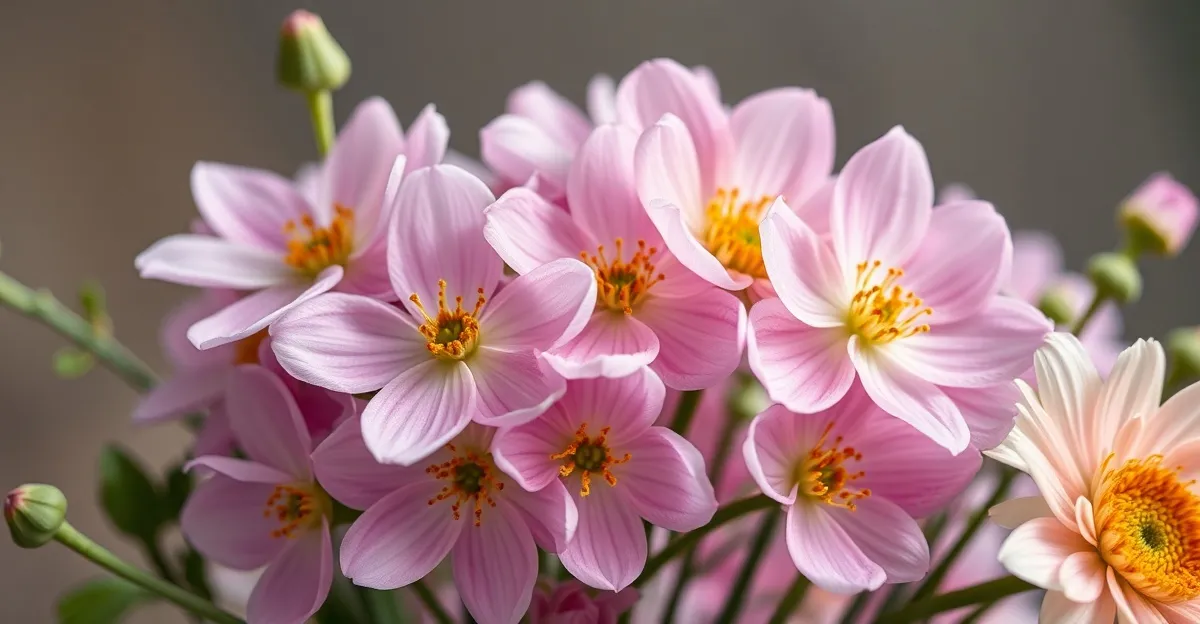
The first time I walked past the flower stalls at Pasar Badung early on a Sunday morning and caught the faint, clove-like scent rising from a bucket of stock, I made a mental note to find out more about the plant. Stock isn't native to the tropics. It doesn't feel like it belongs in Bali in the way that frangipani or heliconia does. And that contrast — between this very European-feeling flower and the heat and colour of a Balinese market — is part of what makes it interesting.
Stock flower (Matthiola incana) has a longer human history than almost any garden flower still in common use. It's been cultivated, loved, and argued over by botanists for at least five centuries, and its story touches on Roman emperors, Tudor herbalists, and the globalisation of the cut flower industry that eventually brought it to Bali.
The ancient and medieval origins
Matthiola incana is native to the rocky coastlines and cliff faces of southern Europe and the eastern Mediterranean — southwestern Europe from Portugal around to Greece, as well as parts of western Asia and northern Africa. It grows wild on limestone outcroppings, coastal cliffs, and disturbed rocky ground, which explains its preference for sharp drainage and slightly alkaline soil.
The ancient Greeks and Romans were familiar with the plant. Roman writings describe a fragrant flowering plant matching stock's description growing wild around Mediterranean shores and occasionally brought into gardens. The strong, spicy-sweet scent made it appealing as a garden ornamental at a time when scent was considered among the most important qualities of a garden.
Through the medieval period, the plant appears in European monastery gardens and in early herbalist manuscripts. Monks cultivated it alongside other fragrant herbs, partly for its scent and partly because it was believed to have medicinal properties — a common assumption with strongly scented plants.
The Renaissance and the first formal classification
The flower takes its scientific name from Pietro Andrea Mattioli (1501–1577), an Italian physician and botanist who wrote one of the most widely read herbals of the 16th century. His Commentarii on the works of the ancient Greek physician Dioscorides ran through many editions and was translated across Europe. In recognition of his contribution to botany, the 18th-century Swedish botanist Carl Linnaeus named the Matthiola genus after him.
The species name incana means "hoary" or "gray" in Latin — a reference to the soft, silver-grey down of tiny hairs that covers the leaves and stems, giving the plant a distinctive velvety appearance when you look closely.
During the Renaissance, stock became a popular garden plant across Europe. It was cultivated in royal gardens and featured in the elaborate knot gardens fashionable among wealthy Tudor households in England. The English common name "gillyflower" was applied both to stock and to carnations, reflecting the similar spicy fragrance — giroflee in French, derived from the word for clove (girofle).
The Victorian era and floriography
Stock flower reached its cultural peak during the Victorian era, when the language of flowers (floriography) became a serious social practice in Britain and across Europe. Every flower was assigned a meaning, and bouquets were composed to send coded messages between lovers, friends, and social rivals.
Stock's assigned meaning — "happy life" and "lasting beauty" — made it a natural inclusion in wedding bouquets and romantic arrangements. The Victorians were also drawn to its fragrance, at a time when strongly scented cut flowers were prized for their ability to perfume a room before artificial air freshening existed.
Specialist varieties were developed throughout the 19th century. Double-flowered forms — where each floret has additional petals creating a fuller, more opulent look — became the most desirable. By the late 19th century, florists were cataloguing dozens of named varieties in different colours: pure white, shades of pink from blush to magenta, purple, red, and creamy yellow.
The global cut flower industry
The 20th century transformed stock flower from a garden plant into a global commodity. As refrigerated transport and air freight made it possible to cut flowers in one country and sell them in another within 24 hours, the cut flower industry became increasingly globalised.
Kenya emerged as a major producer, with its highland growing regions offering near-perfect conditions: high altitude (1,500–2,500m), cool temperatures, equatorial sunlight, and relatively dry air. The Kenyan floriculture industry, which grew significantly from the 1980s onward, now exports stock flower (alongside roses and other temperate blooms) to markets across Europe, Asia, and the Middle East.
In Indonesia, stock is commercially grown in Java's highland regions — particularly around Malang and Batu in East Java, and the Puncak area in West Java — where elevation (700–1,500m) creates conditions similar enough to temperate climates for the plant to flower reliably. These Javanese flowers supply much of Bali's market.
How stock flower arrived in Bali's market
Bali's florist market is a relatively recent development — the explosion of tourism from the 1980s onward created demand for Western-style flower arrangements alongside Bali's traditional ceremonial flowers. Florists began sourcing temperate-climate blooms from Java's highlands and from imports to serve hotels, weddings, and later the growing expat community.
Stock flower became a staple of this trade. Its long stems, strong fragrance, and ability to hold up reasonably well in transit made it practical. Today you'll find it at the Badung wholesale flower market in Denpasar most mornings, in florist shops along Jalan Raya Seminyak, and included in arrangements at Ubud's higher-end flower studios.
The flower that Roman agriculturalists picked from Mediterranean cliffs has made a remarkable journey to the tropical island of Bali, where it arrives in air-conditioned vans from highland Java and sits, slightly incongruous but beautiful, in buckets alongside frangipani and heliconia.

The team
your florists
weekly subscription · Bali
We write about flowers because we love them. We deliver them because someone should — properly, weekly, across Bali.
— heyflowerPay once for 3, 6, or 12 months, no auto-renewal.
Stock flower in Bali today
Stock's use in Bali sits entirely within the Western flower tradition that the island has absorbed alongside tourism. It's not used in traditional Balinese Hindu offerings or ceremonies — that ritual space belongs to frangipani, lotus, marigold, and hibiscus. Stock is what you see in hotel lobby arrangements, wedding bouquets for destination weddings, and subscription flower deliveries to villas in Canggu or Seminyak.
For florists working in the Bali market, stock is valued for its fragrance more than almost anything else. Smell is central to Balinese spiritual life — incense, flower offerings, and scented water are daily presences — and stock flower's strong, clean scent resonates even in a culture where its specific symbolic meanings aren't locally understood.
To understand how another flower with Mediterranean roots has been incorporated into Balinese ceremony, snapdragon pairings in Balinese floral tradition offers an interesting comparison of how Western flowers find a place in a tropical context.
FAQ
Where is stock flower originally from? Stock flower is native to the rocky coastlines of southern and western Europe, from Portugal across to Greece, and into western Asia and North Africa.
Why is it called "stock flower"? The name refers to the plant's woody, trunk-like stems (the "stock" of the plant). It was also historically called gillyflower, a name shared with carnations due to their similar clove-like scent.
Who was the Matthiola genus named after? Pietro Andrea Mattioli, a 16th-century Italian botanist and physician who wrote influential works on medicinal plants.
Where does the stock flower sold in Bali come from? Most is grown in Java's highland regions around Malang and Batu, or imported from Kenya. Very little is grown locally in Bali.
How long has stock flower been cultivated in gardens? It has been intentionally grown in gardens for at least 500 years, since the Renaissance period in Europe, though ancient Romans and Greeks knew the wild plant growing along Mediterranean coasts.
Ready to bring fresh flowers to your Bali home or event? Explore our weekly flower subscription and get handpicked blooms delivered to your door every week.
More on Stock flower