The History and Origin of the Stargazer Lily
The remarkable story behind the stargazer lily — from a California breeder's dream to one of the world's most popular cut flowers, delivered to Bali doorsteps today.
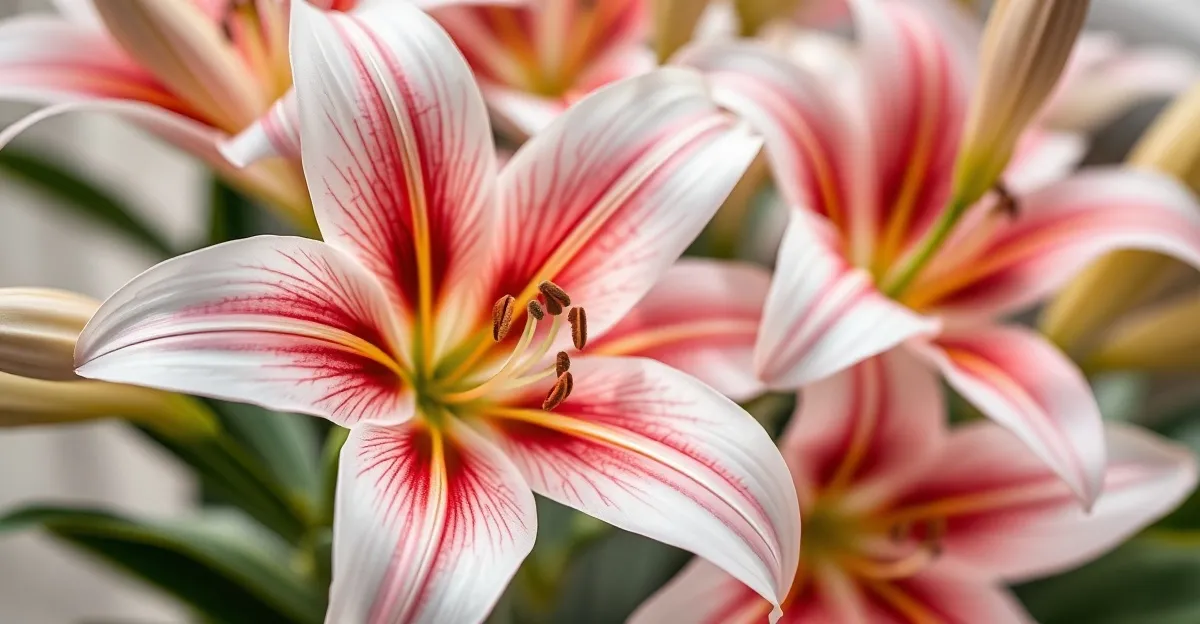
Most flowers in a florist's shop have histories stretching back millennia — roses cultivated by ancient Egyptians, lilies mentioned in biblical texts, orchids collected from remote jungles by Victorian explorers. The stargazer lily is different. It is a modern creation, born in a California greenhouse in the 1970s, and its origin story is one of the most fascinating in contemporary botanical history. It is a flower that did not exist until someone imagined it into being.
The Breeder Behind the Bloom: Leslie Woodriff
The stargazer lily was created by Leslie Woodriff, a self-taught lily breeder from Smith River, California. Woodriff was not a trained botanist or university researcher — he was a passionate amateur who had devoted most of his adult life to breeding lilies in his backyard greenhouse. His work was driven by personal vision rather than commercial mandate, which may be precisely why he achieved something that larger, better-resourced breeders had not.
The Problem Woodriff Set Out to Solve
By the mid-20th century, Oriental lilies — the large, fragrant, spectacular species hybrids derived from East Asian parent species including Lilium auratum and Lilium speciosum — were well established in horticulture. But they had a significant commercial limitation: the heavy flower heads drooped downward or faced outward, making them aesthetically problematic in cut flower arrangements. A lily whose face looks at the ground or the wall does not work well as a centrepiece.
Woodriff's ambition was to breed an Oriental lily that faced upward. He wanted a flower that looked at the sky. He imagined it, and then spent years trying to breed it.
The Hybridisation Challenge
Oriental lily breeding is technically complex because the parent species come from geographically separate environments and do not naturally interbreed easily. Woodriff worked through hundreds of controlled crossings over many years, selecting seedlings that showed the desired upward-facing characteristic. Most attempts produced plants with the typical downward or outward flower orientation.
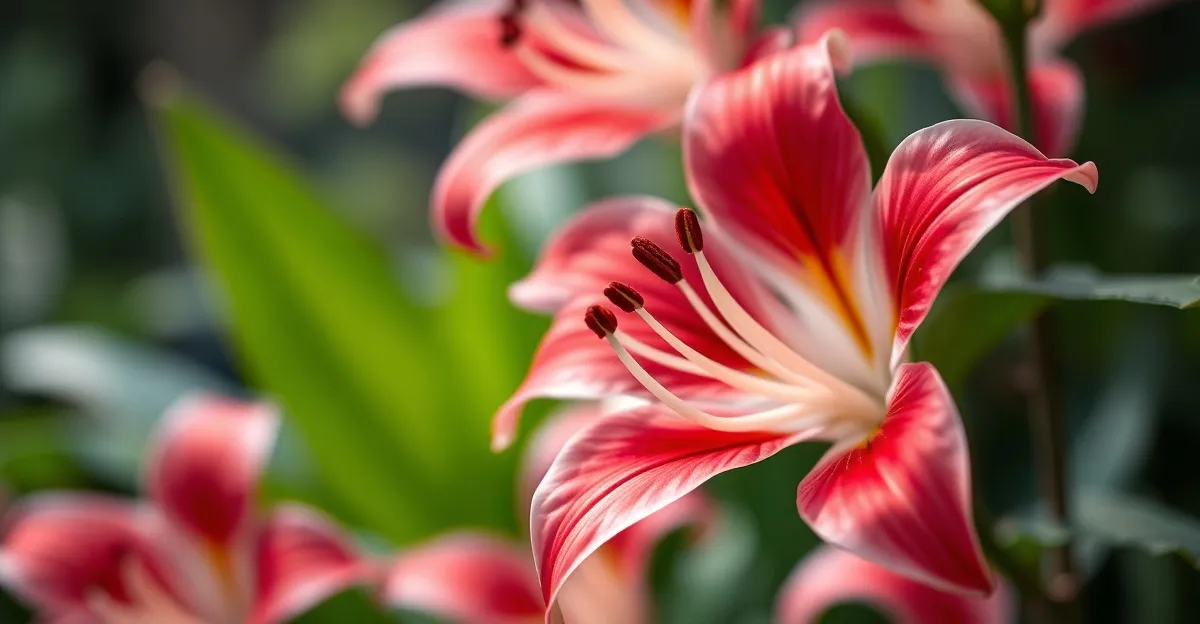
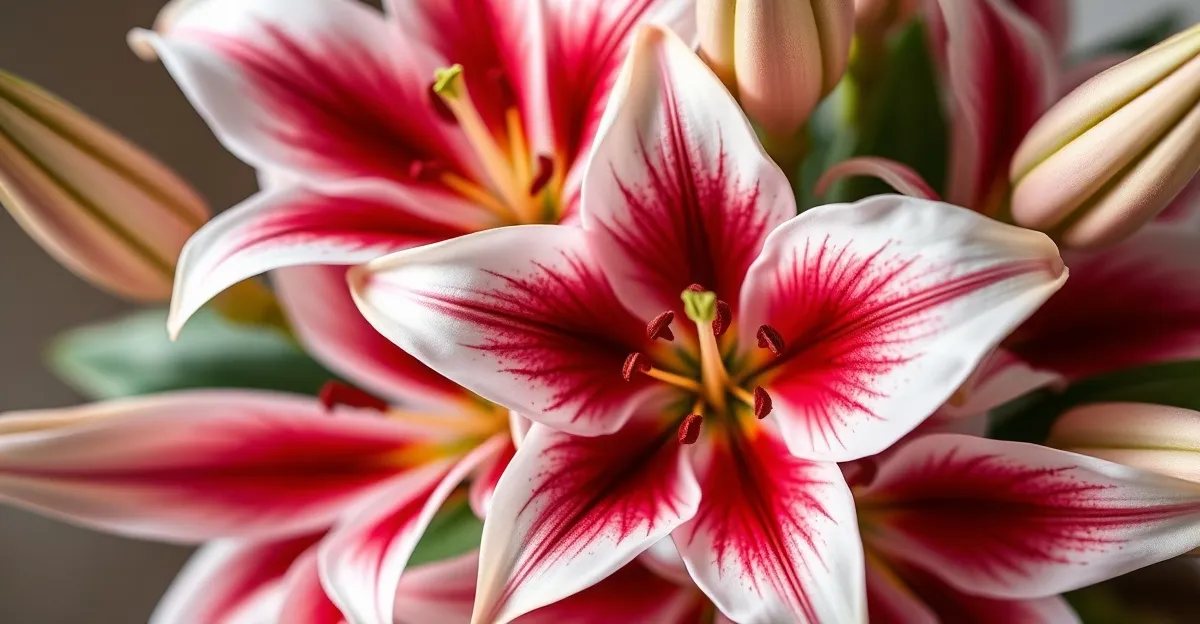
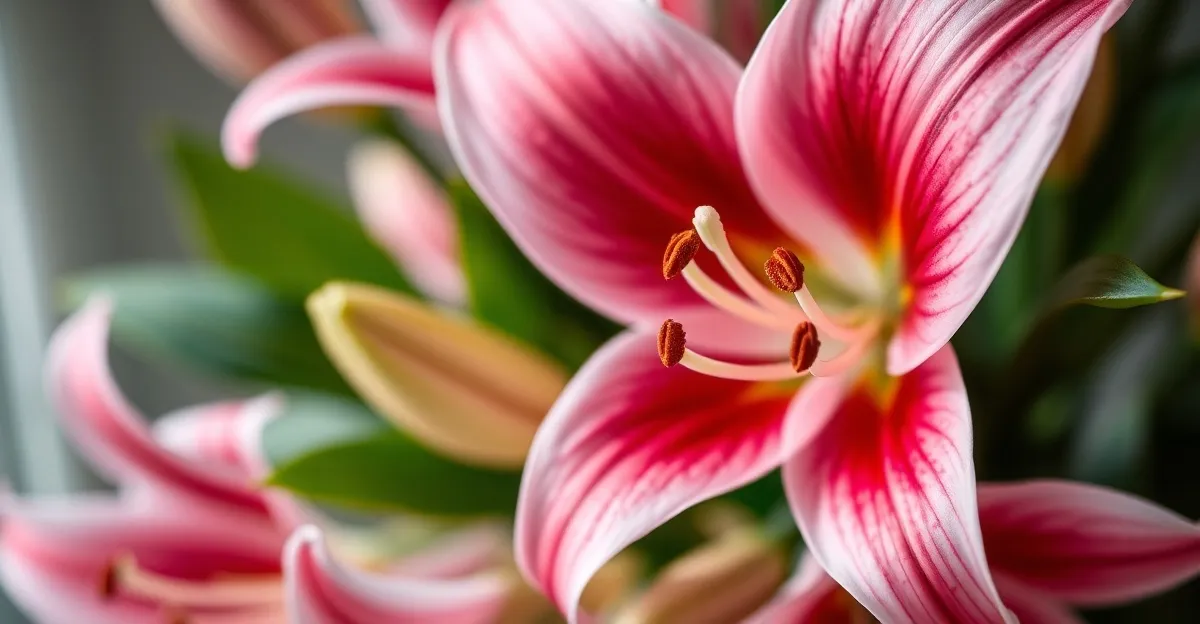
The breakthrough came in 1978, when Woodriff successfully produced a hybrid that consistently produced upward-facing blooms with the bold crimson markings, strong fragrance, and dramatic white-and-pink coloring that has come to define the stargazer. The name was Woodriff's own: watching the flowers face toward the sky, he called them "stargazers."
Commercial Recognition and an Injustice
What happened next to Woodriff is one of the more uncomfortable stories in commercial floristry history. The stargazer lily was a sensation. Its commercial potential was enormous, and the Dutch cut flower industry — which dominates global flower production and trade — quickly recognised that the stargazer would be one of the most commercially successful cut flowers ever developed.
Woodriff had not patented his creation. He was an amateur working from personal passion, not a commercial strategist. As the stargazer lily was propagated and commercialised globally — primarily by Dutch growers who developed their own lines from Woodriff's original variety — he received little financial benefit from the commercial explosion he had made possible. He died in relative obscurity in 1991, without the recognition or compensation that the scale of his contribution warranted.
His story has become something of a cautionary tale in plant breeding circles, and in recent years there has been more retrospective recognition of his contribution to the global cut flower industry.
The Botanic Background: Oriental Lily Heritage
To fully appreciate the stargazer lily, it helps to understand its parent species.
Lilium auratum: The Golden-Rayed Lily
Lilium auratum, the golden-rayed lily of Japan, is one of the most spectacular wild lily species. Native to the mountain slopes of Japan's Honshu island, it produces enormous white flowers with distinctive golden stripes running from the centre to the petal tips, and characteristic crimson or maroon spots. It carries the Oriental lily family's strong fragrance.
Lilium auratum was one of the most sought-after horticultural plants of the Victorian era when Western botanists first encountered it in Japan after the country opened to foreign trade in the 1850s. Thousands of bulbs were exported to Europe, where the plant caused a sensation in wealthy gardens.
Lilium speciosum: The Showy Lily
Lilium speciosum, the showy lily, is another East Asian species — native to Japan, China, and Taiwan — that contributes to the Oriental lily heritage. It produces nodding (downward-facing) flowers with recurved petals in white, pink, and deep crimson, with characteristic papillae (bumpy surface texture) on the petals.
The nodding quality of Lilium speciosum was what Woodriff was trying to overcome in the stargazer. He succeeded by selecting through many breeding generations for the upward-facing trait, effectively reversing the natural growth habit of the flower's parent lineage.
The Rise to Global Popularity
The stargazer lily's commercial history from 1978 onward is a story of extraordinary success.
Dutch Commercialisation
The Netherlands' position as the world's dominant cut flower exporter meant that once Dutch breeders adopted and propagated the stargazer (and related upward-facing Oriental hybrid concepts), global distribution was guaranteed. By the 1980s, stargazer lilies were appearing in flower shops across Europe and North America. By the 1990s, they were a global cut flower staple.
The Colombian Supply Chain
Alongside the Dutch trade, Colombia became a major producer of Oriental lily and stargazer varieties for the international market. Colombia's highland climate — the Bogotá Savanna sits at around 2,600 metres altitude — provides conditions remarkably suited to lily cultivation. Colombian lily exports grew significantly from the 1990s onward, bringing prices down and availability up globally.
Reaching Indonesia and Bali
Stargazer lilies reached Indonesia's commercial flower market through both import channels and the development of domestic highland growing. West Java's Bandung plateau, at altitudes of 700–1,500 metres, began producing Oriental lily varieties for domestic consumption. As Bali's tourism industry grew and demand for premium flowers increased, stargazer lilies became a staple of the island's florist market.
For context on how the broader lily family's history connects to this modern story, the history and origin of the lily traces the longer arc of lily cultivation across world cultures.

The team
your florists
weekly subscription · Bali
We write about flowers because we love them. We deliver them because someone should — properly, weekly, across Bali.
— heyflowerPay once for 3, 6, or 12 months, no auto-renewal.
The Stargazer's Cultural Impact
In the decades since its creation, the stargazer lily has become one of the most culturally recognisable flowers in the world. It appears in celebrity birthday photographs, wedding editorials, film set-dressings, and lifestyle imagery with a regularity that speaks to its visual impact.
In Popular Culture
The stargazer lily is frequently cited in surveys as one of the "most beautiful flowers in the world," which is not a meaningful botanical designation but is a useful indicator of cultural impact. The flower is regularly used in branding for luxury goods, premium experiences, and aspirational lifestyle products — its visual associations with aspiration and beauty have made it a natural fit for premium brand aesthetics.
The Fragrance Economy
Stargazer lily fragrance has become an iconic scent in perfumery. Synthetic and natural stargazer lily fragrance compounds appear in numerous luxury perfumes and home fragrance products. The scent is so strongly associated with "lily" in popular consciousness that most commercial lily-fragrance products are modelled on the stargazer rather than any wild lily species.
Frequently Asked Questions
Who technically owns the stargazer lily's intellectual property?
Because Woodriff did not patent his creation, the stargazer lily entered essentially open development. Subsequent breeders have developed and patented specific cultivars (named varieties within the Oriental lily category), but the original "stargazer" concept as a category is not under any single proprietary ownership.
How many stargazer lily cultivars exist today?
Many hundreds. The original Woodriff stargazer inspired generations of Oriental lily breeding, and nurseries and breeding programs globally have developed specific named varieties in colours, sizes, and growth habits far beyond the original. The commercial cut flower market uses multiple specific cultivars, often without distinguishing between them for retail purposes.
Is the original Woodriff stargazer still available?
The original variety is likely still in cultivation, but the majority of commercially available "stargazer lilies" are descendant cultivars with similar characteristics rather than the identical original variety.
Are there other "stargazer-type" lilies that face upward?
Yes — the development of upward-facing Oriental hybrid lilies continued after Woodriff's breakthrough, and many varieties now have this quality. The category is sometimes called "LA hybrid" lilies (Longiflorum-Asiatic crosses) or simply upward-facing Oriental lilies.
Why is Woodriff not better known in flower history?
The amateur, non-commercial context of his work and the patent oversight that prevented him from benefiting commercially from his creation both contributed to his relative obscurity. There has been increasing recognition in the specialty lily growing and plant breeding community in recent decades.
The stargazer lily arrived in the world because one person imagined a flower that looked at the sky, and then spent years making it real. That spirit of reaching upward — of aspiring to something more beautiful — is built into this flower's very character. At heyflower.co, we work with this extraordinary flower every day, bringing it from growers who honour its quality to Bali doorsteps across the island. Explore our stargazer lily arrangements today.
More on Stargazer lily