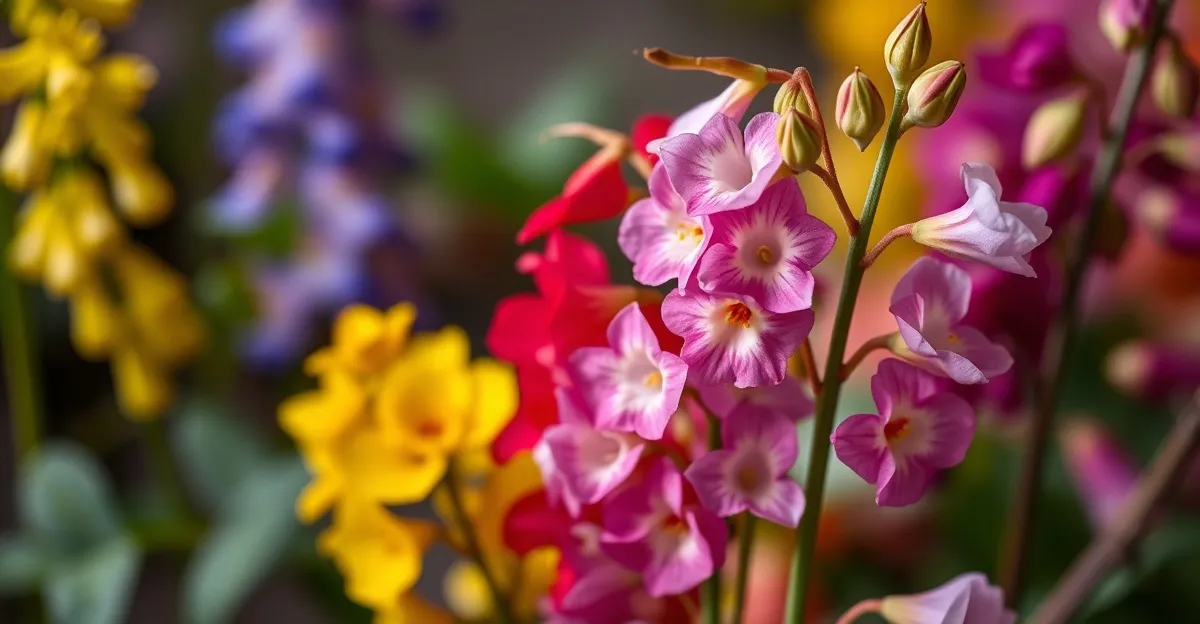
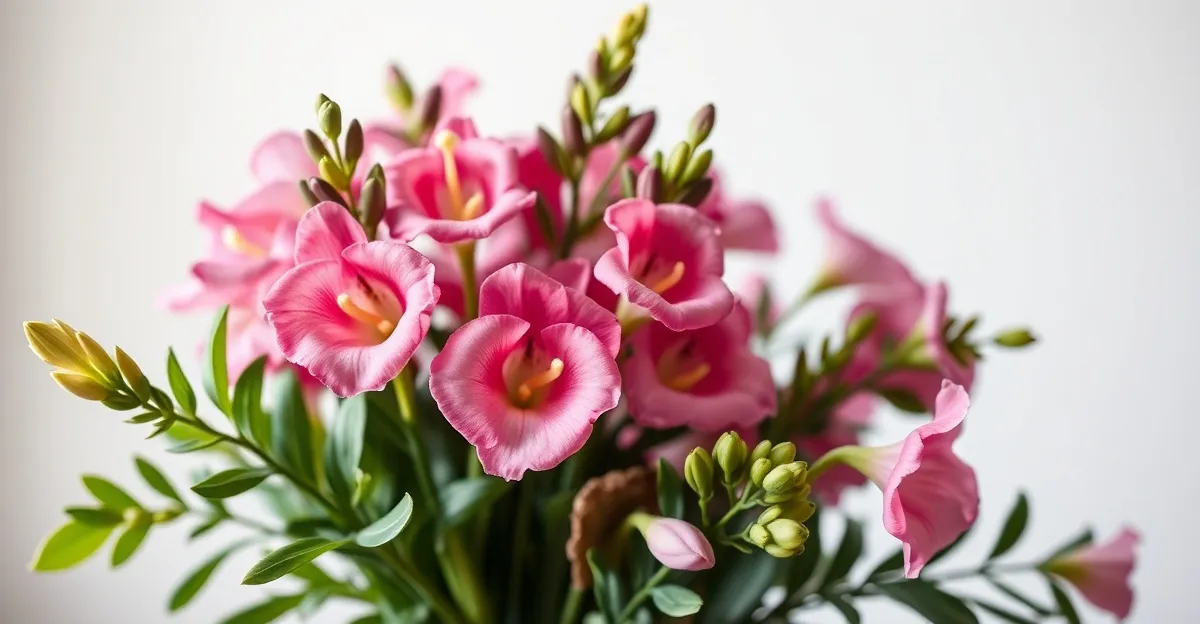
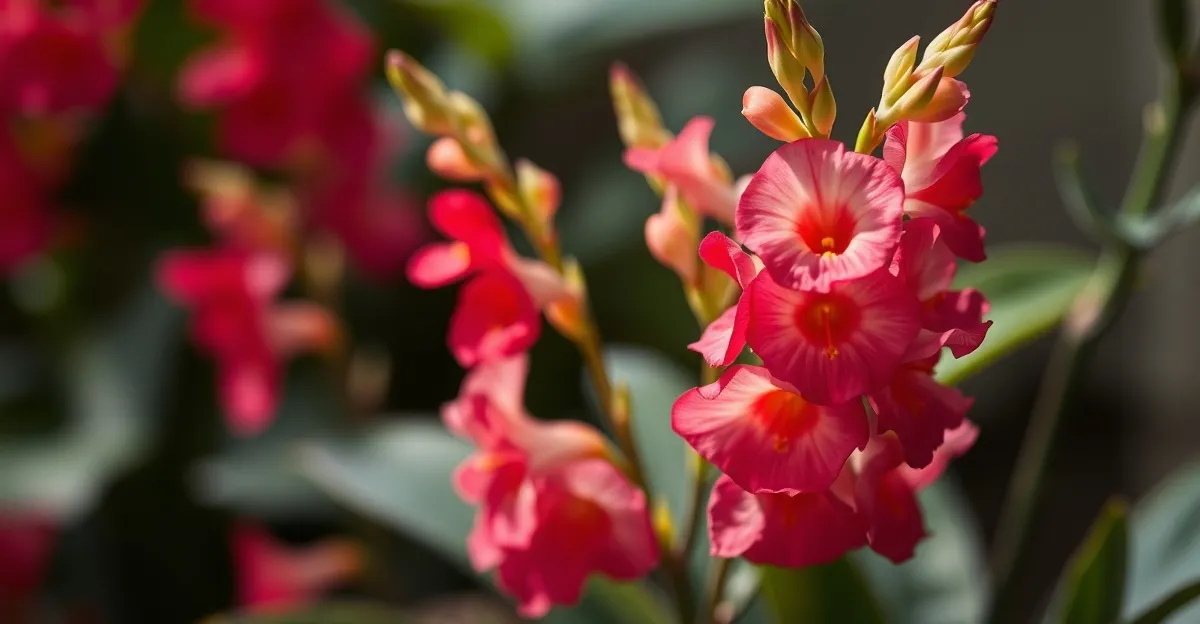
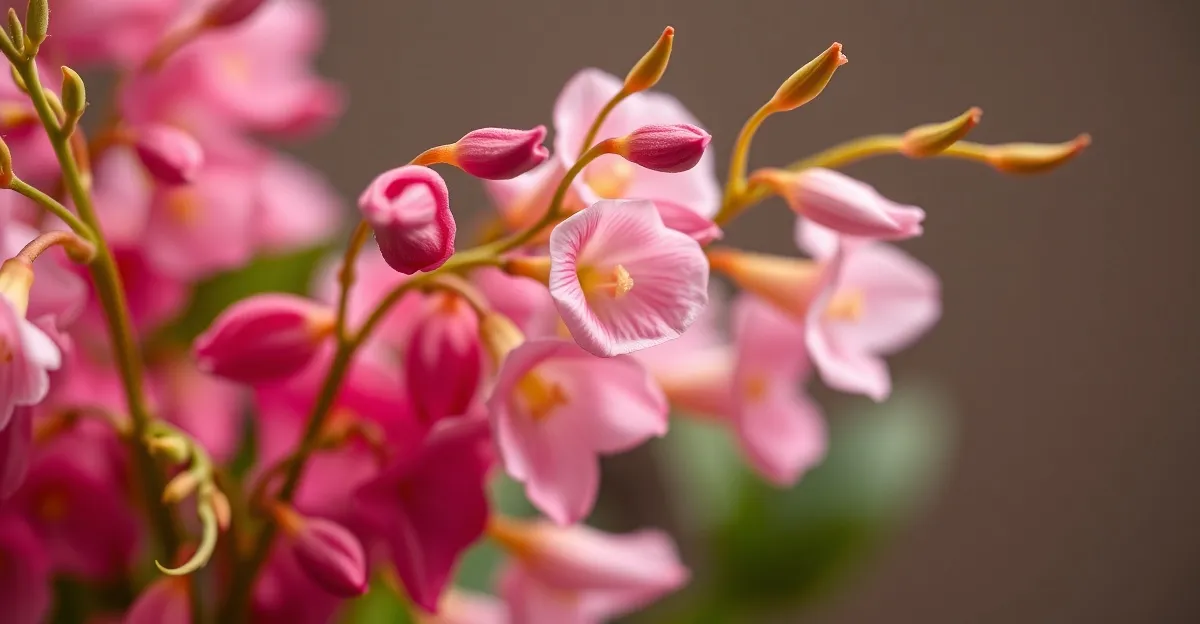
The history and origin of the snapdragon
From Mediterranean hillsides to Bali's flower markets, the snapdragon has a rich history spanning ancient symbolism and centuries of cultivation. Trace its journey here.
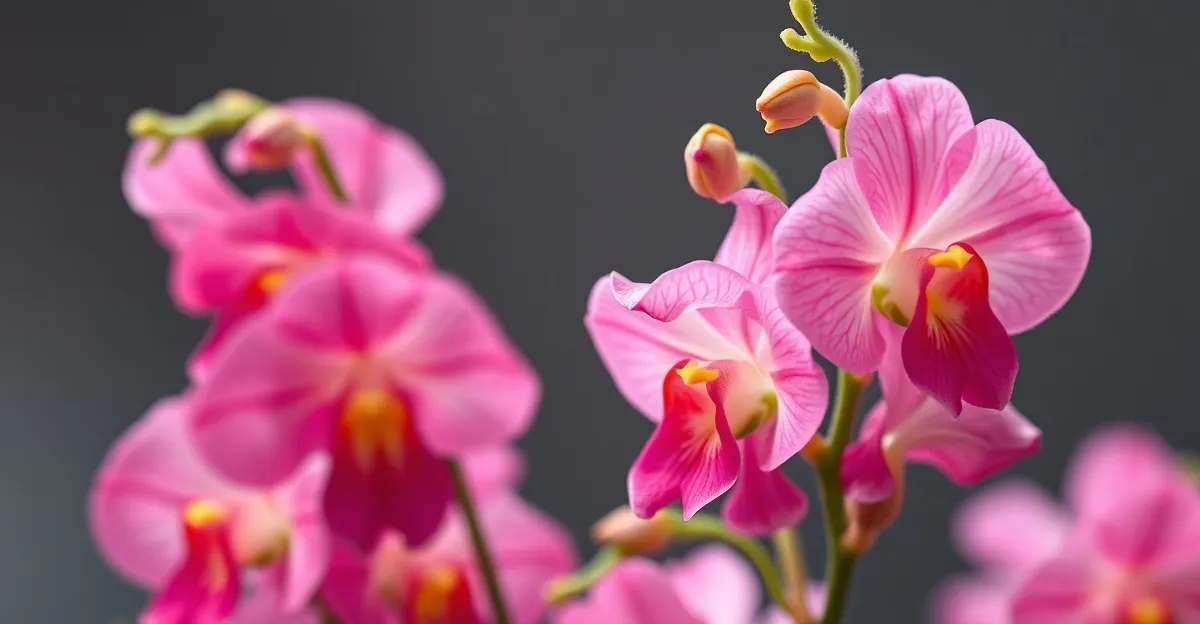
The snapdragon is named for a behavior rather than a place. Press the sides of the tubular flower and the "mouth" opens; release it and it snaps shut. Children have been doing this for as long as the flower has been cultivated in European gardens — and that history goes back at least two thousand years. The snapdragon's story is one of the more textured in the cut flower world, moving from ancient symbolism through Renaissance gardens to the global cut flower trade that brings it to Bali's florists today.
Origins in the Mediterranean world
Antirrhinum majus — the common snapdragon — is native to the Mediterranean region, with its center of diversity across the Rocky outcrops and hillsides of Spain, Portugal, and the western Mediterranean coast. Wild snapdragons are perennial in their native climate, growing from crevices in rocky limestone soils where drainage is perfect and winter temperatures stay mild.
The genus name Antirrhinum comes from the Greek — anti (like, resembling) and rhin (nose, snout). Greek botanists observed the flower's resemblance to an animal's muzzle — the same quality that later English speakers would capture in the word "snapdragon." The observation was consistent across cultures: something about the tubular, pinching flower invites comparison to a mouth or snout.
Wild snapdragons produce smaller flowers in shades of purple, pink, and pale yellow — quite different from the large, color-saturated cultivated varieties in Bali's flower markets. The wild plants have a delicate, airy quality that the cultivated forms have largely traded for visual impact.
Ancient symbolism: dragons and protection
The "dragon" element of the English common name did not appear by accident. In European folk tradition, the snapdragon was associated with protective magic — specifically with dragons and serpents, which were liminal creatures in many mythologies, connected to the boundary between the known and unknown, between the natural and supernatural.
Snapdragons were grown near doorways and thresholds in medieval European households as protective plants. Their association with warding off deception and revealing what was hidden may connect to this threshold symbolism — the flower standing guard against forces that operated in concealment. Snakes and dragons in European folklore often represented hidden forces, and a flower that revealed its hidden interior only when properly approached (when you squeezed it open) had obvious allegorical resonance.
In other folk traditions, the snapdragon was carried or worn for protection during travel — particularly travel that took the bearer beyond familiar territory. The flower's hardy ability to grow in rocky, marginal soils may have contributed to this resilience-and-protection association.
Roman and medieval cultivation
Roman writers including Dioscorides documented Antirrhinum as a medicinal plant and garden flower. The Romans were systematic about cultivating Mediterranean plants for both practical and ornamental purposes, and snapdragons — already native to their expanded territory across Spain and southern Gaul — were natural candidates.
In medieval monastery gardens, snapdragons were cultivated alongside other medicinal and ornamental plants in the hortus conclusus (enclosed garden) tradition. These monastic gardens were the primary sites of plant knowledge preservation in Europe through the medieval period, and many plants' cultivation traditions survived primarily through monastery records and practice.
The snapdragon was grown in these contexts for both ornamental purposes and for its supposed medicinal properties — though modern analysis confirms limited active medicinal compounds. The tradition of medicinal use may have been partly inherited from Roman practice and partly from the protective folk magic tradition.
The emergence of the modern cultivated snapdragon
By the 16th century, snapdragons were appearing in European garden design texts and illustrated herbals. John Gerard's influential English herbal of 1597 documented and illustrated snapdragons with the characteristic tongue-in-cheek detail of the era, noting their ornamental rather than medicinal value.
The transformation from wild species to cultivated garden flower happened gradually through selective growing and, later, deliberate hybridization. By the 18th century, European horticulturalists were developing new color forms and flower sizes. The tall, large-flowered cultivated snapdragon we recognize today — the type commercially produced for cut flowers — emerged from breeding programs that accelerated through the 19th and early 20th centuries.
The Victorian era's enthusiasm for flower symbolism and the language of flowers gave snapdragons formal social meaning: graciousness, strength, and presumption were the standard Victorian readings. Flower books of the 1820s–1880s included snapdragons as regular entries in the floral vocabulary, giving them a defined social role in the gift economy of that era.
Commercial cultivation and the cut flower trade
The 20th century saw snapdragons become a standard cut flower in the international trade. Their suitability for cutting — long stems, sequential blooming, wide color range, reasonable vase life — made them popular with commercial growers.
The Netherlands became the dominant center of snapdragon hybridization for the cut flower market, following the same pattern as their work with freesias, tulips, and other commercial flowers. New varieties were developed for:
- Stem length: Taller varieties for larger arrangements
- Heat tolerance: Lines that could be grown in warmer conditions
- Extended vase life: Post-harvest performance improvements
- Color range: New shades and bicolor combinations
- Petal form: Double-flowered varieties, ruffled petals, novel textures
Modern commercial snapdragon varieties — like the widely grown Rocket series and Potomac series — bear relatively little resemblance to the wild Mediterranean species but have proven commercially important in global flower markets.
The snapdragon's path to Bali
Snapdragons reach Bali through the global and regional cut flower distribution network. Most cut snapdragons sold in Bali originate from highland farms in East Java — the areas around Malang and Batu where cooler mountain temperatures allow quality cultivation. Some premium varieties come through Jakarta's air freight network from Netherlands, Ecuador, or Kenyan production.
The flower's presence in Bali's market is relatively recent in historical terms — a product of the late 20th century expansion of cut flower imports through Java-Bali distribution networks. Unlike marigolds, frangipani, or lotus — which have deep roots in Balinese cultural and spiritual life — snapdragons are a purely commercial flower in the Bali context, appreciated for their visual qualities rather than any cultural embedding.
This makes the snapdragon an interesting contrast to Bali's indigenous ceremony flowers. It carries its Mediterranean and European symbolic history into a tropical island with an entirely different floral cultural tradition, where it sits alongside ancient ceremony flowers in florists' refrigerators as equals.
For ideas on pairing snapdragons with locally meaningful Bali flowers in arrangements, see our guide to pairing snapdragon with other blooms: a florist's guide.

The team
your florists
weekly subscription · Bali
We write about flowers because we love them. We deliver them because someone should — properly, weekly, across Bali.
— heyflowerPay once for 3, 6, or 12 months, no auto-renewal.
The snapdragon's name in other languages
The "snap" quality of the flower has been noticed across cultures:
- English: Snapdragon (the dragon snapping)
- Spanish: Boca de dragón (dragon's mouth) or bocas de lobo (wolf's mouth)
- French: Gueule de loup (wolf's throat)
- German: Löwenmaul (lion's mouth)
- Italian: Bocca di leone (lion's mouth)
- Dutch: Leeuwebek (lion's beak)
Almost universally, speakers noticed the flower's resemblance to a predatory animal's mouth. The specific animal varies — dragon, wolf, lion — but the instinct is the same across cultures.
In Indonesian, the flower is sometimes called bunga naga (dragon flower) following the English/Spanish naming tradition, though it is also simply referred to by its commercial name snapdragon in florist contexts.
For the snapdragon's gifting symbolism in contemporary contexts, see our full guide to snapdragon meaning and symbolism: a full gifting guide.
FAQ
Where is the snapdragon originally from? The common snapdragon (Antirrhinum majus) is native to the Mediterranean region, particularly the Iberian Peninsula (Spain and Portugal) and parts of southern France and northern Africa. It grows wild on rocky limestone hillsides and coastal cliffs.
Why is it called a snapdragon? The name describes the flower's behavior: the tubular floret, when squeezed from the sides, opens like a mouth and then "snaps" shut when released. "Dragon" refers to the mythological creature whose mouth this resembles — or perhaps to the protective folk magic associations of the plant. The same observation inspired "dragon's mouth" and "lion's mouth" names in other European languages.
When were snapdragons first cultivated? Snapdragons were documented in classical Roman and Greek writings as both medicinal and ornamental plants, suggesting cultivation for at least 2,000 years. They were grown in medieval monastery gardens and appear in Renaissance herbals, becoming widely cultivated as garden flowers through the 16th century.
Is the snapdragon related to any other common flowers? Snapdragons belong to the family Plantaginaceae (in modern classifications) — a family that includes plantains but not many familiar garden flowers. In older classifications, they were placed in Scrophulariaceae alongside foxgloves and mulleins, plants that share the tubular flower structure.
How did snapdragons reach commercial production at the scale we see today? Through selective breeding and commercial cultivation development, primarily in the Netherlands during the 20th century. Dutch horticulturists developed the tall, long-stemmed, wide-color-range varieties suited for the cut flower trade, establishing snapdragons as a standard commercial product in the global flower market.
Ready to bring fresh flowers to your Bali home or event? Explore our weekly flower subscription and get handpicked blooms delivered to your door every week.
More on Snapdragon