The history and origin of the peony
From ancient Chinese imperial gardens to European medicine to Bali's wedding arrangements, the peony has one of the most fascinating histories in the floral world.
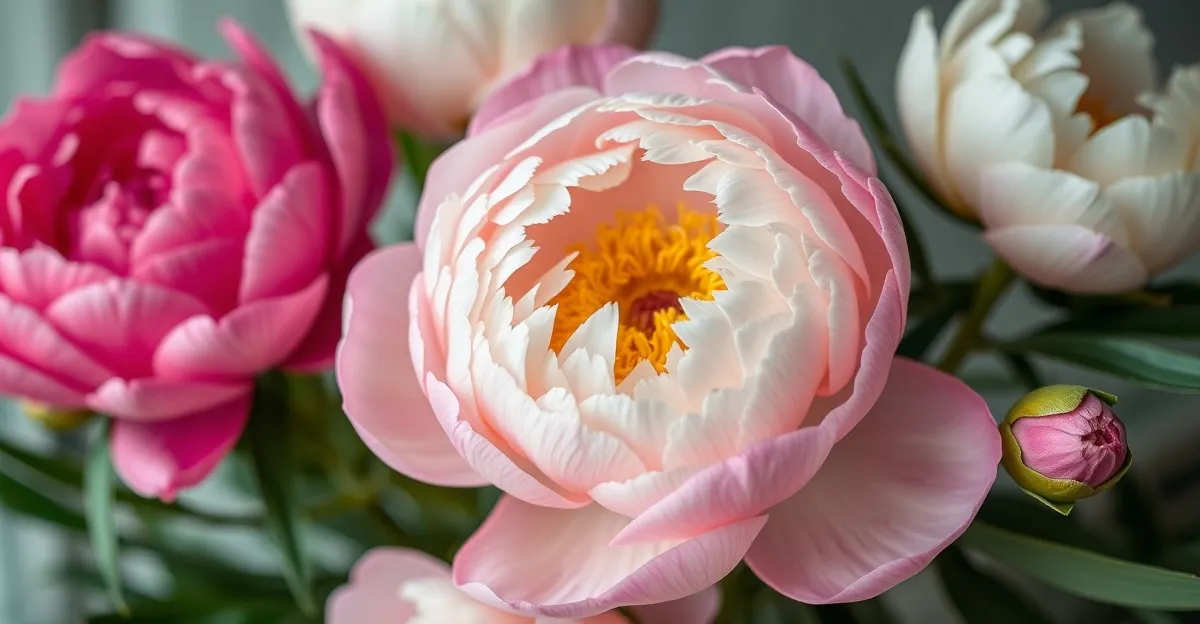
Few flowers carry as much history as the peony. It has been cultivated in China for over 1,500 years, revered in ancient Greek medicine, traded along the Silk Road, and eventually carried to the gardens of Europe and then the world. Today, when a peony arrangement arrives at a villa in Canggu, it brings with it a lineage that stretches back through imperial courts and monastery gardens to the earliest recorded discussions of plants and healing.
Understanding where peonies come from makes them more interesting to give and receive. This is the story of a flower that has always meant something — and how that meaning has evolved over millennia into what we understand it to be today.
Ancient origins: China and the imperial court
The peony's story begins in China, where the species Paeonia lactiflora and Paeonia suffruticosa (the tree peony) have been cultivated since at least the Han dynasty (206 BCE–220 CE). The tree peony — sometimes called the "king of flowers" (huā wáng) — was a prestige plant reserved for imperial gardens during the Tang dynasty (618–907 CE), a period often called the golden age of Chinese civilisation.
The Tang emperor Xuanzong famously had peonies planted throughout the palace gardens of Chang'an, and the flower became synonymous with imperial power, opulence, and the educated classes. Poets of the era — Du Fu and Bai Juyi among them — wrote extensively about peonies. Bai Juyi's poem about peonies at the markets of Chang'an captures the flower's cultural weight: people from across the region would travel to see them in bloom, and a single exceptional specimen could sell for the price of a small house.
Luoyang: the peony capital
By the Song dynasty (960–1279 CE), Luoyang had become the peony capital of the world. The city's climate was ideal for cultivation, and breeders developed hundreds of named varieties in shades ranging from pure white to deepest crimson. Peony exhibitions drew enormous crowds, and horticultural texts from this period remain important references today. The city still holds that reputation — Luoyang's annual peony festival draws visitors from across China each spring.
The peony became embedded in Chinese decorative arts during this period. Peonies appear in porcelain, silk embroidery, paintings, and carved jade from the Song dynasty onward — a cultural ubiquity that persists today in everything from restaurant décor to wedding invitations.
The Greek story: Paeon and the name
While China was cultivating peonies for their beauty, the ancient Greeks were using them for medicine. The peony genus takes its name from Paeon, a physician to the gods in Greek mythology. According to Theophrastus — writing in the 4th century BCE — the root of the peony was used to treat bladder problems, kidney inflammation, and nightmare disorders.
The story goes that Paeon learned of the plant's healing properties from the goddess Leto, and used it to heal Pluto after a battle wound. The god Asclepius, divine patron of medicine, grew jealous of Paeon's skill and threatened to kill him. Zeus saved Paeon by transforming him into the flower that now bears his name.
Whether or not you believe the mythology, the medical use was real. European herbal texts from the medieval period regularly recommend peony root for epilepsy, pain management, and childbirth complications. Dried peony root was a standard item in apothecary shops across Europe for centuries.
The herbaceous species in Europe
The wild herbaceous peonies native to southern Europe — Paeonia officinalis and related species — are the ones that entered Western medicine and later Western gardens. These differ from the Chinese tree peonies that dominate ornamental cultivation today; they're smaller plants that die back to the ground each winter and re-emerge in spring.
European cultivation for ornamental purposes accelerated in the 16th and 17th centuries as botanical exploration brought new peony species from across Asia. The hybridisation of European and Chinese species eventually produced the large, fragrant herbaceous peonies that dominate modern florist stock.
The Silk Road and westward travel
Peonies moved between China and the West through multiple channels. Buddhist monks and scholars carried plant materials and knowledge. Arab traders brought Chinese goods — including dried peony root and seeds — to Persia and then to Mediterranean markets. The Mongol empire's facilitation of Silk Road trade in the 13th century allowed more direct botanical exchange.
The tree peony (Paeonia suffruticosa) reached Europe by the late 18th century, when specimens were brought back by British and French plant hunters during the period of intense China trade. A tree peony specimen brought to London in 1789 caused a sensation in horticultural circles — it was so unlike any European flower that people struggled to believe it was a natural plant.
The Japanese contribution
Japan received peonies from China — likely via Buddhist monks — around the 8th century CE. Japanese gardeners developed their own distinct cultivation traditions and aesthetic sensibility around the tree peony (botan in Japanese). Peonies appear extensively in Japanese woodblock prints, lacquerwork, and textile design. The pairing of peonies with lions (shishi) is a classic motif in Japanese art, symbolising nobility and power.
Japanese breeders contributed significantly to the diversity of peony varieties available today. They developed forms with extraordinary petal density and an aesthetic ideal that emphasised the flower's architecture as much as its colour. Many premium peony varieties in commercial cultivation today have Japanese cultivars in their lineage.
Peonies in the modern flower trade
By the 19th century, European breeders — particularly in France, England, and the Netherlands — had created thousands of named peony cultivars. The French firm Guerin and later Victor Lemoine produced varieties that remain in commercial production today, including 'Sarah Bernhardt' (named for the actress) — a soft pink herbaceous peony that is among the most widely grown florist peonies in the world.
The 20th century saw peony cultivation spread to North America, Australia, and New Zealand. Today, global peony production is distributed across China (largest producer), the Netherlands, Chile, New Zealand, and Australia — among others. This geographic spread means that somewhere in the world, peonies are almost always in season.
The global supply chain is what allows peonies to appear in Bali at all. Without the networks of importers, freight logistics, and specialist florists, the flower's story would end at its cultivation origins. But through those networks, a Chinese imperial bloom can appear in a Canggu wedding arrangement — carrying 1,500 years of meaning with it.
For those interested in how peonies pair with their historical symbolism, our peony meaning and symbolism guide explores what the different colours and contexts signify today.

The team
your florists
weekly subscription · Bali
We write about flowers because we love them. We deliver them because someone should — properly, weekly, across Bali.
— heyflowerPay once for 3, 6, or 12 months, no auto-renewal.
The peony in Indonesian and Balinese context
Peonies have no deep indigenous history in Bali or Indonesia — the climate makes cultivation impossible, and the flower doesn't appear in traditional Balinese ceremonies or offerings. Its presence in Bali is entirely a product of the global flower trade and the island's cosmopolitan culture.
What's interesting, though, is how quickly peonies have been absorbed into Bali's aesthetic vocabulary. They've become synonymous with luxury floral design in the island's burgeoning wedding and hospitality industry. A Bali wedding that features peonies is signalling something about quality and intention — the effort to source a flower that doesn't grow here, because nothing else quite does what a peony does. Explore our curated arrangements and subscriptions at /#subscriptions.
Frequently Asked Questions
Where did peonies originally come from?
Peonies are native to Asia, Europe, and western North America. The most historically important species come from China — Paeonia lactiflora and the tree peony Paeonia suffruticosa — which were the basis of Chinese ornamental cultivation for over 1,500 years. European species were known to ancient Greeks as medicinal plants.
How did peonies get their name?
The genus Paeonia is named after Paeon, the physician of the gods in Greek mythology. According to the myth, Paeon used the plant's roots for healing and was transformed into the flower by Zeus. The name has been consistent in botanical literature since ancient Greek times.
Why are peonies called the king of flowers in China?
The tree peony was associated with the Tang imperial court and cultivated exclusively in palace gardens during its early Chinese history. Its size, fragrance, and spectacular blooms gave it a status above other flowers in Chinese aesthetic culture. The title "king of flowers" is primarily applied to the tree peony rather than to all peonies.
When did peonies arrive in Europe?
Wild herbaceous peonies (Paeonia officinalis) are native to southern Europe and were known to ancient Greek writers. The more spectacular tree peonies from China arrived in Europe in the late 18th century, brought by plant collectors during the period of intense trade with China. Their arrival caused enormous excitement in European horticultural circles.
Which country produces the most peonies today?
China remains the world's largest producer of peonies, both for ornamental and pharmaceutical purposes. The Netherlands is the largest exporter of cut peony flowers. Australia and New Zealand supply significant volumes to Asian markets including Bali, particularly during the southern hemisphere spring (October to January).
More on Peony