The History and Origin of the Heliconia
Trace heliconia's journey from the tropical Americas to Bali's gardens and florists—a story of botanical discovery, colonial trade, and tropical beauty.
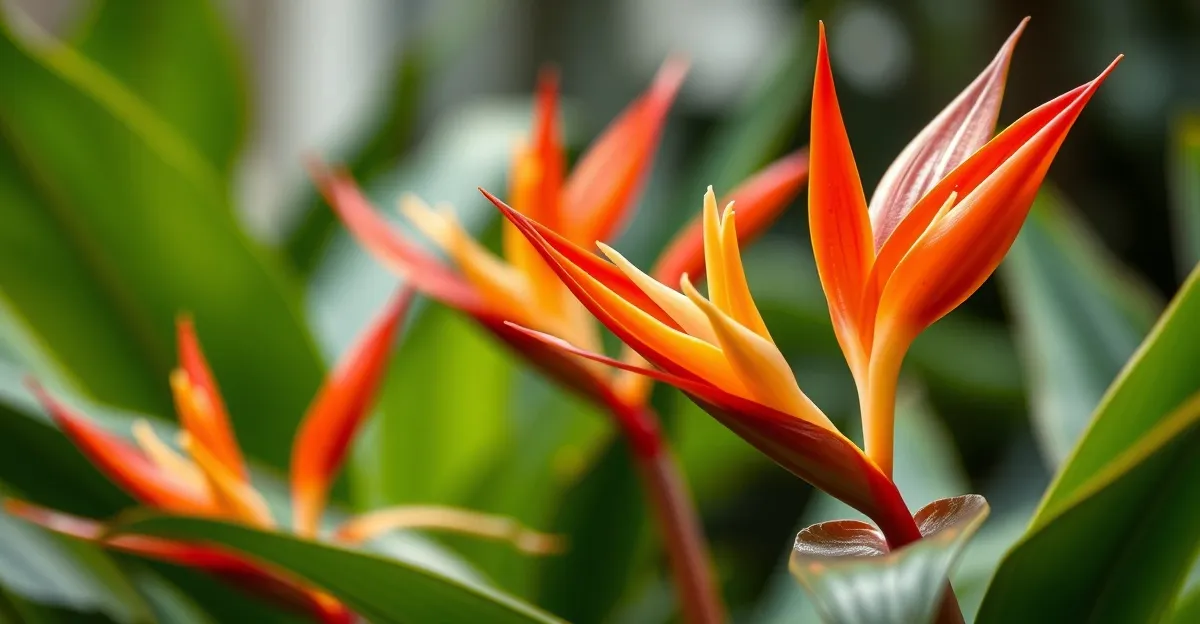
There is something almost prehistoric about heliconia. Its outsized bracts, its tendency to grow in towering clumps in dark, damp forest clearings, the way hummingbirds hover around its blooms in its native range—it has the quality of a plant from an earlier, more exuberant era of the earth's botanical life. That quality is not accidental. Heliconia has been on the planet, in roughly its current form, for tens of millions of years. Its story is one of the longest in the tropical flower world.
Understanding where heliconia comes from and how it arrived in Bali adds meaning to every arrangement in which it appears. It is not just a beautiful cut flower—it is a botanical traveller with an extraordinary history.
The Origins in Tropical America
A Genus Born in the Rainforest
Heliconia belongs to the family Heliconiaceae—a small, entirely tropical family with only a single genus, Heliconia, which contains somewhere between 100 and 250 species depending on the taxonomic system used. The vast majority of these species are native to tropical America, distributed from southern Mexico through Central America and into the northern regions of South America, with the greatest concentration of diversity in Colombia, Ecuador, Peru, and Brazil.
The name Heliconia comes from Helicon, the Greek mythological mountain of the Muses—a somewhat unexpected reference that reflects the classical naming conventions of 18th-century botany more than any practical connection between the flower and ancient Greece.
In their natural habitat, heliconias grow in the understorey and forest edge of tropical rainforest—areas with high humidity, warm temperatures, dappled light, and rich, moist soil. They form dense clumps from rhizomatous root systems and can colonise forest clearings rapidly when conditions permit.
The Coevolution With Hummingbirds
One of the most fascinating aspects of heliconia's natural history is its close coevolutionary relationship with hummingbirds, which are among its primary pollinators in the Americas. The curved tubular flowers hidden within the bracts of many heliconia species are precisely matched in shape to the bills of specific hummingbird species—a product of millions of years of mutual adaptation.
This coevolution has shaped the flower's form in ways that still define its appearance today: the bracts are coloured red, orange, and yellow specifically to attract hummingbird attention (birds are particularly responsive to these colours), while the actual nectar-bearing flowers are tucked inside in a way that positions the hummingbird's head against the pollen-bearing parts of the flower. It is a masterpiece of evolutionary engineering.
When heliconia was transplanted from the Americas to Asia and the Pacific, it lost its primary hummingbird pollinators. In Bali and throughout Southeast Asia, heliconia is primarily pollinated by other birds, insects, and by human cultivation—it reproduces readily by rhizome, which has made its spread as an ornamental plant straightforward even without its evolved pollinators.
European Botanical Discovery
The First Scientific Records
European naturalists began encountering heliconia during the 16th and 17th centuries as they explored the tropical Americas, but formal scientific description came later. The genus Heliconia was formally described by Carl Linnaeus in his botanical works of the 18th century, though the classification and naming of individual species continued to evolve through subsequent decades as collectors brought more specimens to European herbaria.
The 19th century was the great era of tropical botanical collecting, and heliconias attracted significant attention from naturalists working in South and Central America. Expeditions collecting specimens for Kew Gardens, the Jardin des Plantes in Paris, and the botanical gardens of the Netherlands brought dried specimens and later living plants back to Europe, where they became prized greenhouse subjects.
The Challenge of European Cultivation
Maintaining heliconia in a European greenhouse was a considerable undertaking. It requires not just warmth and humidity, but the specific water and light conditions of a tropical forest environment. Early 19th-century greenhouse technology was not always adequate to these demands, and many specimens were lost before growers developed sufficient understanding of the plant's needs.
As greenhouse technology improved through the 19th century—the development of better glass, heating systems, and environmental control—heliconia became more reliably cultivated in European botanical collections. It remained a specialist greenhouse subject rather than a widely available plant, however, until the global trade in tropical plants expanded dramatically in the 20th century.
The Journey to Asia and Bali
Dutch Colonial Botanical Networks
The route from the Americas to Bali ran primarily through Dutch colonial botanical networks. The Dutch East India Company (VOC) and later the colonial administration of the Dutch East Indies maintained botanical gardens and experimental stations across their territories, with the Bogor Botanical Garden (Kebun Raya Bogor) in West Java serving as a central hub.
Heliconia was introduced to this network during the 19th century, initially as a botanical specimen and then increasingly as an ornamental plant. Java's climate proved excellently suited to heliconia cultivation, and the plant spread from botanical institutions to private gardens and eventually to commercial cultivation.
Establishment in Bali
Bali's position as part of the Dutch East Indies, combined with its warm tropical climate and deep tradition of garden cultivation, made it a natural destination for heliconia as it spread through the Indonesian archipelago. By the early 20th century, heliconia was present in Balinese gardens, thriving in the volcanic soil and humid climate.
The island's tourism development from the 1920s onwards—beginning with Dutch colonial tourism and accelerating dramatically from the 1970s—created an enormous demand for tropical ornamental plants in hotels, resorts, and private villas. Heliconia, with its dramatic tropical character and exceptional ornamental qualities, was perfectly positioned to meet this demand.
Today, heliconia is commercially grown by farmers and nurseries across Bali, with production concentrated in the cooler highland areas around Bedugul where the climate favours high-quality bloom production. Local growers supply both the island's hospitality industry and its florists.
The Pacific Extension: Hawaii and the Modern Industry
Hawaiian Cultivation and Global Trade
A parallel and equally important chapter in heliconia's modern history unfolded in Hawaii. The Hawaiian Islands, with their warm Pacific climate and absence of freezing temperatures, proved ideal for heliconia cultivation. Several species were introduced to Hawaii in the late 19th and early 20th centuries and thrived in the volcanic soil environment that closely mirrors Bali's own conditions.
Hawaiian heliconia growers developed significant horticultural expertise during the 20th century, breeding new cultivars, refining growing techniques, and developing the post-harvest care practices that allow heliconia to be shipped internationally as cut flowers. This Hawaiian expertise has influenced heliconia cultivation practices worldwide, including in Bali.
Today, Hawaii and Bali are among the most significant producers of heliconia for the global cut flower trade, with their geographic positions allowing them to supply different international markets efficiently.
A Few Species From the Pacific
While the vast majority of heliconia species are American in origin, a small number—approximately six to eight species—are native to the Pacific islands rather than the Americas. These Pacific heliconias are found in the islands of Indonesia, Papua New Guinea, and the Bismarck Archipelago. Heliconia indica, with its distinctive red bracts, is among the Pacific species and was present in the Southeast Asian region long before the American species arrived through colonial trade routes.
This means that when you see heliconia growing in Bali, some plants may be descended from genuinely local Pacific species, while others are derived from the American varieties introduced through Dutch colonial networks. The long, rich history of heliconia in this part of the world has multiple origins. For more on heliconia's connection to Balinese life and culture, heliconia in Balinese ceremonies: traditional uses in Bali explores how it fits into local ceremonial practice.

The team
your florists
weekly subscription · Bali
We write about flowers because we love them. We deliver them because someone should — properly, weekly, across Bali.
— heyflowerPay once for 3, 6, or 12 months, no auto-renewal.
Heliconia in Contemporary Bali
From Garden Specimen to Commercial Flower
The transformation of heliconia from a specialist botanical curiosity to a widely grown commercial flower mirrors the transformation of Bali's own flower industry. As tourism expanded and the demand for premium tropical experiences grew, the island's flower farmers and florists developed the production systems, cold chain management, and design knowledge needed to bring heliconia from highland farms to Seminyak villas and Ubud resort tables.
This commercial development has made heliconia one of Bali's most accessible and recognised tropical flowers—available in markets, from florists, and through delivery services like heyflower.co across the island. For a flower whose evolutionary history involves coevolving with the hummingbirds of the Amazon basin, its presence in a Canggu villa lobby is the end point of a remarkable botanical journey.
For more context on the flower's contemporary meaning and gifting culture, heliconia meaning and symbolism: a full gifting guide covers how this ancient plant communicates in modern Bali gifting contexts.
Frequently Asked Questions
Where does heliconia originally come from?
Heliconia is native primarily to tropical America, with the greatest diversity in Colombia, Ecuador, Peru, and Brazil. A small number of species are native to the Pacific islands, including some in Indonesia's eastern archipelago.
How did heliconia reach Bali?
Heliconia was introduced to Southeast Asia through Dutch colonial botanical networks in the 19th century. The Bogor Botanical Garden in Java served as a key entry point from which the plant spread across the archipelago, including to Bali.
Why are hummingbirds important to heliconia's history?
Heliconia coevolved with hummingbirds as its primary pollinators in its native Americas. The flower's colour, shape, and nectar production are specifically adapted to attract hummingbirds. Outside the Americas, heliconia reproduces primarily by rhizome rather than through pollination.
How many species of heliconia exist?
Between 100 and 250 species of heliconia have been formally described, depending on the taxonomic approach used. New species continue to be discovered in remote rainforest areas of tropical America.
Is heliconia the same as bird of paradise?
No. Heliconia and bird of paradise (Strelitzia) are different genera. They are both members of the same plant order (Zingiberales) and share a broadly similar tropical character, but they are distinct plants with different flower structures, growing habits, and origins.
Bali's Botanical Heritage, Delivered to Your Door
At heyflower.co, we are proud to work with locally grown heliconia that reflects Bali's extraordinary botanical heritage. Every arrangement we create draws on the island's long history of tropical cultivation—from highland farms to your front door.
Explore our tropical arrangements and subscribe for regular fresh flower deliveries at heyflower.co.
More on Heliconia