Heliconia in Balinese Ceremonies: Traditional Uses in Bali
Discover how heliconia is used in Balinese ceremonies and daily ritual life—from temple decoration to wedding florals and Galungan celebrations.
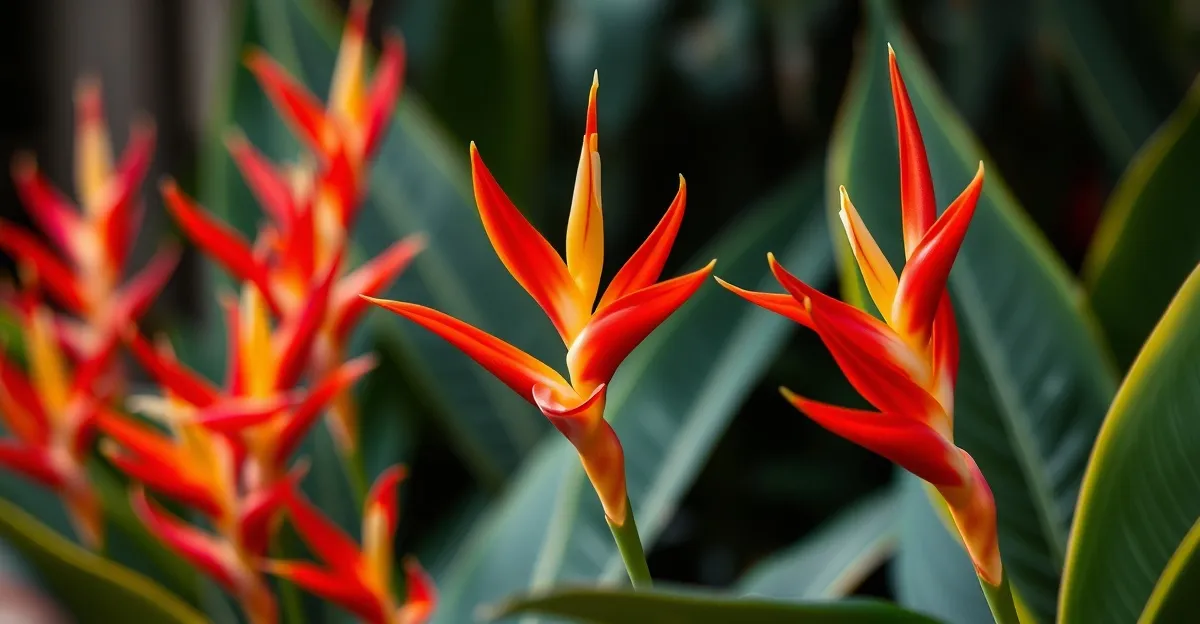
In Bali, the boundary between the botanical and the spiritual has always been permeable. Flowers are not decorative additions to ceremony—they are part of the ceremony itself, carrying meaning, directing energy, and communicating with the divine. Against this backdrop, heliconia's bold, vivid presence in Balinese ceremonial life is not surprising. What is interesting is the specific ways it is used and the roles it plays in different ceremonial contexts.
This guide explores heliconia's place in Balinese ceremonial life: where you will see it, what it means in those contexts, and how the traditional and contemporary blend in the way this flower is used across the island today.
The Role of Flowers in Balinese Hindu Life
Flowers as Living Prayer
The foundation of understanding any flower's ceremonial role in Bali is the Balinese Hindu relationship with offerings (banten). Flowers are the most consistently present element in banten, from the simplest daily canang sari placed on a household shrine to the elaborate multi-tiered offerings prepared for significant ceremonies. The selection of flowers for these offerings is not arbitrary—specific colours, specific scents, and specific plants have specific spiritual associations.
In this system, heliconia occupies a particular niche. It is not among the classical ritual offering flowers—the specific blooms prescribed for the innermost ritual acts of Balinese Hindu ceremony. Those flowers follow ancient guidelines that predate the arrival of heliconia in Bali. What heliconia does instead is occupy the celebratory, decorative, and welcoming spaces that surround and frame ceremonial life.
The Distinction Between Ritual and Celebratory Flowers
Understanding Balinese floral ceremony requires grasping this distinction: the ritual core of a ceremony uses specific, prescribed flowers that carry assigned spiritual meaning. The celebratory and decorative framing of that ceremony—the flowers on the village gate, the arrangements in the reception area, the floral styling of the celebration spaces—follows different, more flexible rules where contemporary taste and seasonal availability have more latitude.
Heliconia almost exclusively lives in this second category. It is a ceremony-adjacent flower—vibrant, welcoming, and tropical in a way that feels appropriate to celebration—rather than a ritual flower in the strict liturgical sense.
Heliconia in Temple Ceremonies and Odalan
The Outer Temple Space
Every Balinese temple has three zones: the outer courtyard (jaba sisi), the middle courtyard (jaba tengah), and the inner sanctum (jeroan). The further into the temple, the more strictly prescribed the ritual elements. In the outer courtyard and the middle courtyard, where community gatherings, celebrations, and performances take place, decorative flowers are used more freely.
During odalan (temple anniversary celebrations, held every 210 days according to the Balinese Pawukon calendar), the outer temple areas are decorated with flowers, woven palm leaf ornaments, and offerings. Heliconia, with its tropical boldness and long-lasting quality, appears in these outer decorative displays—in vases at the entrance, in floral compositions along pathways, and in the arrangements that welcome the community gathering.
Penjor Decorations During Galungan
One of the most visually spectacular aspects of Galungan—the Balinese Hindu celebration of the victory of dharma—is the bamboo penjor poles that line the streets of every village and neighbourhood. These tall, arching bamboo poles are decorated with woven palm leaf ornaments, fruit, flowers, and locally significant botanical elements.
In contemporary Galungan decorations, particularly in urban Bali and in communities with strong connections to the local flower industry, heliconia has found a place in penjor styling. Its bold red-orange colours complement the yellow and green of traditional penjor elements, and its tropical presence feels authentically Balinese. This is a modern evolution rather than an ancient tradition—heliconia's presence in penjor is a living example of how Balinese ceremonial culture continuously incorporates and adapts elements from its botanical environment.
Heliconia in Wedding Ceremonies
The Ceremonial and the Celebratory
Balinese Hindu weddings (pawiwahan) have two distinct dimensions: the sacred ritual, which involves specific prayers, holy water, offerings, and priestly guidance, and the communal celebration, which is a feast, a gathering, and a joyful expression of community. The flowers for these two dimensions follow different logics.
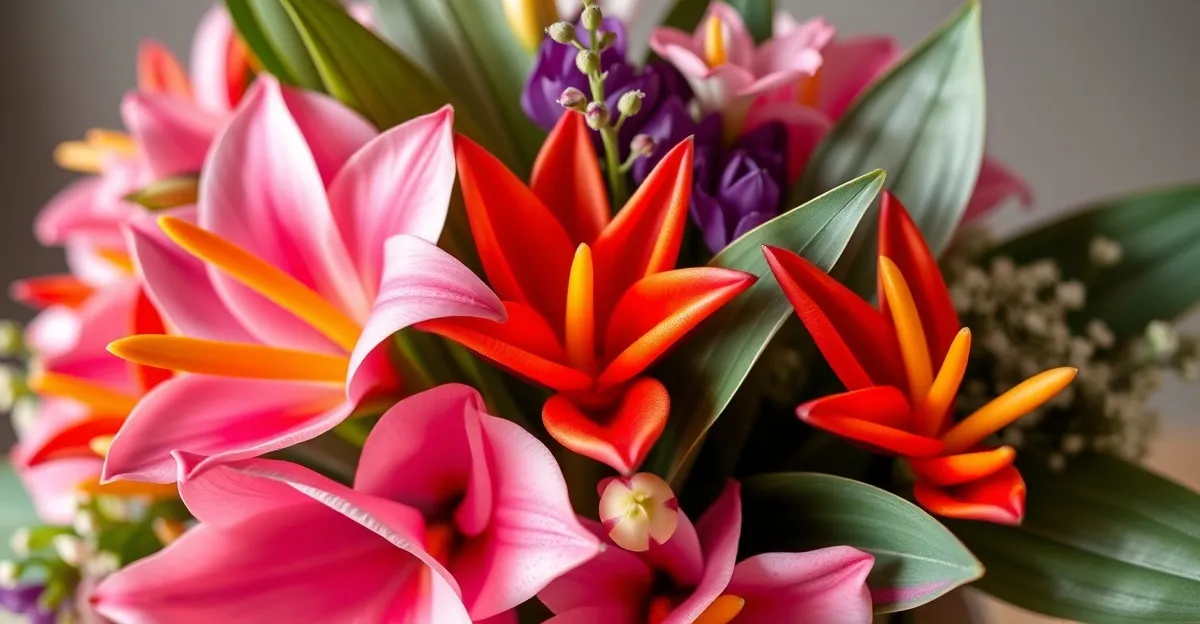
In the sacred ritual core, traditional offering flowers—marigold, frangipani, rose, and specific local blooms—are prescribed. In the celebratory dimension—the event styling, the entrance decoration, the table arrangements, the welcome displays—heliconia is at home. Contemporary Balinese weddings, particularly those hosted in garden villas or resort settings, use heliconia extensively for its ability to create immersive tropical environments that feel genuinely of the island.
The Processional Welcome
In some Balinese wedding traditions, a floral welcome path is created for the bridal couple and the guests. Flower petals are scattered, arrangements placed at intervals, and the entrance space decorated with flowers that communicate abundance and blessing. Heliconia in the welcome displays at the entrance to a wedding space frames the sacred moment with tropical grandeur—it says that this is an important threshold, and crossing it leads into something extraordinary.
Heliconia in Balinese Spa and Hospitality Ritual
The Sacred Hospitality of Bali
In Balinese culture, hospitality carries genuine spiritual weight. Welcoming a guest well is not simply good manners—it is an expression of devotion and a form of blessing. The extraordinary attention to floral detail in Bali's hotels and resorts is not merely a marketing strategy; it draws from this deep cultural tradition of honouring guests through beauty and abundance.
Heliconia is central to this hospitality aesthetic. Its striking appearance in a hotel lobby arrangement or a villa welcome display communicates the island's natural generosity—the same generosity that underlies Balinese hospitality values. Guests who arrive to a space decorated with heliconia feel welcomed by the island itself, not just by a hotel.
Flower Petal Pools and Spa Traditions
The Balinese spa tradition—one of the most imitated and distinctive wellness experiences in the world—draws on indigenous Balinese healing practices that involve purification through flowers, water, and aromatic plants. While heliconia's bold bracts are less typical in the petal pool aesthetic than smaller, more fragrant flowers, it is used in some luxury spa settings as a dramatic decorative element in entry and reception spaces.
The dramatic, architectural quality of heliconia also makes it well-suited to the entrance of spa facilities, where the first sensory impression sets the tone for the entire experience.

The team
your florists
weekly subscription · Bali
We write about flowers because we love them. We deliver them because someone should — properly, weekly, across Bali.
— heyflowerPay once for 3, 6, or 12 months, no auto-renewal.
Heliconia in Life Transition Ceremonies
New Birth and Childhood Ceremonies
Balinese life is marked by a series of ceremonies that accompany each significant stage—birth, the first 105-day milestone (otonan), the first birthday, adolescence, marriage, and death. The flowers at these ceremonies shift depending on the stage: new birth ceremonies tend toward softer, purer white flowers and gentle arrangements, while childhood celebrations become more joyful and colourful.
As children grow toward the joyful public celebrations of adolescence and early adulthood, bolder tropical flowers including heliconia may appear in the decorative framing of ceremonies. The flower's association with vitality and bold new life makes it conceptually appropriate for celebrations of growing children taking their place in the community.
The Maturity of Heliconia as a Ceremonial Flower
The story of heliconia in Balinese ceremonies is a story that is still being written. Unlike frangipani, which has been part of Balinese ritual life for centuries, or marigold (gemitir), which has deep symbolic roots in Balinese Hindu practice, heliconia's ceremonial presence in Bali is relatively recent—a product of the island's botanical history and the continuous evolution of its ceremonial culture. The history and origin of the heliconia explores how the flower arrived in Bali through Dutch colonial botanical networks and has become genuinely localised in the island's flora over the past century.
For ideas on the symbolism that heliconia carries in modern Bali gifting contexts, heliconia meaning and symbolism: a full gifting guide is a natural companion to this article.
Frequently Asked Questions
Is heliconia used in traditional Balinese Hindu offerings?
Heliconia is not among the classical ritual offering flowers of Balinese Hinduism. It is used decoratively in the celebratory spaces surrounding ceremonies—entrances, reception areas, event styling—rather than in the prescribed ritual core of offerings.
Can heliconia appear at an odalan temple ceremony?
Yes, heliconia can appear in the decorative spaces of an odalan celebration—the outer courtyard, the entrance, the community gathering areas. It is appropriate in the celebratory framing of the ceremony rather than in the ritual offering arrangements.
Is heliconia used in Balinese weddings?
Yes, extensively. Heliconia is widely used in the decorative and event-styling dimensions of contemporary Balinese weddings—entrance arches, table centrepieces, processional decorations, and reception styling. It is not typically used in the ritual offering component of the ceremony.
Does heliconia appear in Galungan celebrations?
In some contemporary Balinese communities, heliconia is incorporated into penjor decorations during Galungan, particularly in urban areas. This is a modern evolution of the tradition rather than an ancient prescription.
Is it respectful to bring heliconia to a Balinese ceremonial gathering?
As a general rule, heliconia is appropriate for celebratory ceremonial contexts (weddings, odalan, Galungan) and inappropriate for mourning and purification ceremonies. When uncertain, ask a Balinese host or local florist before bringing flowers to a ceremony.
Ceremony Flowers That Honour the Occasion
At heyflower.co, we understand the nuanced role that flowers play in Balinese ceremony and celebration. Our team will help you choose arrangements that honour the occasion—bold and joyful where that is called for, quiet and elegant where that is needed.
Explore our ceremonial and celebratory arrangements, and subscribe for regular fresh tropical flowers at heyflower.co.
More on Heliconia