The history and origin of the bougainvillea
From the Brazilian jungle to Bali's villa walls — the full history and botanical origin of bougainvillea and how it became iconic in Bali.
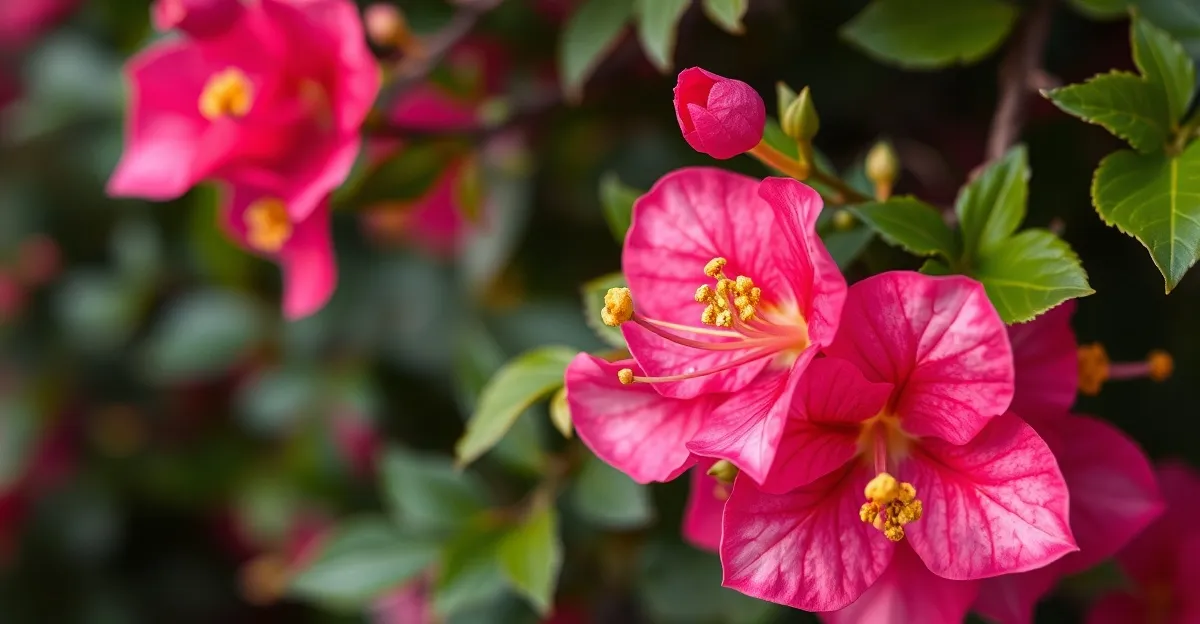
Walk down almost any street in Seminyak or Ubud and you'll pass bougainvillea without giving it a second thought. It seems as embedded in the Balinese landscape as the banyan tree or the frangipani. But bougainvillea is not native to Bali, or even to Asia. It's a South American plant that arrived on this island as part of a centuries-long process of botanical exploration, trade, and colonial exchange. Its history is as colourful as its bracts.
The botanical expedition that started it all
The bougainvillea's discovery by Western science is credited to Philibert Commerson, a French naturalist who sailed as the chief botanist on Louis-Antoine de Bougainville's circumnavigation of the globe between 1766 and 1769. The expedition was the first French voyage to circumnavigate the Earth, and de Bougainville was a celebrated naval officer who would later have the flower named in his honour.
Commerson first collected bougainvillea specimens in the Rio de Janeiro area of Brazil in late 1767. He was struck by the plant's extraordinary colour — the vivid bracts that surrounded tiny, inconspicuous true flowers — and by the way it climbed and sprawled across trees and structures at the forest edge.
There is a fascinating sidebar to this story. Jeanne Barré, Commerson's assistant and companion, sailed on the expedition disguised as a man — she became the first woman to circumnavigate the globe, though the disguise meant she couldn't be officially acknowledged at the time. She reportedly participated fully in the specimen collection work, and some botanical historians have argued that her unrecognised contribution to the discovery of bougainvillea deserves greater attention than it has received.
Taxonomy and the naming debate
Back in Europe, Commerson's specimens were classified and the genus was named Bougainvillea by the French naturalist Antoine Laurent de Jussieu, who formalised the name in his 1789 work Genera Plantarum. The naming honoured not Commerson (who died in 1773 before the plants were formally described) but de Bougainville, the expedition commander.
The botanical taxonomy has shifted over the years. Bougainvillea belongs to the family Nyctaginaceae and is related to the four o'clock flower (Mirabilis jalapa). The genus contains 18 accepted species, but the three species most important in horticulture are Bougainvillea spectabilis, B. glabra, and B. peruviana. Most of the hundreds of cultivated varieties in existence today are hybrids of these three, particularly B. spectabilis × B. glabra hybrids.
From South America to the tropics of Asia
Bougainvillea was being grown in European botanical gardens by the early nineteenth century. The great botanical gardens — Kew Gardens in London, the Jardin des Plantes in Paris — received living specimens through the networks of colonial-era plant hunters and explorers. From Europe, bougainvillea spread to colonial territories through the same networks.
It reached India and Southeast Asia through multiple routes during the nineteenth century. The British colonial administration in India actively distributed ornamental plants from Calcutta's botanical gardens to other colonial outposts. Singapore and Penang became early Asian hubs for bougainvillea cultivation; from there it spread across the Malay Archipelago.
Bali's long history of trade connections with the rest of the archipelago, and later its position as a Dutch colonial territory, meant that ornamental plants circulated through the island from the late nineteenth century onward. By the mid-twentieth century, bougainvillea was so thoroughly naturalised in Bali that older Balinese residents sometimes struggle to believe it isn't a native plant.
The colonial garden aesthetic and bougainvillea's role
In the Dutch colonial period, bougainvillea became strongly associated with a certain aesthetic of tropical colonial architecture — the whitewashed walls, terracotta tile roofs, and generous tropical gardens of Dutch plantation-era villas. This aesthetic, which can still be seen in parts of Denpasar's older neighbourhoods, made bougainvillea a fixture of colonial-era Balinese properties.
The flower's association with colonial-era aesthetics has created an interesting tension in contemporary Bali. Some older Balinese families associate heavy bougainvillea plantings with the colonial period; younger generations tend to see it simply as part of the Balinese landscape. The tourist industry's embrace of bougainvillea-draped whitewashed walls as a visual shorthand for "tropical Bali paradise" has further complicated the plant's cultural positioning.
Bougainvillea's place in Balinese ceremony
Despite being an introduced species, bougainvillea has been incorporated into some aspects of Balinese Hindu ceremonial life. The bracts appear in canang sari (daily offerings), woven into the decorative elements of ceremony-related structures, and occasionally in larger temple offerings. This integration reflects Balinese Hinduism's pragmatic approach to incorporating beautiful, locally available natural materials into religious practice — there's no strong barrier between "native" and "introduced" when it comes to ceremonial use.
The most ceremonially significant Balinese flowers — frangipani, hibiscus, lotus — all have deeper historical roots in the island's ritual practice. But bougainvillea has found a place in the visual vocabulary of ceremony, particularly for decorative rather than specifically ritual purposes.
The hybridisation explosion of the twentieth century
Most of the bougainvillea varieties available today are the result of deliberate hybridisation carried out primarily in the Philippines, Thailand, India, and Hawaii during the twentieth century. Thai horticulturalists were particularly active in developing new cultivars, and Bangkok became one of the world's most important centres for bougainvillea breeding. Many of the varieties now growing in Bali gardens arrived via Thailand.
Double-bracted varieties (where the bracts themselves have layers), varieties with variegated foliage, and miniature compact cultivars were all developed through this hybridisation work. The colour range expanded from the original deep magenta and purple of wild B. spectabilis to include whites, oranges, golds, and bicoloured varieties.
The nursery trade in Bali today carries the results of this global hybridisation work. Pasar Ngurai Rai (Denpasar's main plant market) stocks both the classic vigorous varieties and some of the more exotic cultivars, many of which came through the Philippine and Thai breeding programs.
Bougainvillea in Contemporary Bali Culture
Today, bougainvillea occupies a fascinating position in Bali's cultural and aesthetic landscape. It is simultaneously:
- A "local" Balinese plant that appears in daily life, temple decorations, and everyday gardens
- A "colonial" plant introduced from elsewhere, part of the island's complex history of outside influence
- A global symbol of tropical paradise, reproduced on hotel walls across the world's beach destinations
- An authentic marker of Bali's natural beauty for the millions of visitors who arrive each year
This layered identity makes bougainvillea an interesting lens for thinking about Bali itself — an island whose identity has always been shaped by outside contact, yet which has absorbed those influences and made them genuinely its own.
In contemporary Bali floristry, bougainvillea has gained new status as both a garden plant and an event flower. The destination wedding industry in particular has embraced it: there is no more photographically striking backdrop than a Balinese villa wall covered in flowering bougainvillea, and ceremony arch installations constructed from bougainvillea have become a signature aesthetic for Bali's luxury wedding market.

The team
your florists
weekly subscription · Bali
We write about flowers because we love them. We deliver them because someone should — properly, weekly, across Bali.
— heyflowerPay once for 3, 6, or 12 months, no auto-renewal.
The Science Behind the Colour
One of the most botanically interesting facts about bougainvillea is something most admirers never know: the vivid structures that make the plant so spectacular are not petals at all. They are bracts — modified leaves that evolved to attract pollinators to the much smaller, less visible true flowers at the centre. The true flowers are tiny, white, trumpet-shaped structures that most people barely notice.
The bract colour in bougainvillea comes from pigments called betalains — the same group of pigments responsible for the colour of red beets. Unlike the anthocyanin pigments that colour most red and blue flowers, betalains are remarkably stable and don't change colour with soil pH. This is why bougainvillea reliably produces the same colour regardless of what it's planted in.
This botanical fact has an interesting philosophical dimension: bougainvillea's extraordinary beauty is created by leaves that transformed themselves into something spectacular for a specific purpose. It's a reminder that beauty and function aren't separate — that the most striking things are often the result of transformation toward a clear goal.
Bougainvillea and the Rose: A Historical Parallel
The history of bougainvillea's global spread has some interesting parallels with that of the rose. Both were plants that existed in wild form for centuries before Western botanical exploration and colonial trade networks distributed them globally. Both became symbols of their respective growing regions — the rose for the English garden, bougainvillea for the tropical paradise. Both were intensively hybridised in the nineteenth and twentieth centuries to produce the remarkable variety of cultivated forms available today.
The rose has a longer documented cultural history — appearing in Persian poetry, Roman ceremony, medieval herbalism, Victorian floriography. Bougainvillea's documented cultural history is shorter, having entered Western botanical records only in the eighteenth century. But in the parts of the world where it grows, it has accumulated symbolic associations remarkably quickly: warmth, welcome, passion, abundance, resilience. These are powerful and consistent symbols for a plant that has only been globally distributed for about two hundred and fifty years.
Frequently Asked Questions
Who discovered bougainvillea?
The French naturalist Philibert Commerson first collected bougainvillea specimens in Brazil during Louis-Antoine de Bougainville's 1766–1769 circumnavigation. The genus was formally named after de Bougainville by Antoine Laurent de Jussieu in 1789.
Where is bougainvillea originally from?
Bougainvillea is native to South America, particularly coastal and inland Brazil, Peru, and Ecuador. It evolved in warm, seasonally dry climates very similar to Bali's.
Is bougainvillea native to Bali?
No. It was introduced to Southeast Asia during the colonial period, likely reaching Bali in the nineteenth or early twentieth century. It has since naturalised so thoroughly that it's considered part of the Balinese landscape.
How many species of bougainvillea are there?
The genus contains 18 accepted species, but three species — B. spectabilis, B. glabra, and B. peruviana — are the parents of most cultivated varieties. There are hundreds of named cultivars from twentieth-century hybridisation programs.
Why is bougainvillea named after a person?
The genus is named after Louis-Antoine de Bougainville, the French naval officer who commanded the 1766–1769 circumnavigation expedition during which specimens were first collected. It was common practice in the eighteenth century to name newly described plant genera after prominent expedition leaders or patrons of science.
The history of bougainvillea in Bali is, at its heart, a story about how beauty travels — how a plant from the edge of a Brazilian forest found its way to a Balinese villa wall and became, in the eyes of everyone who sees it, genuinely of this place. At heyflower.co, we find that story worth knowing. For more botanical histories from Bali's flower world, see our guide to the history and origin of the marigold — another imported flower that became deeply embedded in Indonesian ceremonial life.
Explore our flower subscription service at heyflower.co/#subscriptions and let us bring the beauty of Bali's flowers to your door each week.
More on Bougainvillea