Reviving a wilted bouquet: step-by-step
Flowers wilt fast in Bali's heat. Here's a step-by-step guide to reviving a wilted bouquet, which techniques actually work, and when it's too late to save them.
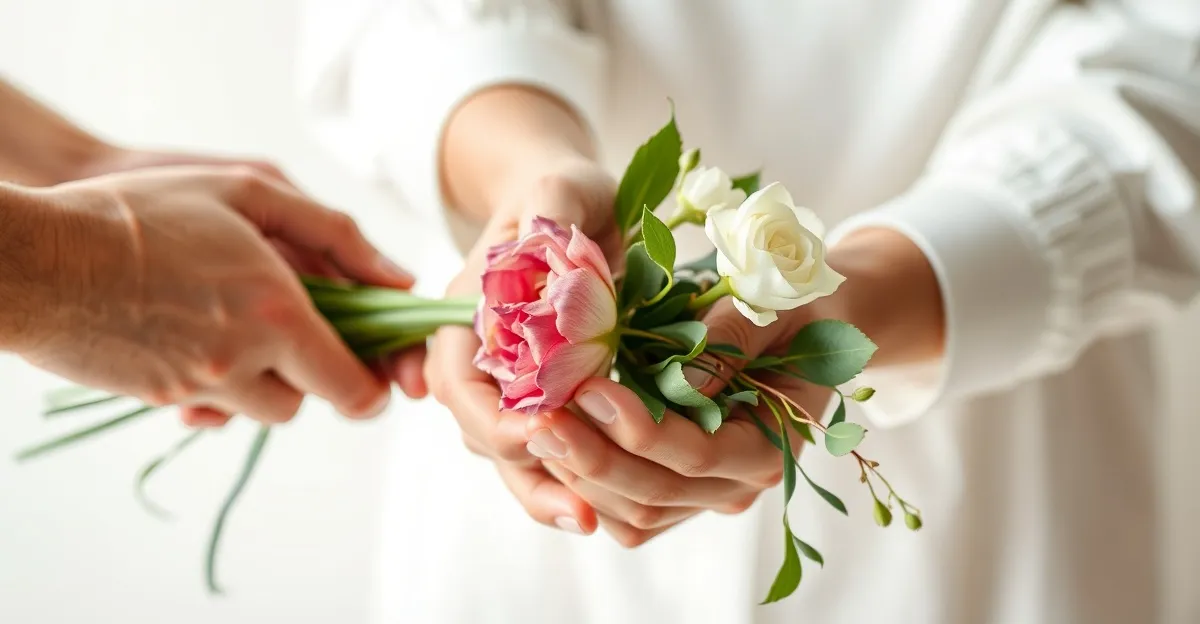
You leave your bouquet on the table near the open villa window. Two hours later, the roses are hanging their heads, the stems are curved, and what was a beautiful arrangement looks like it's given up. This is not an unusual Bali flower experience.
The good news: wilting is not the same as dying. Many flowers that look completely gone in the heat can be fully recovered within one to two hours with the right treatment. Here's what actually works.
Understanding why flowers wilt
Wilting happens when the rate of water loss from petals and leaves exceeds the rate at which the stem can deliver water from the vase. In Bali's heat and humidity, evaporation from petals can happen very fast — faster than even a healthy stem can keep up with.
When you see wilting, the flower is dehydrated at the cellular level. The cells that keep petals and leaves firm (turgid) have lost their water pressure. The structure collapses.
Recovery is possible because the stem can still absorb water — if you help it. The key is removing whatever is blocking water uptake and creating conditions for rapid rehydration.
There are two main reasons stems stop delivering water effectively:
- Air embolism: When a cut stem is exposed to air (even briefly), air bubbles form in the xylem channels that carry water. This blocks uptake.
- Bacterial buildup: Bacteria in vase water colonise the cut end of the stem and physically block the water-uptake channels.
Both problems are solved by the same initial step: re-cutting the stems.
The basic revival method
This works for most cut flowers — roses, carnations, gerberas, chrysanthemums, orchids, and most tropical varieties.
What you need:
- A sharp clean knife or scissors
- A bucket or large container
- Cool (not ice cold) water
- Optionally, flower food or a homemade substitute
Step 1: Fill your container with cool water Use the coolest tap water available in your villa or home. In Bali, tap water after running for 30 seconds is usually 28–30°C — not cold, but cooler than ambient air. If you have ice, add it to bring the temperature down further. The goal is to create a larger temperature differential than the surrounding air.
Step 2: Re-cut the stems underwater This is the critical step. Place the stem end into the water and cut at a sharp 45-degree angle, removing at least 2–3 centimetres. Cutting underwater prevents air from immediately entering the fresh cut.
If you can't cut underwater, at minimum: cut as fast as possible and get the stem into water within five seconds of cutting.
Step 3: Submerge as deeply as possible Place the cut stems as deep into the water as the flowers will allow. If the flowers can handle it — sturdy varieties like sunflowers, chrysanthemums, or roses with outer guard petals intact — you can submerge the entire flower up to its petals in cool water for 20–30 minutes. This speeds rehydration through the petals directly, not just through the stems.
Step 4: Move to the coolest spot available Leave the flowers in the cool water, in the coolest location you have, for one to two hours. If you have air conditioning, put them in the air-conditioned room. If not, a bathroom with stone floors (naturally cooler) or a shaded spot with good airflow works.
Step 5: Observe and reassess After one to two hours, most mildly to moderately wilted flowers will have noticeably perked up. Stems that were curved and limp often straighten as cells rehydrate. Petals that were drooping often lift.
If after two hours there's no improvement, the wilting has progressed too far for recovery. Move on — see the section below on what to do with flowers that can't be revived.
Specific techniques for different flower types
Roses: Re-cut stems, remove two to three outer guard petals (which are often the first to look damaged), and submerge the entire stem in cool water up to the flower head for one to two hours. Roses respond very well to this treatment. After revival, move to air conditioning if possible.
Tropical orchids (Dendrobium): Orchids are actually more tolerant of wilting than they look. Re-cut the stem end, mist the flowers lightly with cool water, and place in a cool shaded spot. Orchids often revive more slowly than roses — give them three to four hours before concluding they can't recover.
Heliconias and birds of paradise: These are hard to wilt significantly — they're very tough. But if they do show stress, fill a deep bucket with cool water, submerge the entire stem (they need deep water access), and leave for several hours. The thick stem structure responds to extended soak time.
Anthuriums: The lacquer-like spathe is actually quite resilient. If it looks dull or slightly limp, wipe the spathe gently with a damp cloth (cool water) to clean it and rehydrate the surface. Then re-cut the stem and place in fresh water.
Lilies: If lily buds are wilting before opening, re-cutting the stems and moving to cool water usually revives them. Open lily blooms are more fragile — once open petals start wilting significantly in heat, they're harder to fully recover.
Frangipani (floating): Frangipani doesn't go in vases, so "revival" is different. Replace floating flowers in your bowl with fresh ones gathered that day. Lightly mist with cool water to refresh petals that have been in warm air.
The ice bath technique
For severely wilted flowers, some florists recommend an ice bath: filling a bucket with very cold water (using ice cubes) and submerging the flowers completely for 15–30 minutes. This is more aggressive than the standard cool water method and works for hardy varieties.
Best candidates for ice bath: roses, sunflowers, chrysanthemums, carnations, gerberas.
Not recommended for: tropical orchids (cold-sensitive), heliconias (cold can affect their thick waxy bracts), frangipani (does not benefit from submersion).
After an ice bath, remove flowers and let them warm slightly in cool water before returning to room temperature. The thermal shock of going from ice water directly to a warm room can be as stressful as the original heat.
The boiling water technique
This sounds counterintuitive, but some florists use briefly boiling the stem end (2–3 cm) in hot water for 10–30 seconds before returning to cool water. The idea is that the heat forces out any air pockets in the stem more effectively than a simple re-cut.
This works for some varieties — roses and chrysanthemums particularly. It's not necessary for most situations and should be used as a last resort rather than a first response.

The team
your florists
weekly subscription · Bali
We write about flowers because we love them. We deliver them because someone should — properly, weekly, across Bali.
— heyflowerPay once for 3, 6, or 12 months, no auto-renewal.
What can't be revived
Not every wilted bouquet can be saved. Signs that flowers have gone past the point of recovery:
- Mushy or translucent petals: Cell walls have broken down — this is irreversible
- Brown or black stem ends: Advanced bacterial rot at the base; even re-cutting may not reach unaffected tissue
- Flowers that have been wilted for more than 24 hours: Extended dehydration causes cell damage that rehydration can't undo
- Flowers with mould at the petal base: The mould is producing compounds that accelerate decay throughout the flower
If only some stems in a bouquet have reached this point, remove them immediately. Decaying flowers in the same vase produce ethylene and bacterial contamination that accelerates the decline of the remaining healthy ones.
What to do with unsalvageable flowers
Even flowers that can't be revived have uses:
- Petals can be scattered on a bath or pool surface (classic Bali spa aesthetic)
- Flowers can be placed in ceremony offerings where the spiritual intention matters more than the perfect appearance
- Petals can be pressed and dried for craft projects
- In Bali, wilted ceremony flowers are traditionally left at a compound corner as an offering to the earth — not wasted, but returned
For more on the broader topic of keeping flowers fresh in Bali's conditions before they wilt, the practical prevention advice in how to keep tropical flowers fresh in 30°C Bali heat is the companion to this guide.
FAQ
How quickly should I act when I notice my flowers wilting? As soon as you notice — every hour of delay in heat makes recovery harder. A flower wilted for two hours in Bali's heat is much more recoverable than one that's been drooping for six hours.
Can I use sparkling water to revive flowers? There's some anecdotal support for this — the carbonation may have mild antibacterial properties and the slightly acidic pH mimics flower food. It won't hurt and may help marginally. Use it if that's what you have and switch to regular water thereafter.
Should I add sugar or aspirin when reviving wilted flowers? Sugar helps if the stem can uptake it (which requires a clean, unblocked stem end after re-cutting). Aspirin (acetylsalicylic acid) acidifies the water and has some antibacterial effect. Either is better than plain water alone for recovery.
How long does the revival process take? For mild wilting in a mildly wilted flower: 30–60 minutes in cool water. For significant wilting: one to two hours. If there's no improvement after two hours, recovery is unlikely.
Is there a way to prevent wilting rather than respond to it? Yes — proper initial placement (out of direct sun and airflow), air-conditioned space, and daily water changes all dramatically reduce wilting risk. See the full prevention guide for details.
Ready to bring fresh flowers to your Bali home or event? Explore our weekly flower subscription and get handpicked blooms delivered to your door every week.



