Purnama full moon ceremonies: flowers used in Bali
Explore the flowers central to Purnama, Bali's monthly full moon ceremony, and understand how Balinese Hindus use blooms to honour the lunar cycle.
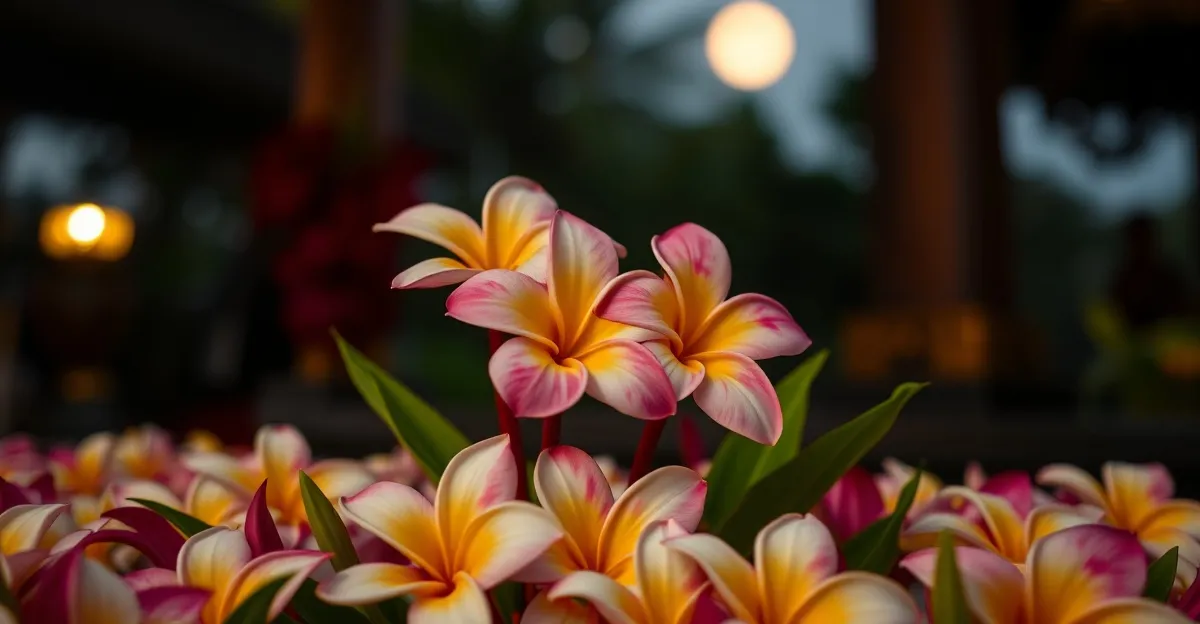
Every full moon, Bali's temples fill with people. The full moon — called Purnama in Balinese and Indonesian — is one of the most consistently observed sacred times in the Balinese Hindu calendar. Unlike Galungan, which happens twice a year, Purnama comes monthly, making it a rhythm that shapes weekly life across the island.
If you live in Bali long enough, you begin to sense Purnama approaching before you consciously note the date — there's a certain accumulation of flower baskets and white and yellow decorations at compound gates that signals its nearness.
What Purnama represents in Balinese Hinduism
In Balinese Hindu understanding, the full moon is a time of heightened spiritual energy — the universe is considered to be in a state of fullness (purna), and the gods are believed to be more accessible. This makes it an ideal time for prayer, for making vows, for seeking healing, and for gratitude rituals.
Purnama falls on the same day as the full moon in the Saka lunar calendar, which is one of several calendars Balinese people use simultaneously alongside the Gregorian and Pawukon systems. Because of this, Purnama is also sometimes called Tilem-Purnama — paired with Tilem (dark moon) as the two peaks of the lunar month.
Many Balinese Hindus observe Purnama with a visit to their local temple (pura) wearing traditional dress — white kebaya for women, white shirt and udeng headband for men. White is significant here, as we'll see in the flowers used.
White flowers and their dominance at Purnama
The colour white carries particular weight during Purnama. White is associated with purity, with Iswara (lord of the eastern direction), and more broadly with the full expression of spiritual light that the full moon represents.
At Purnama ceremonies, the most prominent flowers are:
White frangipani (jepun putih): The most sacred of Bali's flowers, particularly the white variety with the yellow centre. Used in virtually every offering at Purnama. Placed in hair, woven into garlands at shrine entrances, and arranged in the highest-tier offerings.
White chrysanthemum: More affordable and longer-lasting than frangipani in the Bali heat, white chrysanthemum is widely used in the lower tiers of Purnama offerings and in the decorative garlands (tamiang) that adorn shrines.
Kenanga (Cananga odorata): The small yellow-white flowers of the kenanga tree have an intense, sweet scent. Used primarily for their fragrance rather than visual impact — the smell is considered to attract divine attention.
White jasmine (melati putih): Less common than frangipani but used in special full moon offerings, particularly in shrines associated with Dewi Sri (rice goddess) and in water blessings.
The colour palette beyond white
While white dominates, Purnama offerings still follow the directional colour system that governs all Balinese Hindu ritual:
- Red flowers at the southern placement — often red hibiscus or red carnation
- Yellow flowers in the western position — marigold is standard, supplemented with yellow chrysanthemum
- Mixed or dark flowers in the northern position — sometimes dark purple or navy flowers, or green banana leaf sections
The elevated status of white at Purnama means the white flowers often take up more visual space than they would in a typical canang sari. A Purnama banten (offering basket) might feature a spray of white frangipani at its crown, where a daily offering would use just a petal or two.
Temple decorations during Purnama
Beyond the personal offerings carried by devotees, the temples themselves are decorated for Purnama. In major temples like Pura Besakih on the slopes of Gunung Agung, Pura Uluwatu on the south coast cliffs, or the water temples at Pura Ulun Danu Bratan and Pura Tirta Empul, Purnama draws significant congregations.
For these ceremonies, temple priests (pemangku) and the community arrange fresh flowers on the shrine structures. Marigold strings are common as boundary markers and on penjor-style bamboo decorations. White frangipani is placed directly on sacred statues and stones. Cut flower arrangements in clay pots sit at shrine bases.
In coastal areas — Sanur, Jimbaran, Nusa Dua — Purnama ceremonies sometimes incorporate sea ceremonies where offerings and flowers are carried to the water's edge. The juxtaposition of white flowers against the ocean at full moon is a sight that stops you in your tracks.
Melasti ceremony: flowers carried to the sea covers the elaborate coastal ceremony that also involves carrying flowers to the ocean, though with a different ritual purpose.

The team
your florists
weekly subscription · Bali
We write about flowers because we love them. We deliver them because someone should — properly, weekly, across Bali.
— heyflowerPay once for 3, 6, or 12 months, no auto-renewal.
Sourcing flowers for Purnama
For Balinese families, buying flowers for Purnama is a predictable monthly expense. In the days before the full moon, flower stalls at markets stock up on white frangipani and white chrysanthemum specifically. Prices for white varieties may rise 10–20% in the day or two before.
Expat residents and villa owners in Bali who want to honour the Purnama rhythm — or simply want fresh flowers on their home altar — often find that ordering flowers through a delivery service for full moon dates is simpler than navigating the busy market days. Standard arrangements with white flowers, jasmine, and marigold translate naturally into Purnama-appropriate decor even without following the full ceremonial protocol.
What happens on temple days for your subscription delivery explains how flower deliveries in Bali are sometimes affected by major ceremony days, including Purnama.
FAQ
How often does Purnama occur? Purnama occurs once per month, on the full moon date in the Saka lunar calendar. This is approximately every 29–30 days, though the exact Gregorian date shifts each month.
Is there anything different about Purnama in major Balinese months? Yes — certain Purnama are considered especially sacred, particularly Purnama Kedasa (the full moon of the tenth Saka month), which coincides with a major pilgrimage to Pura Besakih. During these elevated Purnama, offerings and flower use are more elaborate.
What should I wear to a temple during Purnama? Wear white or light-coloured traditional Balinese dress: sarong and sash for all, white kebaya for women or a simple white shirt for men. Avoid black. A small canang sari or a bundle of white frangipani is an appropriate contribution.
Can foreigners attend Purnama ceremonies? Most public Purnama ceremonies at temple outer courtyards are open to respectfully dressed visitors. Inner sanctums require being Hindu or having a formal invitation. Ask locally or with your accommodation's staff before attending.
Why do Balinese women place white flowers in their hair at Purnama? White frangipani in the hair is a sign of participation in a ceremony and spiritual readiness. At Purnama, it's also a visual acknowledgement of the lunar energy — the white flower echoing the white light of the full moon.
Ready to bring fresh flowers to your Bali home or event? Explore our weekly flower subscription and get handpicked blooms delivered to your door every week.



