Preserving frangipani color without fading
Frangipani petals fade fast when dried — here's how to lock in those creamy whites, soft pinks, and deep yellows using methods that work in Bali's tropical climate.
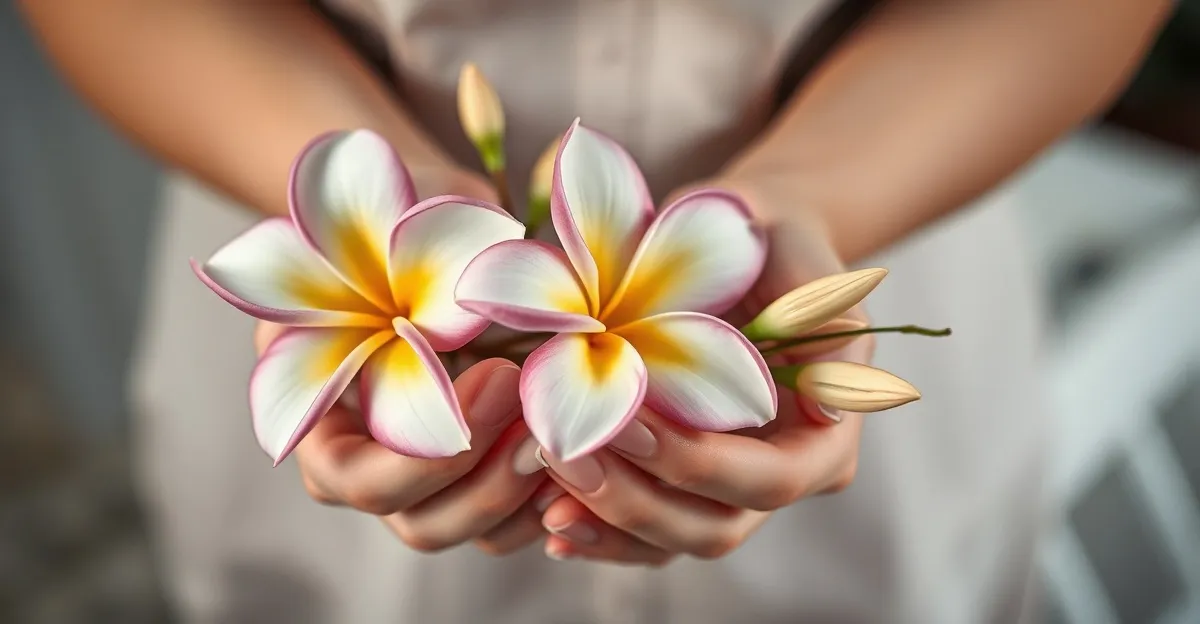
Frangipani is everywhere in Bali — spiraling off temple walls in Ubud, floating in hotel pools in Seminyak, pressed into garlands for ceremonies across the island. It's one of those flowers so tied to the place that visitors spend their whole stay wanting to take a piece of it home with them.
The problem is that frangipani is one of the harder flowers to preserve with its color intact. The same delicate, translucent petals that make it beautiful when fresh become the main challenge when you try to dry or press it. Without the right technique, you end up with pale, papery, brownish shapes that barely resemble the original bloom.
Here's what works — and what doesn't.
Why frangipani color fades so quickly
Frangipani petals are thin, waxy, and high in moisture. When that moisture evaporates during drying, the cell structure collapses and the pigment concentration drops dramatically. What was a rich yellow center or a deep pink edge becomes a ghost of itself.
Additionally, frangipani contains latex compounds that can oxidize when exposed to air during slow drying processes. This oxidation contributes to the brownish tone that many people associate with poorly preserved frangipani.
UV exposure during drying accelerates this further. Placing frangipani in sunlight to dry — which many people do intuitively — actually causes rapid pigment breakdown. The sun that makes the flower glow on the tree is the same sun that strips color from the petal during drying.
The goal of any good frangipani preservation method is to remove moisture quickly while minimizing oxidation and UV exposure.
Silica gel: the most reliable method for color retention
Silica gel drying is the single most effective method for preserving frangipani color. It removes moisture fast enough to beat the oxidation process, and it supports the petal structure as it dries, preventing the collapse that causes translucency.
The process is straightforward. Pour a layer of silica gel crystals (available from hardware and craft stores in Denpasar and Kuta) into an airtight container — a plastic storage box with a lid works perfectly. Place the frangipani blooms face-up on the silica layer, then gently spoon more crystals around and over the petals, being careful not to crush or distort the shape. Seal the container.
Check at three days. Frangipani petals are thin enough that they can over-dry and become extremely brittle if left too long. The sweet spot is typically three to five days in Bali's climate. The petals should feel papery and dry but not yet starting to crack at the edges.
With silica gel, pink varieties like Plumeria rubra 'Siam Red' can hold a deep blush for months. The yellow-centered white varieties retain their gradient rather than fading to uniform cream. The improvement over air-drying is significant.
Pressing for flat applications
If you're planning to use the preserved frangipani in framed art, bookmarks, or resin projects, pressing produces better color results than three-dimensional drying for many varieties.
The key to pressing frangipani with color intact is speed and absorbency. Traditional pressing between book pages works, but the results in Bali's humidity are inconsistent because the paper absorbs moisture too slowly, allowing oxidation time to do its work.
A faster approach: use sheets of silica-based cat litter (the type with fine granules, not clay) as your pressing material. Place frangipani blooms between layers of thin tissue paper, then pack them between thick layers of the granule material inside a heavy book or under a weighted board. The granules wick moisture much faster than paper alone.
Pressing in an A4-sized flower press with silica sachets inside the pages is another good option. Change the absorbent layers after 24 hours to keep moisture moving away from the petals.
For the deepest pink varieties, pressing actually preserves the edge color better than silica gel drying because the petals stay flat rather than curling, which can create color variation as some petal surfaces dry faster than others.
Quick-drying in a food dehydrator
A food dehydrator set at its lowest temperature (around 40–45°C) can dry frangipani in four to eight hours while preserving a surprising amount of color. The constant, gentle airflow removes moisture evenly without the temperature spikes that cause browning.
This method produces flowers that are slightly more wrinkled and less three-dimensionally perfect than silica gel drying, but the color retention is good and the speed is a genuine advantage if you want to process many flowers quickly.
Place blooms in a single layer on dehydrator trays with space between them. Check every hour after the four-hour mark. Remove promptly when fully dry.
Resin embedding: permanent color lock
For frangipani that will be displayed in a fixed, sealed piece — pendants, paperweights, decorative tiles — embedding in clear resin is the ultimate color preservation method. Once the resin cures around the petal, it creates a completely moisture-proof seal. The petal's color is locked in at the moment of embedding, and UV-resistant resin additives can further prevent light fading.
The challenge is that frangipani needs to be very thoroughly dried before resin embedding. Any residual moisture in the petal will create bubbles or cloudiness in the resin. Use silica gel drying first, then allow a further 24 hours in a warm, dry environment before embedding.
Resin craft supplies are available at art stores in Kuta, Seminyak, and Denpasar. Silicone molds in round, oval, and geometric shapes are inexpensive and produce professional-looking results. Epoxy ornaments with pressed Bali flowers covers the full process in detail.

The team
your florists
weekly subscription · Bali
We write about flowers because we love them. We deliver them because someone should — properly, weekly, across Bali.
— heyflowerPay once for 3, 6, or 12 months, no auto-renewal.
What to do with preserved frangipani
The most common uses for color-preserved frangipani in Bali are:
Framed botanical prints: Pressed frangipani arranged on archival paper behind UV-protective glass makes a genuinely beautiful piece of wall art that's unmistakably Balinese in character. Local framing shops in Ubud and Seminyak can do the framing for a reasonable price.
Jewelry and accessories: Small dried or resin-embedded frangipani petals work in pendant settings, hair clips, and earring components. Local craft markets in Ubud have suppliers selling appropriate blanks and settings.
Potpourri and sachets: Even if the visual color has faded slightly, frangipani that's been quickly dried retains fragrance well. Mixed with ylang-ylang and sandalwood essential oil, it makes a sachet that evokes Bali very immediately.
Wedding keepsakes: Brides who receive frangipani in their ceremony garlands or bouquets sometimes press individual blooms as keepsakes. The silica gel method works well for this purpose, and the results can be framed with the wedding date for a meaningful memento.
FAQ
Which frangipani varieties hold their color best when dried? The deeper pink and coral varieties (often sold as Plumeria rubra cultivars) hold color better than white varieties. Yellow-center white frangipani retains its yellow gradient reasonably well with silica gel but fades faster than pinks.
Why did my preserved frangipani turn brown? Usually caused by too-slow drying, which allowed oxidation. Air-drying in humid Bali conditions is the common culprit. Switch to silica gel or a food dehydrator for faster moisture removal.
Can I preserve frangipani from temple offerings? Flowers from completed offerings can be preserved — and this is a lovely way to commemorate a Balinese ceremony or ritual you participated in. Collect flowers from spent offerings that have been left in their proper place, treating them respectfully.
How long does color-preserved frangipani last? Silica gel-dried frangipani stored away from UV light lasts one to two years before noticeable color change. Resin-embedded frangipani with UV-resistant resin can last indefinitely without significant color loss.
Is there any spray or coating I can apply to prevent fading? UV-protective floral spray (available from craft and floral supply shops) can slow fading but won't stop it entirely. Keeping preserved flowers out of direct light is more effective than any coating.
Frangipani doesn't have to become a pale imitation of itself when preserved. With silica gel drying or careful pressing, those soft pinks, golden yellows, and luminous whites can be held for months or years — giving you a piece of Bali that outlasts the trip, or simply letting your garden's blooms live beyond a single week.
Ready to bring fresh flowers to your Bali home or event? Explore our weekly flower subscription and get handpicked blooms delivered to your door every week.



