Pairing Bird of Paradise with Other Blooms: A Florist's Guide
A Bali florist's practical guide to combining bird of paradise with other flowers and foliage for stunning tropical arrangements that hold together beautifully.
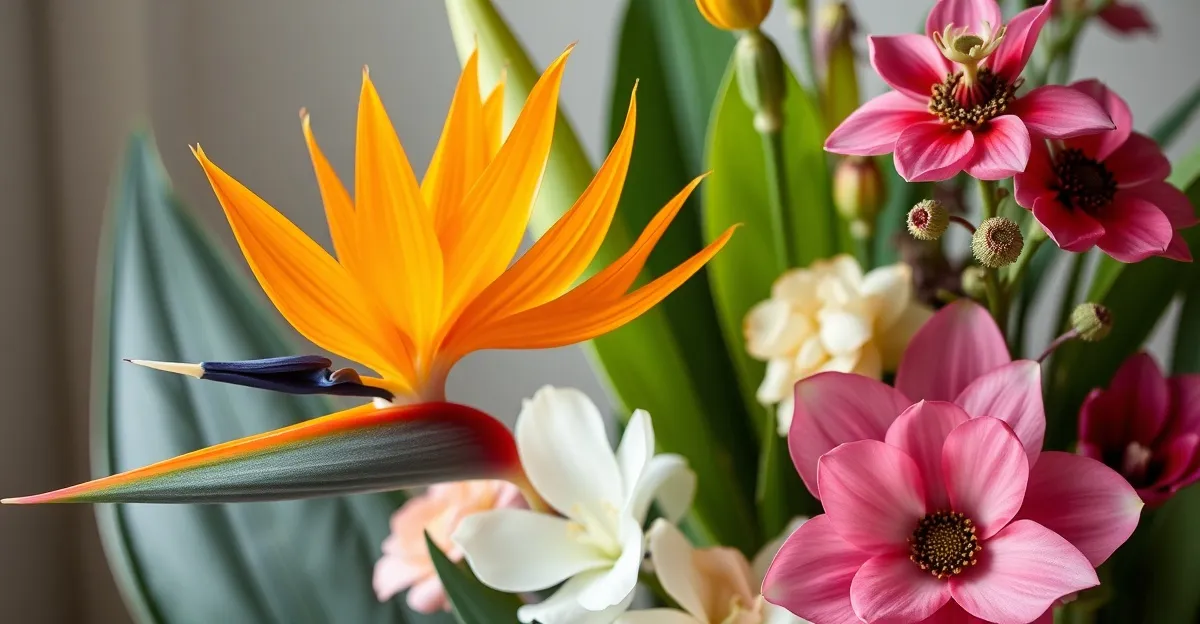
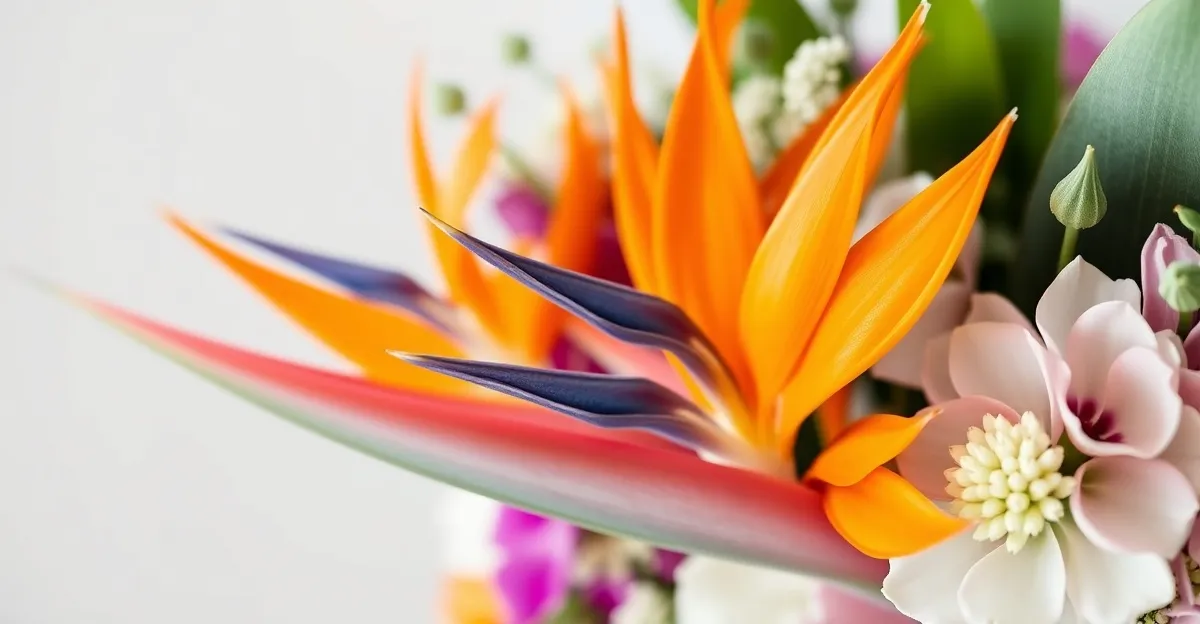
The bird of paradise is one of those flowers that florists both love and approach with respect. Its architectural scale and vivid colour make it an extraordinary statement piece — but those same qualities mean it dominates anything it is placed alongside unless the pairing is considered carefully. Get it right and you have an arrangement of extraordinary visual power. Get it wrong and the bird of paradise simply overwhelms everything else and leaves the arrangement feeling unresolved.
This guide draws from our work in Bali's tropical floristry landscape — arrangements for villas, hotels, weddings, and events across the island — to share what actually works when pairing bird of paradise with other blooms. We will cover colour, scale, texture, and structural logic, because all four matter.
Understanding the Bird of Paradise as a Design Element
Before diving into specific pairings, it helps to understand the bird of paradise's role in an arrangement. It is, almost always, a dominant flower — what floristry calls a focal point or feature bloom. A single stem commands attention and sets the colour and structural key for everything else.
This means you are never really looking for flowers to compete with bird of paradise. You are looking for flowers and foliage that support, frame, and complement it. Think of the bird of paradise as a soloist and everything else as accompaniment.
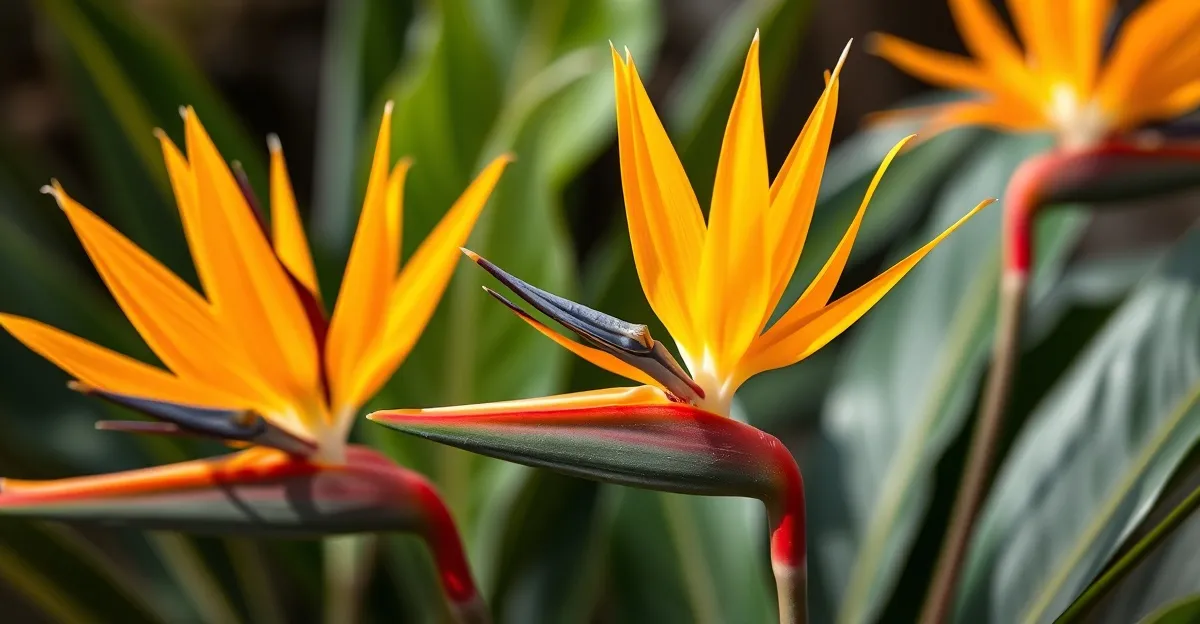
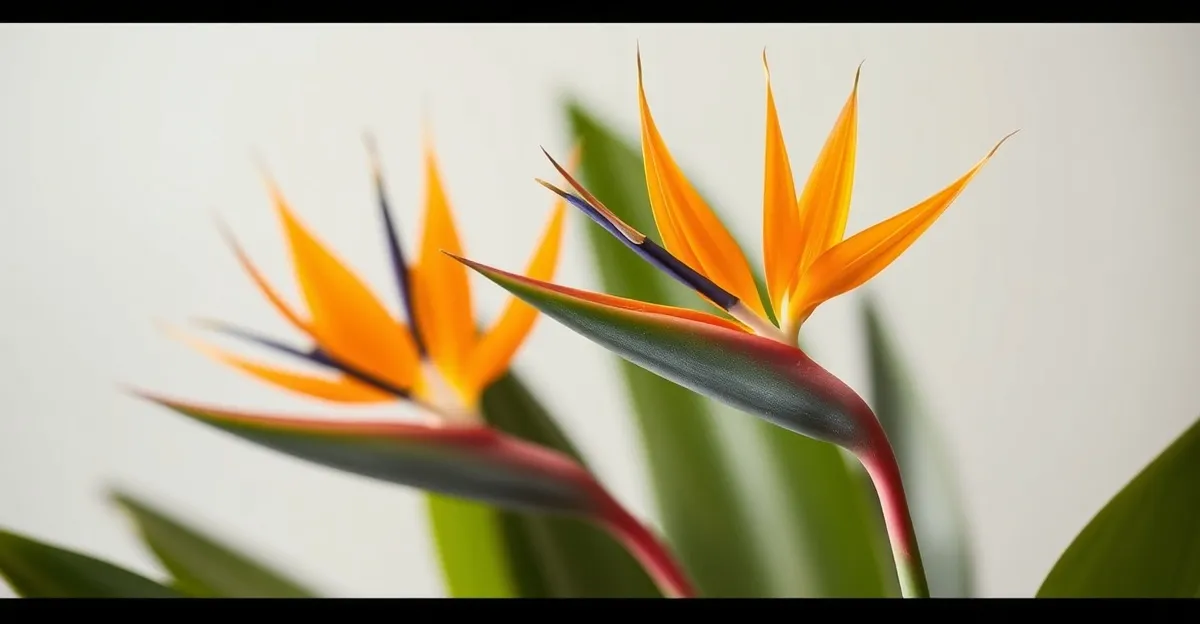
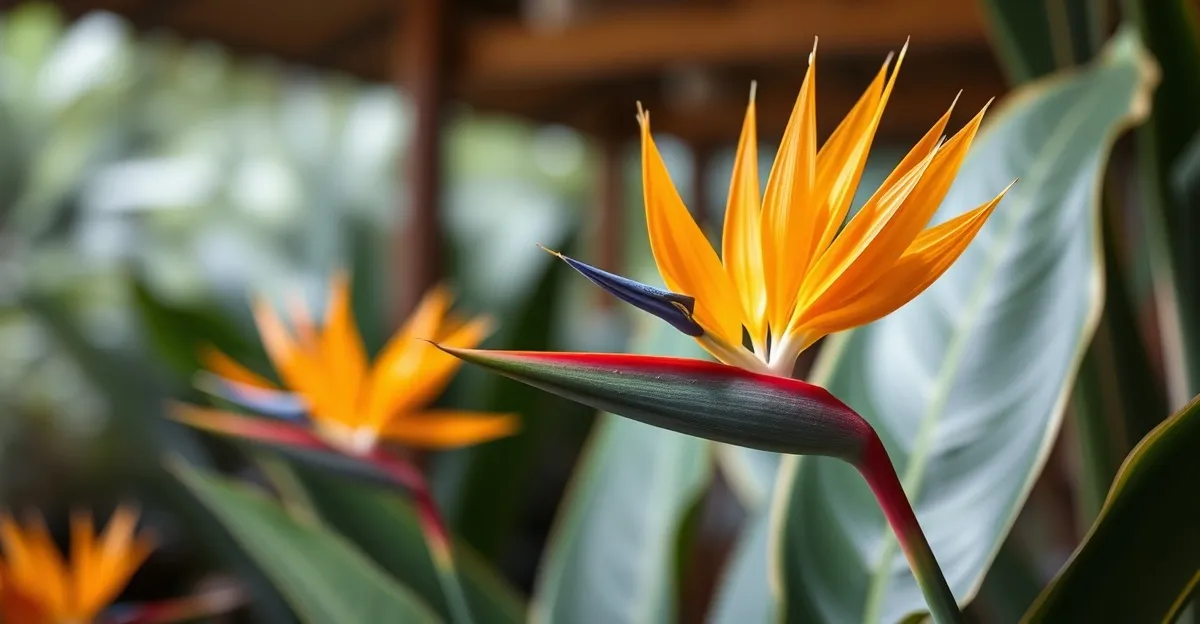
The classic orange and blue Strelitzia reginae brings an intense warm-cool contrast with its own bloom. This means you have already used two strong colour statements within a single flower. Additional colour should either reinforce one of those notes or provide breathing space in neutral or green tones.
Tropical Foliage: The Essential Foundation
In almost every successful bird of paradise arrangement, tropical foliage does the structural and visual heavy lifting. Leaves create mass, depth, texture, and colour contrast without competing for the eye.
Monstera Deliciosa
The large, split leaves of monstera are a natural companion to bird of paradise. Both are architectural in scale and both carry a distinctly tropical sensibility. Monstera's deep green and sculptural form provides a strong backdrop that lets the bird of paradise bloom dominate without looking isolated. The plants coexist in the wild in similar tropical habitats, which gives the pairing an ecological authenticity that is visually satisfying.
Banana Leaf
Cut sections of banana leaf — whether the full fan or the narrower inner leaf — bring large-scale green texture that grounds bird of paradise arrangements. The matte, slightly dusty surface of banana leaf contrasts beautifully with the waxy sheen of bird of paradise blooms. In Bali, banana leaf is readily and inexpensively available from any market, making it a practical choice for large-scale arrangements.
Heliconia Leaves
The long, paddle-shaped leaves of heliconia plants (as distinct from the blooms) offer a clean, elegant backdrop for bird of paradise. Their smooth surface and strong vertical form complement the bird of paradise's own verticality without competing with the bloom.
Bird Nest Fern and Asparagus Fern
For arrangements that need softer texture, fern fronds provide a lighter, more delicate contrast to the bird of paradise's bold structure. Bird nest fern's flat, wavy fronds add volume at lower levels of an arrangement. Asparagus fern adds fine-textured, cloud-like mass that can fill space without adding visual weight.
Flowers That Pair Well with Orange Bird of Paradise
Heliconias
Heliconia blooms — particularly the lobster-claw varieties — are perhaps the most natural pairing for orange bird of paradise because both are bold tropical flowers that share similar scale and visual energy. The warm yellows, oranges, and reds of heliconia blooms reinforce the warmth of bird of paradise. Used together, they create a fully tropical arrangement that feels abundant and exuberant.
The key is to avoid having heliconia and bird of paradise compete directly for the same focal point. Place bird of paradise higher or more central, with heliconia providing supporting drama at a slightly lower level.
Anthuriums
Anthurium blooms — particularly the red, orange, or cream varieties — complement bird of paradise beautifully. The waxy, flat spathe of an anthurium creates a strong but different surface quality from the bird of paradise's petals, providing visual variety without colour conflict. Red anthuriums amplify the warm energy of orange bird of paradise; cream or white anthuriums provide a clean contrast.
Tropical Lilies
Orange or yellow tropical lily varieties (such as Gloriosa superba, the climbing lily sometimes called flame lily) work particularly well alongside bird of paradise, reinforcing the warm colour palette while adding a different floral form. The reflexed petals of the flame lily create movement that plays off the more static architecture of the bird of paradise.
Ginger Flowers
A ginger flower (Etlingera elatior) alongside bird of paradise creates a powerful statement arrangement that is both deeply tropical and unmistakably Balinese. Both are architectural, both are bold, and their colours — red-pink ginger versus orange-blue bird of paradise — create an intense, warm-toned composition. Use these two as joint statement flowers with plenty of green foliage to balance the intensity.
Pairing with White Bird of Paradise (Strelitzia nicolai)
White bird of paradise (Strelitzia nicolai) is a considerably different design proposition. It is larger, more architectural, and monochromatic in effect. It suits pairings that lean into elegance and restraint rather than tropical exuberance.
Deep Green Foliage
White bird of paradise against very dark, near-black or deep green foliage — black ti leaves, dark croton, deep-hued monstera — creates a dramatic, high-contrast composition that is striking in formal or luxury settings. The contrast between the white bloom and dark leaves is bold without being busy.
White Orchids
Pairing white bird of paradise with white phalaenopsis or dendrobium orchids creates a refined, all-white arrangement where the variation comes from form and texture rather than colour. This works particularly well for spa environments, luxury hotel spaces, and white-palette weddings.
Tropical Greens Only
One of the most sophisticated approaches with white bird of paradise is to pair it exclusively with varied tropical greens — letting form, texture, and subtle tonal variation do all the work. This is a deeply considered, design-led arrangement that suits the most pared-back aesthetics.

The team
your florists
weekly subscription · Bali
We write about flowers because we love them. We deliver them because someone should — properly, weekly, across Bali.
— heyflowerPay once for 3, 6, or 12 months, no auto-renewal.
What Does Not Work — And Why
Understanding failed pairings is as useful as understanding successful ones.
Small, delicate flowers at the same height as bird of paradise blooms are almost always overwhelmed. Sweet peas, ranunculus, lisianthus, and similar flowers at the same visual level as a bird of paradise look crowded and out of scale. If you want to use these flowers in the same arrangement, position them significantly lower — in the base of the arrangement where they add texture without competing with the focal bloom.
Multiple competing focal flowers create visual chaos. Bird of paradise with protea, bird of paradise with large sunflower heads, bird of paradise with large dahlia blooms at the same level — these pairings fight each other. Choose one focal flower and let the others support.
Pastel and soft-toned flowers in mixed arrangement with orange bird of paradise often look washed out. The intensity of orange bird of paradise is so strong that soft peach roses, pale lavender lisianthus, or blush peonies can look faded rather than delicate alongside it. For pastels, white bird of paradise is the better choice.
Arrangement Structure and Stem Placement
In practical terms, bird of paradise works best when placed on its own stems, not bunched. Give each stem space — in a vase, three to five stems with room between them allows each bloom to be individually visible.
In large vessel arrangements, bird of paradise is often positioned at the back or top and slightly off-centre, with companion flowers and foliage built forward and to the sides. This creates depth and avoids the flat, stagey quality that comes from lining up all elements at the same height.
For inspiration on how bird of paradise works in larger events and spaces, exploring flower subscriptions for villa rentals in Jimbaran gives a sense of the scale and approach typical for Bali's upscale villa market.
Frequently Asked Questions
What is the best foliage to pair with bird of paradise?
Monstera, banana leaf, and heliconia leaves are the most natural companions. All are tropical in character, large enough to balance the bird of paradise's scale, and deeply green — providing maximum colour contrast.
Can I pair bird of paradise with roses?
Yes, but with care. Deep red or rich orange roses can complement orange bird of paradise when placed at lower levels of an arrangement. Avoid pale or pastel roses which can appear washed out next to the intensity of orange bird of paradise.
How many bird of paradise stems look right in a mixed arrangement?
For a standard table arrangement, one to three stems is typically ideal. The scale of bird of paradise means a single stem can anchor a large arrangement. More than five stems in a non-large vessel arrangement can feel overwhelming.
Does white bird of paradise pair differently from orange?
Yes. White bird of paradise (Strelitzia nicolai) suits pairings that lean into elegance and restraint — white orchids, deep green foliage, other white architectural flowers. It does not work as well in the exuberant tropical palette that suits orange bird of paradise so naturally.
Can bird of paradise be used in low, wide arrangements like table centrepieces?
The standard bird of paradise (S. reginae) is typically a tall-arrangement flower — the stems are long and the bloom sits high. For lower arrangements, the flower can be cut shorter, but the stem is its setting and shortening it loses impact. Low-wide centrepieces work better with the bird of paradise used as an accent element at a slightly raised level rather than as the primary bloom.
At heyflower.co, our arrangements are designed by florists who understand Bali's tropical palette deeply. We pair bird of paradise, ginger flowers, heliconias, and local foliage in ways that feel genuinely of the island. Visit our site and explore our subscription options for regular arrangements delivered to your door, beautifully composed every time.
More on Bird of paradise