Pagerwesi day and its floral significance in Bali
Pagerwesi is one of Bali's most important Hindu holy days. Learn what the name means, which flowers are used in offerings, and how to respectfully engage with the ceremonies.
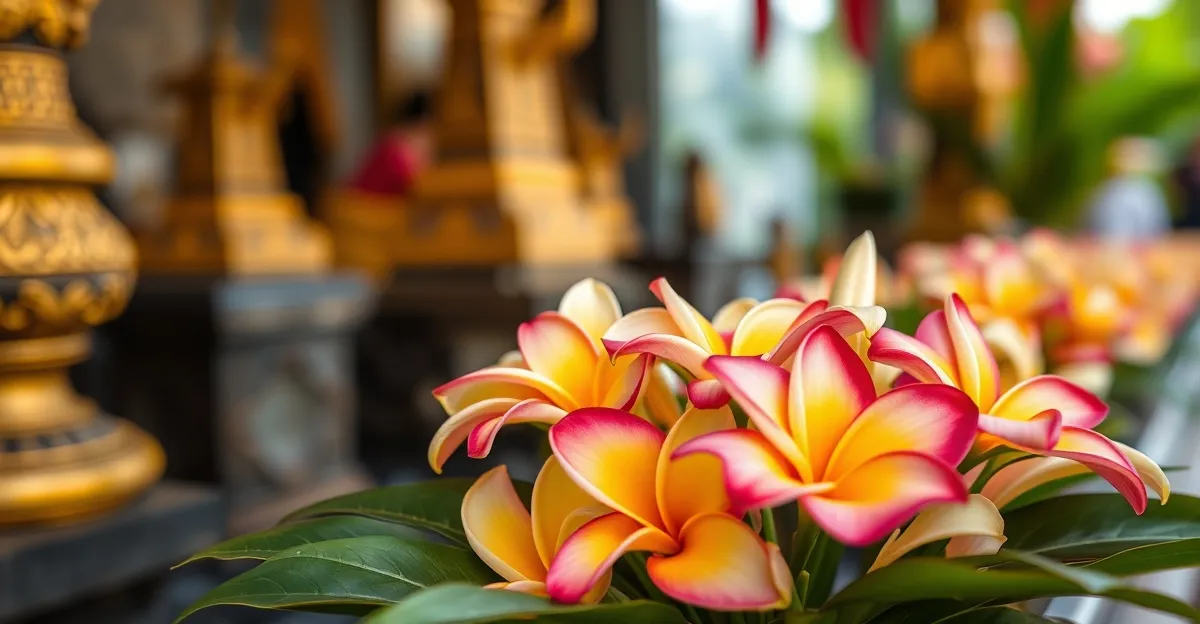
Every 210 days in the Balinese Pawukon calendar, Pagerwesi falls on a Wednesday (Buda) in the week of Sinta — the first week of the 30-week cycle. The name comes from the Old Javanese words "pager" (fence or fortification) and "wesi" (iron). Pagerwesi is the day of the iron fence — a day for strengthening spiritual defences, fortifying the soul against negative forces, and honouring Sanghyang Pramesti Guru, the deity of knowledge and cosmic order.
It's one of Bali's four most sacred days, alongside Galungan, Kuningan, and Saraswati. And like all major Balinese holy days, flowers are central to how it's observed.
The spiritual meaning behind Pagerwesi
Where Galungan celebrates the victory of dharma (cosmic order) over adharma (chaos), Pagerwesi is more personal. It's about the individual soul reinforcing its own spiritual strength — building the "iron fence" within. Prayers are directed inward, to one's own spiritual fortification and protection.
Households and temples perform elaborate offerings. The scale of ceremony varies: some families hold simple home ceremonies with a pedanda (high priest) officiating; larger community temples may have multi-day celebrations. In areas like Besakih, Pura Ulun Danu Bratan, and significant community temples (pura desa) across Bali, Pagerwesi is marked with particular attention.
Flowers in Pagerwesi offerings
The offering structures used on Pagerwesi are among the most layered in the Balinese repertoire. Because the day relates to spiritual fortification, the offerings are typically robust — many layers, many components, and many flowers.
Yellow marigolds (gumitir): The workhorse of Balinese ceremony flowers. Marigolds appear in virtually every offering component — canang sari trays, the base of large penek offerings, strewn petals at temple entrance ways. On a major holy day like Pagerwesi, thousands of marigold flowers may be used across a single household compound.
White frangipani (jepun putih): Associated with divinity and purity. White frangipani appears in offerings placed at the highest shrines — the padmasana (lotus throne shrine) and any family shrine representing the ancestor deities. The scent of frangipani is understood to attract divine presence.
Red hibiscus (pucuk bang): Present in offerings associated with the south direction and Brahma. On Pagerwesi, where the focus is on comprehensive spiritual protection across all directions, red hibiscus appears in directional offerings.
Kemoning (white champak/cempaka): Used in high offerings and as incense accompaniment. The champak flower appears throughout Pagerwesi ceremony arrangements, particularly in shrines dedicated to the higher deities.
Sandat (gardenia): The intensely fragrant white gardenia, native to Bali, appears in offerings where scent is understood to carry prayers. Sandat is harder to source commercially but is grown in family gardens across highland Bali, particularly in Tabanan and the Kintamani area.
Mixed colour offerings by direction: Balinese ceremony offerings are often colour-coded by the cardinal directions — white (east), red (south), yellow (west), black or dark-toned (north), and multi-colour for the centre. On Pagerwesi, complete directional offering sets are made, so flowers of all four primary ceremony colours are needed.
How families prepare flowers for Pagerwesi
In the days before Pagerwesi, the women of Balinese households (traditionally the ones who prepare offerings, though this varies across communities) visit the flower market to stock up. Pasar Kumbasari in Denpasar, Pasar Ubud, and local village markets see sharp increases in marigold and frangipani sales in the lead-up to Pagerwesi.
Many families grow some of their own ceremony flowers: marigolds in the yard, frangipani trees at the compound entrance, hibiscus hedges along the walls. But for a major holy day, purchased flowers supplement what the garden provides.
The offering-making itself is a communal activity. Neighbours, aunts, and banjar (community group) members often gather the day before to make offerings together — a ritual in itself.
Pagerwesi and temple ceremonies
On Pagerwesi, family temples (sanggah or merajan), community temples (pura desa or pura puseh), and any temple celebrating its own odalan (temple anniversary) on this day will have full ceremony. These ceremonies are often partially visible to respectful visitors, though the inner sanctum ceremonies are for worshippers.
If you're visiting Bali around a Pagerwesi day, you'll likely encounter processions, hear gamelan music from temple courtyards, and see roads temporarily closed for ceremonial purposes. This is normal. The ceremonies are not performances — they're working religious practice.
Flower markets near major temples will be particularly busy. If you need flowers for personal or event use on days around Pagerwesi, order a few days in advance. For how deliveries work around temple days in general, temple-day flower deliveries: how we plan around ceremonies explains the logistics.

The team
your florists
weekly subscription · Bali
We write about flowers because we love them. We deliver them because someone should — properly, weekly, across Bali.
— heyflowerPay once for 3, 6, or 12 months, no auto-renewal.
Can non-Balinese participate or acknowledge Pagerwesi?
Non-Balinese people are not expected to observe Pagerwesi, but acknowledging it respectfully is always appreciated by Balinese neighbours and colleagues. Simple gestures:
- Giving space to ceremony preparations happening in the street or at nearby temples
- Avoiding loud events or parties in the evening if your home is adjacent to a family compound in ceremony
- If invited by Balinese friends to observe or participate in part of a ceremony, accepting with genuine curiosity and appropriate dress (sarong and sash, which can be borrowed at most temples)
Bringing flowers as a gift to Balinese friends around Pagerwesi is a warm gesture. Lean toward ceremony-adjacent colours (white, yellow, soft red) and include some marigolds or frangipani if possible — flowers that resonate with the day's meaning.
When is the next Pagerwesi?
Pagerwesi falls every 210 days in the Pawukon cycle. Unlike the Gregorian calendar, it doesn't fall on the same date each year. Bali-specific ceremony calendar apps (several are available in the Indonesian App Store and Google Play) can tell you the next Pagerwesi date from your current location. Local Balinese friends or hotel concierge staff can also advise.
The day is never a public holiday in Indonesia's national calendar, but it's observed deeply at the household and community level across Bali. You'll know it's happening by the smell of incense, the sound of gamelan, and streets lined with tall penjor (bamboo poles with hanging offerings).
FAQ
Is Pagerwesi the same as Galungan? No. Galungan is the celebration of dharma's victory, observed every 210 days with festive penjor decorations along roads. Pagerwesi comes six weeks after Galungan, within the same Pawukon cycle, and has a more introspective, protective spiritual focus.
What flowers should I buy for Pagerwesi if I want to make a small offering? Yellow marigolds and white frangipani are the core of almost any Balinese ceremony offering and will always be appropriate. Add red hibiscus and white champak if you can find them.
Is Pagerwesi a public holiday? No, not at the national level. Schools and businesses may close locally in areas with high Balinese Hindu populations, but it's not a national holiday.
How do I find out when Pagerwesi falls? Bali ceremony calendar apps or websites, local Balinese friends, or hotel staff can tell you. The date rotates in the 210-day Pawukon cycle.
Can I visit a temple on Pagerwesi? Yes, usually. Respectful visitors are welcome at many Balinese temples during ceremony. Wear a sarong and sash, follow instructions from temple staff, and don't enter inner areas unless invited. On major ceremony days, some temples may request that visitors not enter to preserve the ceremonial space.
Ready to bring fresh flowers to your Bali home or event? Explore our weekly flower subscription and get handpicked blooms delivered to your door every week.



