Kamboja Jepang and other plumeria varieties in Bali
Explore the plumeria varieties growing across Bali, from common frangipani to rare Kamboja Jepang, and how each is used in daily life and ceremony.
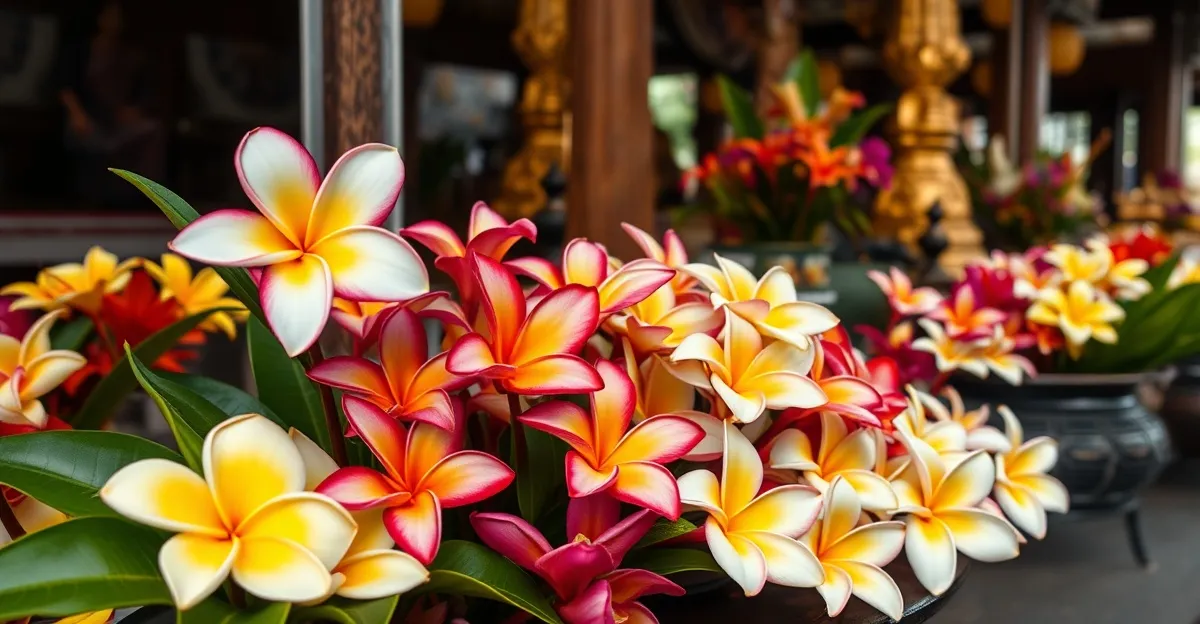
Ask anyone who's spent time in Bali what flower they most associate with the island, and nine times out of ten the answer is frangipani — jepun in Balinese, kamboja in Indonesian. It carpets hotel pools, appears in offerings each morning, and has been photographed so many times it's become almost a cliché. But within that single name lie dozens of distinct varieties, each with its own character, scent, and local significance. Understanding the difference between them takes you deeper into how Bali actually works.
The basics: what are plumeria and why does Bali love them?
Plumeria are tropical trees in the family Apocynaceae, originating from Mexico and Central America. They arrived in Southeast Asia through Portuguese and Dutch traders in the 16th and 17th centuries, and they adapted so quickly to the tropical climate that it's hard now to imagine the landscape without them. They thrive in heat and are extraordinarily drought-tolerant once established — perfect for Bali's dry season, when other plants wilt.
Balinese Hinduism took to plumeria rapidly. The flowers' persistent fragrance, their longevity after picking, and their availability across the island made them ideal for daily canang sari offerings. The white plumeria (Plumeria alba) is the variety most associated with ceremony, in part because white is connected to Iswara, deity of the eastern direction, in the Balinese Hindu cosmological colour system.
The trees require almost no care — they grow in rocky soil, handle full tropical sun, and actually prefer the stressful conditions that force flowering. Walk through any village in Karangasem or Klungkung and you'll find enormous old specimens, their trunks thick as a person's torso, towering over family compounds and temple walls.
White and yellow: the two ceremony workhorses
The most common plumeria in Bali are the white-and-yellow flowering types, most often Plumeria obtusa (evergreen frangipani, with glossy rounded leaves and slightly sweeter scent) and Plumeria pudica (bridal bouquet frangipani, with distinctive spatula-shaped leaves and pure white flowers). Both are considered sacred and appear in every pasar bunga on the island.
The yellow centre of white plumeria blooms is important symbolically: white with yellow is considered a complete colour pairing in Balinese ritual contexts, representing purity and the divine light together. This is why these flowers never quite go out of ritual fashion regardless of how many other varieties become available.
Scent profiles differ more than you might expect. White Plumeria obtusa has a classic warm, creamy, slightly woody tropical fragrance — what most people think of when they think "frangipani". Yellow-dominant varieties (sometimes called jepun kuning) tend toward fruitier, brighter notes with less of the waxy depth.
Kamboja Jepang: the ornamental specialist
Kamboja Jepang is where Balinese plumeria culture gets interesting. The name translates loosely as "Japanese frangipani," though these are not Japanese at all — they're mostly Plumeria rubra hybrids and cultivars, many of which were developed in Hawaii, Thailand, and Florida before finding their way to Indonesia via collectors and plant traders.
Kamboja Jepang are distinguished from standard plumeria by their more elaborate flowers: multicoloured petals with dramatic gradients, deep reds, strong pinks, bold oranges, and patterns that standard white or yellow plumeria never produce. Some cultivars have petals that are tricoloured — red at the tips fading through pink to white at the centre, for example. The leaves tend to be larger and more dramatic too.
In Bali, Kamboja Jepang went from a collector's curiosity to a mainstream garden plant remarkably quickly. The highest concentrations are in the Bukit peninsula — particularly around Jimbaran and Uluwatu — where wealthy villa owners discovered that these showy plants grew happily in the limestone-rich, dry conditions there. Nurseries in Sanur and near Tohpati began stocking them seriously in the mid-2000s, and they're now common in garden centres across southern Bali.
They're less common in offering contexts than the white/yellow varieties. Partly this is tradition — the ritual system was built around what was available before Kamboja Jepang arrived. Partly it's practicality: the more elaborate hybrid varieties are more expensive per bloom. For home arrangements and bouquets, though, Kamboja Jepang are exceptional: their colours, their size, and their longevity (cut flowers last 2-3 days in water in Bali's heat) make them some of the most striking tropical blooms available.
Red and pink plumeria in the Bali market
Red and deep-pink plumeria (Plumeria rubra and its cultivars) occupy a different cultural niche than white. They're less commonly used in daily offerings and more associated with decorative uses: garlands for welcome ceremonies at hotels and villas, hair flowers for Balinese dance performances, and personal adornment. The stronger, more complex fragrance of many red cultivars also makes them popular for scented products — many Balinese essential oil producers seek out specific red plumeria varieties.
At the Sukawati art market and similar venues, you'll find dried red and pink plumeria petals sold as decorative items for tourists. But working florists in Seminyak and Canggu more often use them fresh, incorporating them into arrangements alongside heliconia, ginger flower, and bird of paradise for that distinctly Bali tropical look. For ideas on how these tropical flowers can be paired, see pairing ginger flower with other blooms.
How plumeria is sourced and sold in Bali
Most plumeria flowers sold at markets in Bali come from small-scale farmers in regencies like Tabanan, Gianyar, and Buleleng, where the trees grow along the edges of agricultural land and are harvested daily. Flowers are picked in the morning before the heat peaks — in Bali's 28-32°C typical daytime temperatures, flowers picked by 7am retain their fragrance and structure for much longer than those picked at noon.
The wholesale flower market at Pasar Badung in Denpasar is the central distribution point. Traders arrive from around 3am and the main trading period is over by 8am. Flowers are sold by the kilogram or by the hundred-piece bundle. White plumeria for daily offerings is priced accessibly — a bundle sufficient for a week's offerings might cost Rp 5,000-15,000. Kamboja Jepang hybrid varieties command significantly higher prices, particularly for dramatic multicoloured cultivars, which can go for Rp 3,000-8,000 per bloom retail.
For flower subscriptions and arranged deliveries, heyflower.co sources plumeria directly from growers and prepares them same-morning so they arrive at their freshest.

The team
your florists
weekly subscription · Bali
We write about flowers because we love them. We deliver them because someone should — properly, weekly, across Bali.
— heyflowerPay once for 3, 6, or 12 months, no auto-renewal.
Caring for plumeria in Bali's climate
Despite their reputation for toughness, cut plumeria need a little attention to last their best in Bali's heat. The key issue is the milky latex sap — sealing the cut end briefly in a flame for a second or two stops the sap from blocking the stem and interfering with water uptake. After that, place in cool water and keep out of direct afternoon sun. In an air-conditioned room, cut plumeria can look good for two to three days. In an open-air bale or unventilated room, expect around 24-36 hours of good display time.
Potted plumeria grown in Bali actually benefit from the dry season stress — it forces them to focus energy into flower production rather than leaf growth. If you're growing your own, cutting back water from August to October, then resuming watering when the rains return, typically produces a spectacular flush of flowers.
Frequently asked questions
Why is white plumeria more common in offerings than red? The Balinese ritual system assigns directional and divine significance to flower colours based on tradition that predates most hybrid varieties. White plumeria is linked to Iswara (east) in the offering colour scheme, making it a natural fit for daily canang sari where eastern direction flowers are required.
Are Kamboja Jepang and regular frangipani the same species? They're from the same genus (Plumeria) and many Kamboja Jepang are cultivars of Plumeria rubra, while common white temple frangipani is typically Plumeria obtusa or Plumeria alba. Different species with different appearances but the same basic growing requirements.
Can I take plumeria cuttings out of Bali? Indonesia has plant export regulations, and many countries have strict import rules for plant material. Check both Indonesian regulations and your home country's biosecurity rules before attempting to bring cuttings home. The safest approach is to source from licensed nurseries if you want to propagate plumeria at home.
Do plumeria flowers have different fragrance at different times of day? Yes. The fragrance is typically most intense in the early morning and again in the late afternoon as temperatures cool slightly. Midday heat in Bali disperses the volatile fragrance compounds more quickly, so flowers smell strongest at the cooler bookends of the day.
Which plumeria variety lasts longest in a vase? Plumeria obtusa (evergreen frangipani with rounded, glossy leaves) generally has slightly better vase life than Plumeria rubra cultivars. Among hybrid Kamboja Jepang, vase life varies significantly by cultivar. Searing the cut end of the stem briefly before placing in water extends life for all varieties.
Ready to bring fresh flowers to your Bali home or event? Explore our weekly flower subscription and get handpicked blooms delivered to your door every week.



