How to layer a mixed bouquet like a florist
Professional florists build bouquets in layers — structure, focal, filler, texture. Learn the method that transforms loose stems into a cohesive arrangement.
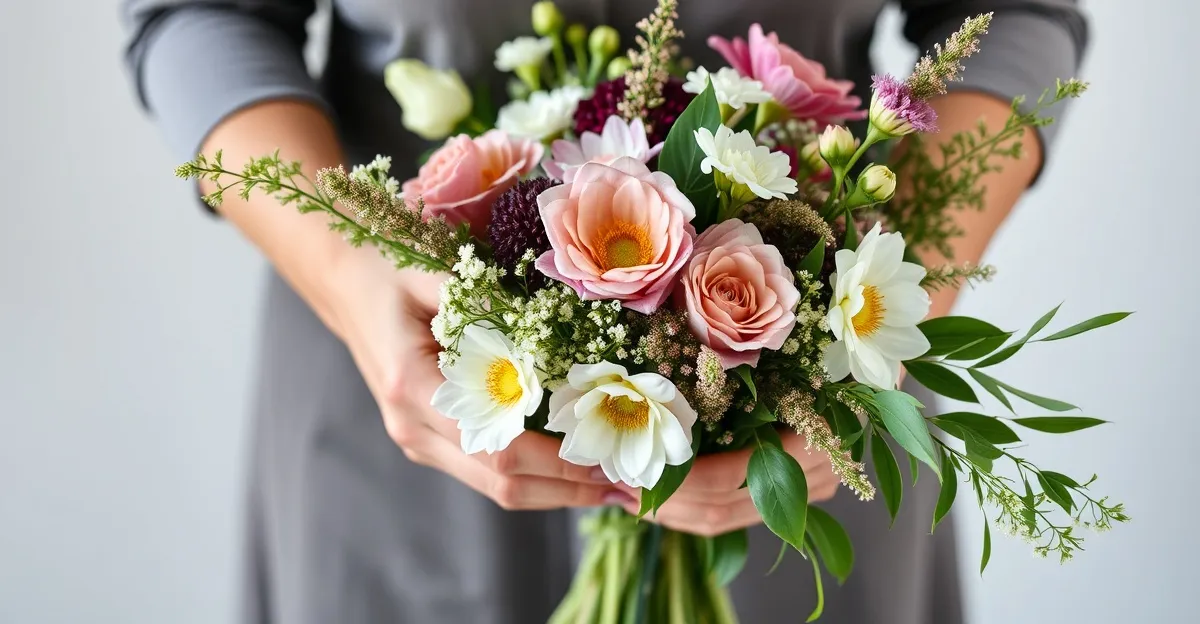
A florist's bouquet looks different from a bunch of flowers shoved into a vase because it was constructed in a specific sequence, with each stem placed for a reason. The result is an arrangement that holds its shape, uses each flower to its best advantage, and looks intentional from every angle.
The process isn't complicated, but it does require understanding the layering logic. Once you grasp it, you can turn any collection of stems — whether from a market in Denpasar, a delivered subscription box, or your own garden in Ubud — into something that looks professionally made.
The four layers of a mixed arrangement
Professional florists think about arrangements in terms of categories that go in in a specific order:
1. Structure flowers: The tallest, most visually dominant stems that establish the height and silhouette of the bouquet. Heliconias, bird of paradise, tall roses, and long-stemmed lilies in Bali contexts. These go in first.
2. Focal flowers: The "hero" blooms — the flowers with the most visual weight that the eye is drawn to. In a mixed Bali arrangement, this might be open roses, large anthuriums, tropical gingers, or garden chrysanthemums. These go in after structure is established.
3. Filler flowers: Smaller blooms that fill in gaps between focal flowers and add density. Baby's breath, small daisies, statice, small tropical clusters. These soften the arrangement and prevent it looking sparse.
4. Texture elements: Foliage, seed heads, unusual textures — monstera leaves, palm fronds, eucalyptus, ferns, grass stems, tropical seed pods. These add visual interest and depth between and around the flowers.
Before you start: prepare all your stems
Everything should be prepped before you begin arranging. Strip foliage from the lower two-thirds of every stem — leaves sitting below the waterline in the vase create bacterial problems, and leaves cluttering the stems make arranging harder.
Cut all stems at a 45-degree angle and keep them in water until you're ready to place each one. In Bali's heat, stems out of water for more than a minute or two begin to close their capillaries.
Have your vase ready with clean water. A vase that's about half as tall as your intended finished arrangement height is a good starting point — this gives the stems enough support without hiding too much of them.
Step 1: establish your structure
Place your tallest, most architectural stems first. For a Bali mixed bouquet, this might be one or two heliconias, a bird of paradise stem, or a tall stem of tropical foliage. Place them in the vase and establish the height you want. Step back and look — this is the skeleton of your arrangement.
The structure layer doesn't need to be dense. One or two stems that establish the topmost point and suggest the overall silhouette is enough. Everything else builds down and around from here.
Step 2: add focal flowers
Now add your focal flowers — roses, anthuriums, lilies, or whatever the premium blooms in your mix are. Place these at slightly different heights to create depth rather than having all focal flowers at the same level.
A common florist technique: imagine the front of the bouquet as a crescent or gentle slope, with flowers at the front sitting slightly lower than those at the back. This creates the cascading, full look that makes a bouquet look professional rather than flat.
Rotate the vase constantly as you work. A bouquet that looks perfect from the front but flat from the sides was arranged with too narrow a focus. Work in a circle — one stem from the front angle, one from the left side, one from the back, one from the right.
Place focal flowers with some space between them initially — you'll fill gaps in the next steps.
Step 3: add filler flowers
Filler blooms go between and around your focal flowers. They should be shorter than the focal layer — they're filling visual gaps, not competing for attention.
In Bali, available filler flowers depend on the season and what's come down from the highlands. Baby's breath (gypsophila) is a classic option available from most Denpasar market suppliers. Small spray chrysanthemums, statice, or delicate tropical clusters all work well as filler.
Look for gaps — places where you can see through the arrangement to the vase or where focal flowers seem isolated. Fill these thoughtfully. The arrangement should start to feel dense without being crowded.
Step 4: add texture elements
Last, add foliage and textural elements. These go in at the lowest level or tucked horizontally between other stems. A few monstera leaves with their dramatic shape, some fern fronds, tropical grass, or eucalyptus branches can completely change the feeling of an arrangement.
In Bali, the range of available foliage is extraordinary. Markets in Gianyar and Ubud often have tropical foliage not available in temperate countries. Exotic textures — rattan vine ends, dried palm fronds, unusual tropical seed pods — can all be incorporated and give arrangements a distinctly Balinese character.
Foliage also hides mechanics — it covers visible stem stems, tape, or foam that might be visible in the vase.

The team
your florists
weekly subscription · Bali
We write about flowers because we love them. We deliver them because someone should — properly, weekly, across Bali.
— heyflowerPay once for 3, 6, or 12 months, no auto-renewal.
The finishing check
Once you have all four layers in place, step back and look at the arrangement from three to four feet away, from multiple angles.
Ask yourself: Is there a clear "face" or most beautiful angle? Is the height and width in proportion to the vase? Are there any obvious gaps? Does it look balanced left-to-right and front-to-back?
Minor adjustments at this point make a significant difference. Pulling a stem slightly higher, tucking a foliage piece to hide a bare area, or removing a flower that's fighting with its neighbors for visual attention all take seconds but elevate the result.
A note on hand-tied bouquets
The above is a vase-arrangement method. Hand-tied bouquets (where the stems are bound together to hold the shape without a vase) follow similar layering logic but are constructed in the hand. Start with a central focal flower, and spiral additional stems around it, rotating the bunch in your hand as you add each stem.
The spiral stem technique is what gives hand-tied bouquets their characteristic cascading shape and allows the stems to all sit parallel when placed in a vase. It takes practice, but the principle of focal-filler-texture layers still applies. See our guide on hand-tied vs. wrapped bouquets: which to choose for more on these two approaches.
FAQ
How many stems does a good mixed bouquet need? A full, generous-looking arrangement for a dining table or sideboard typically uses 15–25 stems, mixing three or four flower varieties with two or three types of foliage. A smaller arrangement for a bedside table might use 7–10 stems.
Should focal flowers always be the most expensive? Not necessarily — focal flowers are defined by visual weight, not price. A large tropical leaf might be cheaper than roses but could serve as a focal element in the right arrangement. Let visual impact guide decisions, not cost per stem.
How do I keep a mixed arrangement balanced when some flowers open faster than others? Remove flowers that have opened and started to decline rather than leaving them in the arrangement. An arrangement with some fresh and some wilted flowers looks worse than a slightly sparser arrangement with everything fresh.
Can I add flowers to an existing arrangement as some stems die? Absolutely. This is how florists extend the life of arrangements in hotels and restaurants. As stems die, remove them, recut the remaining stems, and add fresh ones. The arrangement evolves over its life.
What if I don't have all four layers? Work with what you have. Even just structure and focal flowers can make a beautiful arrangement. Two flower types plus one foliage type is enough for a cohesive result. The layering system is a guide, not a rigid requirement.
Fresh mixed bouquets delivered to your door
Practice makes the layering process fast and intuitive. Explore our weekly flower subscription and get handpicked Bali blooms delivered to your door every week — a new mix to arrange each time.



