Hand-tied vs. wrapped bouquets: which to choose
Hand-tied and wrapped bouquets serve different purposes. Learn the key differences and when to choose each style for gifting or home use in Bali.
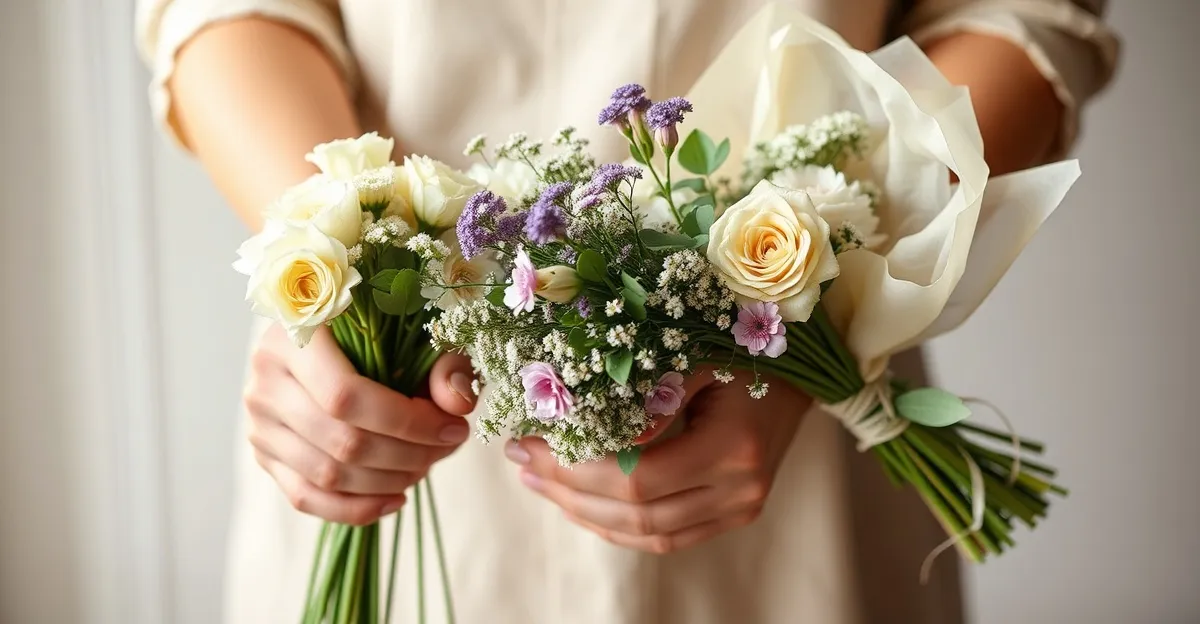
When you order flowers from a florist in Bali — whether it's a boutique studio in Seminyak or a market vendor in Denpasar — you'll often encounter two main bouquet styles: hand-tied and wrapped. Most customers don't think much about which to ask for, defaulting to whatever the florist suggests. But the two styles have genuinely different properties, aesthetics, and practical uses. Knowing which fits your situation will get you better results.
What is a hand-tied bouquet?
A hand-tied bouquet is constructed with the stems bound together at a single binding point, creating a spiral arrangement where the stems naturally splay outward at the bottom. The technique involves adding each stem at an angle around a central stem, rotating the bunch as you build it, so all stems wrap around each other in the same direction.
The result is an arrangement that holds its three-dimensional shape independently — you can set a hand-tied bouquet flat on a table and it will stay in form. Place it in a vase and the natural spiral of the stems keeps everything positioned correctly without needing to re-arrange individual stems.
Hand-tied bouquets are the signature style of boutique and artisan florists. They take more skill to make well — the spiral technique requires practice — and they generally cost more than a comparably sized wrapped bouquet because of the labor involved.
What is a wrapped bouquet?
A wrapped bouquet groups stems together in a parallel or loosely gathered form and wraps them together in paper, cellophane, or fabric. The stems may be trimmed to similar lengths but aren't necessarily spiraled or bound at a specific point the way a hand-tied bouquet is.
When unwrapped and placed in a vase, a wrapped bouquet requires the recipient to arrange the stems themselves. The flowers may need to be sorted into a pleasing arrangement — the florist has grouped them but hasn't given them an inherent structural order.
Wrapped bouquets are the standard format at most market vendors and many florists across Bali, and they're generally more affordable for the same flower quantity. The wrapping can be simple or highly decorative — some florists put enormous craft into the paper layers, ribbons, and presentation, even if the stem structure underneath is less technically precise than a hand-tied arrangement.
Visual differences
A hand-tied bouquet has a characteristic dome shape — the blooms cluster together and the whole arrangement has a rounded, finished silhouette even before it's in a vase. The stem bundle below the binding point is often exposed as part of the presentation, tied neatly with twine or ribbon.
A wrapped bouquet's shape is determined more by the outer packaging than by the stem arrangement. The flowers may fan out, cluster, or be arranged in a flat-front presentation — the wrapping defines how it looks, and the internal structure is more variable.
Looking at Instagram photos of Bali florists will quickly reveal which style a particular studio specializes in. Studios in Canggu and Seminyak catering to expat and tourist markets tend to favor the hand-tied aesthetic; traditional market vendors more often sell wrapped.
When to choose a hand-tied bouquet
Gifting for a significant occasion: A hand-tied bouquet looks more finished and special when presented. The recipient can accept it and place it in water immediately without needing to rearrange anything. It photographs beautifully and feels more considered.
For a specific aesthetic: If you have a clear vision of how you want the arrangement to look — a dome of garden roses, a structured tropical mix — hand-tied ensures the florist has built that vision into the arrangement itself, not just grouped the flowers.
When you want a "stand-alone" arrangement: Some people display hand-tied bouquets without a vase, in a low-water vessel or wrapped in wet paper and placed in a decorative bowl. This works because the hand-tied structure holds the shape.
For weddings and ceremonies: Hand-tied bouquets are standard for bridal flowers, ceremony arrangements, and formal floral presentations in Bali's wedding scene — both at clifftop venues in Uluwatu and garden settings in Ubud.
When to choose a wrapped bouquet
Everyday home flowers: If you're buying flowers for yourself to arrange at home, a wrapped bouquet gives you the flexibility to sort and arrange stems to your own preference. Many enthusiastic home arrangers prefer this — they want to layer and build the arrangement themselves.
Price-sensitive occasions: For casual gifts, a well-wrapped bouquet from a market vendor offers excellent value. The quality of flowers matters more than the stem technique for a bouquet being given to someone who will unwrap and arrange it anyway.
Matching to a specific vase: When you know exactly what vase the flowers will go into, you can ask a florist to prepare stems at a specific length rather than bound at a florist's standard binding point. Wrapped bouquets accommodate this easier than hand-tied ones.
Market shopping: Badung Pasar and the flower markets of Denpasar are almost exclusively selling wrapped bunches of individual flower types — a bundle of roses, a bundle of chrysanthemums. You buy what you want and arrange at home.

The team
your florists
weekly subscription · Bali
We write about flowers because we love them. We deliver them because someone should — properly, weekly, across Bali.
— heyflowerPay once for 3, 6, or 12 months, no auto-renewal.
The care difference
Hand-tied bouquets have one practical advantage: the stem binding keeps the arrangement cohesive during delivery and handling, which means less physical damage to individual stems in transit. If you're transporting flowers on a Bali scooter, a hand-tied bouquet holds together better under movement than a loosely wrapped bunch.
Wrapped bouquets, when unwrapped, require the recipient to do some stem conditioning work themselves — cutting ends, removing lower foliage, placing carefully in the vase. A hand-tied bouquet requires similar conditioning but the arrangement work is already done.
For vase life, both styles perform similarly once properly conditioned and in water. The florist's choice of flowers and freshness matters far more than whether they're hand-tied or wrapped.
FAQ
Can I ask a florist to make a hand-tied version of a usually-wrapped arrangement? Yes, most florists can accommodate this. It may add a small cost (typically Rp 20,000–50,000) for the additional arrangement labor. Be specific about what you want.
Is hand-tied always more expensive? Generally yes, by virtue of the additional skill and labor. But in Bali, pricing varies enormously between florists and there's overlap — a large wrapped bouquet from a boutique florist may cost more than a small hand-tied from a less premium studio.
Can I convert a wrapped bouquet into a hand-tied style at home? You can create a hand-tied effect by rearranging stems in a spiral and securing them with rubber bands or twine before placing in the vase. It won't be as polished as a professionally hand-tied bouquet but can achieve a similar rounded effect.
For a Balinese ceremony, which style is more appropriate? For temple offerings and traditional ceremony flowers, the format is dictated by the ceremony itself — usually specific flower types in specific arrangements that aren't either of these Western florist styles. For international-style events with Balinese themes, either works, but hand-tied reads as more formal and considered.
Does the wrapping material affect vase life? Indirectly — good wrapping with a moisture source on the stems will keep both styles fresher during delivery. The stem arrangement style itself doesn't affect vase life.
Beautifully arranged flowers every week
Whether hand-tied or wrapped, what matters most is starting with genuinely fresh, quality flowers. Explore our weekly flower subscription and get handpicked Bali blooms delivered to your door every week.



