How to deal with tropical flower pollen stains
How to remove pollen stains from clothes, furniture, and surfaces in Bali — covering lilies, heliconia, and other tropical flowers with heavy pollen loads.
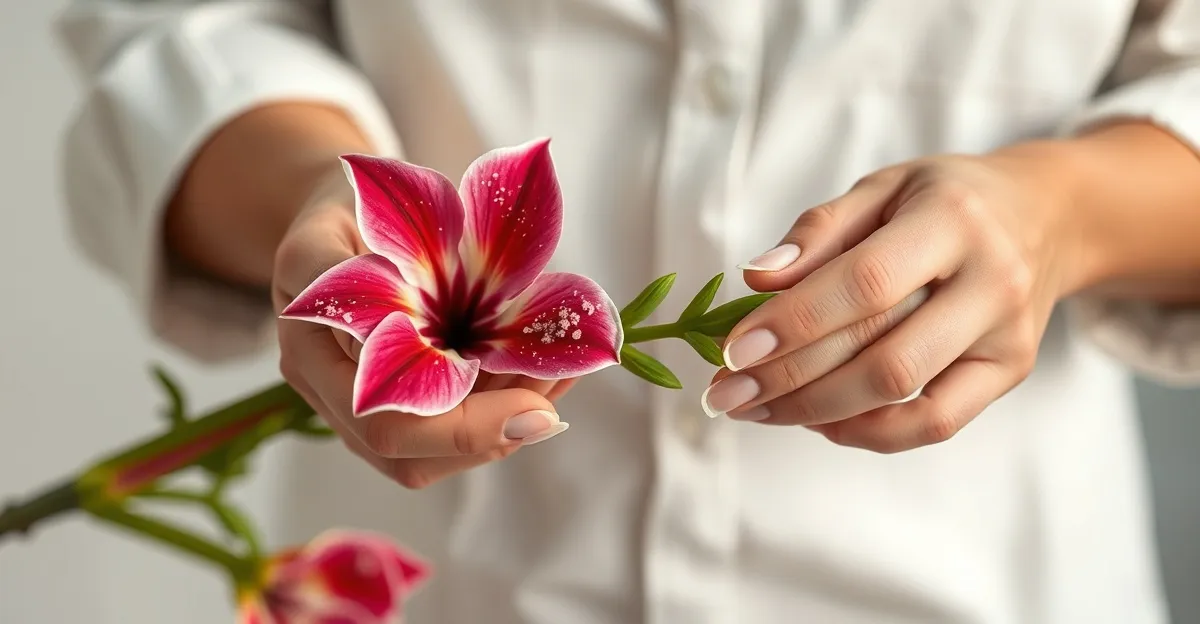
Anyone who's reached into a bouquet to rearrange a stem and come away with a vivid orange or yellow smear on a white linen shirt knows how alarming pollen stains can be. In Bali, where most people are wearing light-coloured clothing — white cotton, linen blouses, pale resort wear — and where bouquets often include pollen-heavy tropical flowers, this is a genuinely common problem.
The good news is that pollen stains are almost always removable, and they're actually easier to deal with than most food stains. The bad news is that the most intuitive responses — brushing the pollen, wiping it with a damp cloth, rubbing it — are exactly the wrong things to do.
Understanding the pollen
Different flowers produce different amounts of pollen, and the pollen from some tropical blooms is particularly aggressive. Lilies, including the Asiatic and Oriental varieties common in Bali bouquets, are notorious for their rust-orange pollen that stains deeply. Heliconia produces waxy pollen that smears. Gerbera daisies have pollen that's dry and powdery. Alstroemeria is another common culprit.
Pollen consists of tiny protein-and-lipid particles that are designed to stick to things — that's their biological purpose. When they land on fabric, they don't just sit on the surface; they start to work into the fibres, especially if any moisture is present. This is why acting quickly matters, and why rubbing or wetting the stain before you know what to do makes it dramatically worse.
The golden rule: do not rub or wet it first
Before anything else, let the pollen dry completely if it's fresh and wet (some pollens are oily). Then, remove as much of the pollen as possible before introducing any moisture or cleaning agents.
Use tape. Press a piece of sticky tape — masking tape, packing tape, even a sticky note — against the pollen and lift it away. The tape picks up the particles without spreading them. Repeat with fresh pieces of tape until you've lifted as much as possible. This works remarkably well and can sometimes remove the stain completely.
Use a soft brush. A soft-bristled brush (like a clean make-up or pastry brush) can sweep dry pollen off surfaces before it bonds. Brush very lightly in one direction — don't scrub back and forth.
Blow it away. For powdery pollen on delicate fabric, sometimes gently blowing (not rubbing) removes loose particles before they embed. Be careful not to breathe in a face full of pollen if you're allergic.
Removing pollen from clothing
Once you've removed the surface pollen with tape or a brush, you'll likely still have a stain. For fabric:
Rinse from the back. Take the fabric to a tap and run cold water through the back of the fabric — pushing the stain out the way it came in rather than driving it deeper. Use cold water only; hot water sets the stain.
Apply a liquid detergent or enzyme-based stain remover. A small amount of liquid laundry detergent or a pre-treatment stain spray works well. Gently work it into the stain with your fingers (not rubbing hard) and let it sit for five to ten minutes.
Wash normally. Machine wash on cold with your regular detergent. Check the stain before putting it in the dryer — if any colour remains, don't dry it. Repeat the treatment.
For stubborn lily pollen stains that have had time to set, a diluted hydrogen peroxide solution (one part peroxide to several parts water) can help on white or light fabrics. Test in an inconspicuous area first — peroxide can bleach some synthetic fabrics. In Bali, you can find hydrogen peroxide at pharmacies and some supermarkets.
Pollen on upholstery, sofas, and villa furniture
White or pale-coloured upholstery is a particular concern in Bali villas and homes where flowers are displayed on living room tables or side tables. The same principles apply:
Lift as much dry pollen as possible with tape before touching it with anything else. Don't rub.
For fabric upholstery, use a minimal amount of cold water and a small dab of liquid detergent, blotting (not rubbing) from the outside of the stain toward the centre. Avoid saturating the fabric, which can cause watermarks.
For leather and faux leather common in Bali villa furniture, pollen usually wipes off easily with a barely damp cloth once the surface pollen is removed. Wipe gently — pollen can scratch polished leather surfaces.
Protecting against pollen staining proactively
The simplest fix is to remove the stamens (the pollen-bearing structures inside the flower) from lilies before they open fully. Many florists do this as standard. If your delivered bouquet still has intact anthers, use a tissue (not your fingers) to pinch and remove them. Do this outdoors or over a bin — the pollen falls freely and you don't want it on your floors.
When arranging flowers, consider wearing an old apron or keeping a cloth nearby. In Bali's heat, you're often in light clothing that you'd rather not stain.
For villa and home displays, placing a small towel or cloth under a bouquet on a wooden table prevents pollen falling onto the furniture surface.
For flowers in the context of Balinese ceremonies and offerings, different cultural expectations apply — pollen is part of the living flower. The key is not to brush against canang sari or other offerings while wearing anything you'd be upset to stain.

The team
your florists
weekly subscription · Bali
We write about flowers because we love them. We deliver them because someone should — properly, weekly, across Bali.
— heyflowerPay once for 3, 6, or 12 months, no auto-renewal.
Pollen on tiles, marble, and terrazzo
Many Bali homes and villas have stone tiles, marble benchtops, or terrazzo floors. Pollen on these surfaces is generally easy to deal with — let it dry, then sweep or wipe away with a dry cloth first before introducing any water. Avoid dragging it across the surface while wet, as some pollens can very briefly stain porous stone. A standard surface cleaner handles any residue.
For more on looking after flowers in your Bali home, see our guide on sustainable flower care and reducing waste at home.
FAQ
Is lily pollen dangerous if I breathe it in? Lily pollen can be a significant allergen and irritant, particularly for people with hay fever or asthma. Remove lily stamens before they open if you're sensitive, and wash hands after handling. Lily pollen is also toxic to cats — if you have cats in your villa, avoid lilies entirely.
Will a regular washing machine cycle remove lily pollen? Often yes, if you've done the pre-treatment steps correctly. The key is not to tumble-dry the item until you've confirmed the stain is gone.
Can I use sun to bleach out a pollen stain? Sunlight can fade some pollen stains, particularly on white fabric. Bali's sun is strong enough to help, but it's an unpredictable method and can also fade the fabric itself. Better to use proper treatment first.
What if pollen gets on my car upholstery? Same process — tape first, then upholstery stain remover or a gentle detergent solution, blotting rather than rubbing. Act quickly before it dries into the fibres.
What flowers produce the least pollen for allergy sufferers? Orchids, anthurium, and bird of paradise produce minimal airborne pollen and are generally considered low-allergy options. Tuberous begonias and carnations are also relatively low-pollen choices.
Ready to enjoy beautiful tropical blooms in your Bali home? Explore our weekly flower subscription and get handpicked blooms delivered to your door every week.



