Flowers for a beach-cleansing ritual in Bali
Explore the flowers used in Bali's Melasti beach purification rituals, why each species matters, and how to participate or observe these ceremonies respectfully.
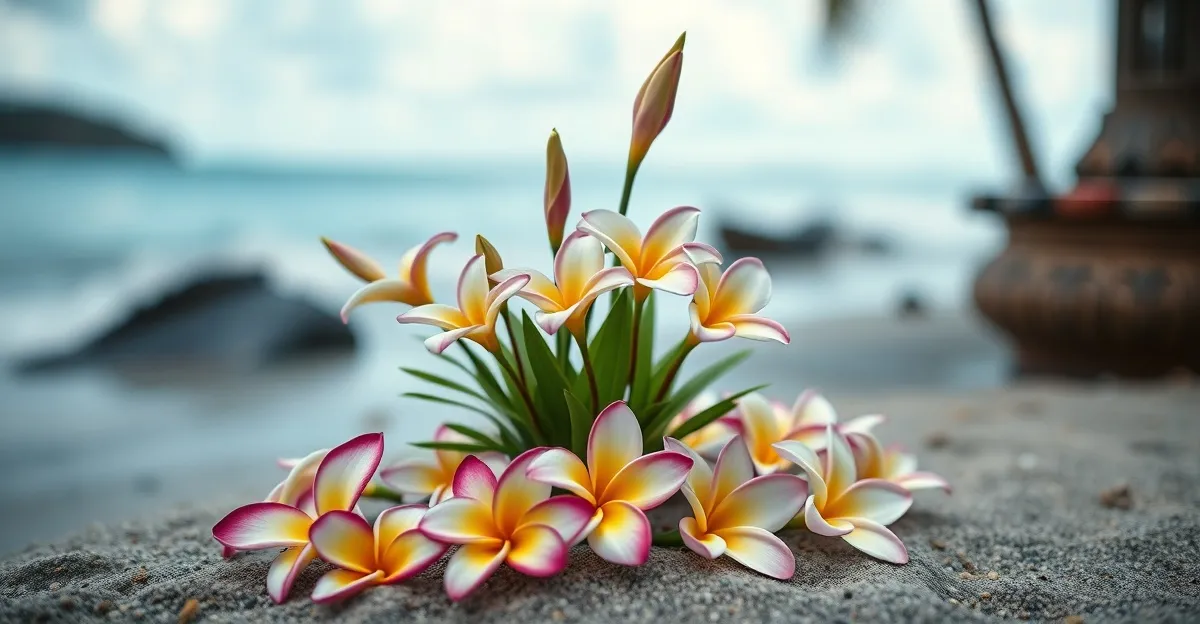
In the weeks before Nyepi, the Balinese Day of Silence, thousands of people make their way to the sea. They come in procession — village congregations dressed in white and yellow, carrying pratima (sacred objects from their temple), accompanied by gamelan music that can be heard half a kilometre away before you see the first person. This is Melasti, one of the most visually arresting ceremonies in Bali's ceremonial calendar, and it's built entirely around the power of the sea to purify.
Flowers are central to Melasti in ways that go beyond decoration. They're part of the offering structure, the ceremonial garlands, the temple objects being purified, and the closing offerings made to the sea itself. Understanding the flower logic of Melasti connects you to how Balinese people think about the relationship between the natural world, the divine, and the ritual work of maintaining community wellbeing.
What is Melasti and why does it happen at the beach?
Melasti (melis or mekiyis in some areas) is a purification ceremony that precedes Nyepi by two to three days. Its purpose is to cleanse the community and its sacred objects in the water — specifically in the sea, which is considered tirtha amerta, the water of immortality and purification. Rivers and lakes are also used in some inland communities, but the sea is preferred where accessible.
The logic is that sacral objects (pratima, ancestral heirlooms, royal regalia) accumulate impurity over the course of a year's cycle of ceremonies and must be renewed before the great renewal of Nyepi, Bali's own New Year. The community itself is also ritually purified — participants enter the water, sometimes fully, as an act of spiritual cleansing.
The beach locations used for Melasti are designated, significant sites. Along the south coast you'll see Melasti processions at Kuta Beach, Sanur Beach, Candidasa on the east coast, Lovina Beach in the north, and at dozens of smaller community beach access points throughout the island. Each village brings its own procession; large ceremonial areas may have multiple congregations arriving and departing across the same day.
Flowers used in the procession and at the beach
The flower work for Melasti begins days before the ceremony itself. The temple's sacred objects are re-dressed in fresh fabric and new flower garlands for the procession. The types of flowers most commonly used for this garland work reflect the sacred colour system of the offering tradition.
White and yellow frangipani dominate. These are the most accessible and most ritually appropriate offering flowers, and their ability to stay fresh for several hours in Bali's heat makes them practical for a ceremony that may last many hours. Garlands of frangipani are draped over pratima being carried in procession.
Marigold (tagetes) appears in abundance — the bright yellow-orange colour reads as auspicious and protective, and marigolds are durable enough to survive the journey to the beach and the ceremony itself without wilting dramatically.
Champaca (cempaka kuning) is included in offering arrangements for its fragrance. As with Sanghyang and other major ceremonies, champaca's persistent scent is considered spiritually active — it maintains the sacred quality of the space and objects throughout the ceremony.
White jasmine sometimes appears in finer garland work, particularly on especially sacred objects or those associated with high-status lineages.
The sea offering: what goes into the water
At the conclusion of Melasti, offerings are made to the sea itself — to acknowledge the sea's role in the purification and to maintain the relationship between the community and the spiritual power of the ocean. These offerings are often elaborate banten prepared specifically for the ceremony, containing the full complement of directional flowers plus additional elements.
The flowers in these sea offerings are the same as those used throughout the ceremony — frangipani, marigold, champaca, red hibiscus for the fire/south direction. What changes is the context: these offerings are released to the water, floating out to sea as the ceremony concludes. The visual image of flower offerings floating on ocean waves at sunset, seen against the silhouettes of the departing procession, is one of the most striking things in Bali's ceremonial landscape.
The practice of releasing flower offerings to water is not unique to Melasti — similar gestures appear in other purification ceremonies at rivers and springs across the island.
Practical considerations: observing Melasti respectfully
Melasti processions and beach ceremonies are not performances — they're active community ritual. They happen to coincide with dates when visitors are also at Bali's beaches, but the community is not there for the audience.
Respectful observation is possible and generally tolerated, particularly at popular beach locations where the procession happens on public beach access. The key rules:
Stay out of the procession path. The processions follow a route and the participants need to move without obstruction. Standing at the side to watch is fine; walking through or ahead of the procession is not.
Dress modestly. The beach setting makes this easy to forget — you're in a swimsuit area and the procession is in full ceremonial dress. At minimum, cover your shoulders and ensure a sarong or pareo is on hand if you get close to the ceremony.
Photography from a distance is generally acceptable; attempting to get very close to the priests or the sacred objects being carried is not.
Don't touch the offerings or the ceremonial objects.
If you want to experience Melasti from a closer, more meaningful position, connecting with a Balinese family or community before the ceremony and asking whether you can accompany them appropriately is the right approach.

The team
your florists
weekly subscription · Bali
We write about flowers because we love them. We deliver them because someone should — properly, weekly, across Bali.
— heyflowerPay once for 3, 6, or 12 months, no auto-renewal.
The chemistry of sea and flower: a Balinese ecological logic
There's something worth noting about why Balinese ritual consistently integrates natural materials — particularly living and fragrant flowers — into ceremonies at natural sites like beaches, springs, and rivers. The theology here is not separate from nature but deeply embedded in it: the flowers' fragrance, the sea's movement and purifying power, the smoke of incense, the sound of water and gamelan together create a multi-sensory ritual environment that the Balinese tradition has developed for thousands of years.
From a purely ecological standpoint, Bali's ceremonial flower demand sustains an agricultural and horticultural sector that might otherwise not be economically viable at the same scale. The daily offering requirement keeps thousands of small-scale flower farmers in Tabanan, Gianyar, and Buleleng economically active. Ceremony season spikes this demand and keeps the island's flower markets among the most active in Southeast Asia.
For anyone interested in how the Balinese flower calendar works throughout the year, the Bali ceremony days flower calendar provides a practical overview of what's in demand when.
Frequently asked questions
When exactly does Melasti happen in 2026? Melasti falls two to three days before Nyepi, which is determined by the Saka lunar calendar. In 2026, you'll need to check the official Balinese calendar for the exact dates. The ceremony typically happens over two to three consecutive days, with different villages processing on different days.
Can I buy Melasti offering flowers to bring to the beach? If you've been invited to participate with a Balinese family, yes — bringing flowers as your contribution to the offering preparation is a meaningful gesture. The same flowers available at any Bali market are appropriate: frangipani, marigold, champaca.
Is Melasti the only water purification ceremony in Bali? No. Melukat ceremonies (personal purification in holy water springs) happen year-round at temples with spring complexes, such as Pura Tirta Empul in Gianyar. Melasti is the community-scale version preceding Nyepi; individual and family melukat are separate practices.
What happens to the offerings floating in the sea? They float and eventually decompose naturally. Balinese offering materials — leaf-based trays, fresh flowers, natural food items — are biodegradable. This is by design: offerings are made of materials that can return to nature without pollution.
Are flowers sold at the beach during Melasti? Near major Melasti sites, you'll typically find vendors selling garlands, prepared offering trays, and loose flowers. These serve both the ceremonial participants and curious visitors who want to buy something to observe the tradition.
Ready to bring fresh flowers to your Bali home or event? Explore our weekly flower subscription and get handpicked blooms delivered to your door every week.



