Bali ceremony days: a year-round flower calendar
A practical guide to Bali's major ceremony days and what flowers are in highest demand each season — essential for locals, expats, and event planners.
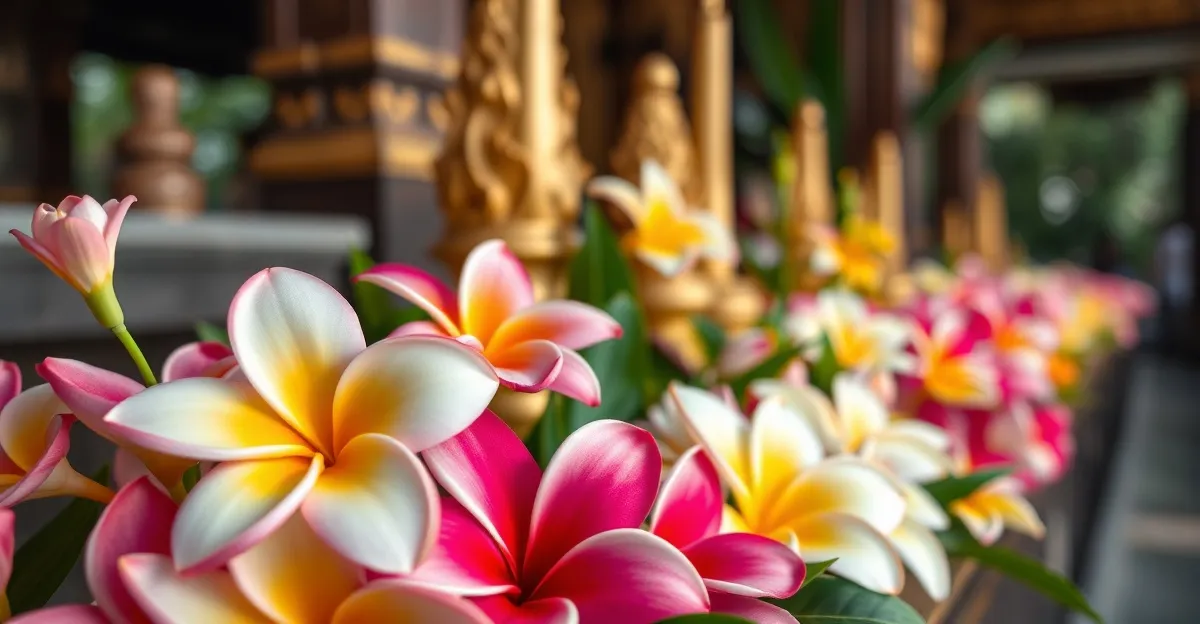
If you live in Bali or run an event here, you quickly learn that the island's calendar is not the Gregorian calendar. Bali runs simultaneously on several overlapping calendrical systems — the 210-day Pawukon cycle, the Saka Hindu lunar calendar, and the standard international calendar all coexist, creating a ceremonial density that has no parallel anywhere in the world. For flower lovers, planners, and anyone who depends on Bali's flower supply, understanding when the major ceremony seasons fall is essential. This is what the flower calendar looks like across a year.
Understanding Bali's two main calendrical systems
Before mapping specific dates, it's worth understanding the two systems that govern most of Bali's ceremony days.
The Pawukon calendar runs 210 days and repeats without reference to solar or lunar cycles. It determines the dates of most village temple ceremonies, many household rituals, and several of the island's most significant festivals. Galungan, perhaps the most important Balinese holiday, falls every 210 days on the same Pawukon date (Budha Kliwon Dungulan). This means it can fall in any Gregorian month — planners tracking Galungan for 2026 need to know the specific Pawukon date, not a fixed month.
The Saka lunar calendar governs a different set of ceremonies, particularly those tied to lunar phases. Purnama (full moon) and Tilem (new moon) ceremonies happen monthly throughout the year; these are consistent, predictable, and create a baseline of ceremonial demand for flowers every two weeks.
The practical upshot: there's rarely a week in Bali when nothing ceremonial is happening. But there are peaks, troughs, and dramatic spikes that every flower supplier on the island knows by feel.
January and February: rainy season ceremonies
The wet season (roughly November to March) brings heavy afternoon rain and high humidity. Flower production across the island is at its most abundant — the continuous moisture keeps growing conditions good — but transport and logistics become harder as roads flood and flowers deteriorate faster in the damp heat.
Hari Raya Nyepi (the Balinese New Year and Day of Silence) typically falls in March based on the Saka lunar calendar, but its preparation — the Ogoh-Ogoh parade and the Melasti purification ceremonies — begin weeks earlier. Melasti sends entire villages to the sea to purify ritual objects and community members, and the processions require substantial quantities of flowers: offerings, garlands for the pretima (ritual objects) being carried, and floral decorations for the ceremonial vehicles and pratima carriers.
In January and February, if no major Pawukon ceremonies coincide, the flower market operates in a relatively steady state. The main demand drivers are daily offerings and the regular Purnama and Tilem ceremonies. Florists and delivery services can usually meet demand without the shortages that come during peak periods.
March: Nyepi and its flower implications
Nyepi itself is one of the most dramatic days on the Balinese calendar — a 24-hour silence during which the entire island shuts down. No lights, no fire, no work, no travel. The airport closes. The streets are empty. And critically for flower logistics: no deliveries happen on Nyepi.
The day before Nyepi (Pengerupukan) sees extraordinary flower demand. Families complete purification offerings, temples hold final ceremonies, and the Caru offerings — elaborate ritual sequences for purifying the earth — require specific flower types. For subscription services and florists, the day before Nyepi requires careful planning: orders must be delivered before the shutdown begins.
The day after Nyepi (Ngembak Geni) sees a rush of fresh offering preparation as households resume normal ritual practice after the silence.
May to July: shoulder season and major Galungan/Kuningan windows
Galungan and Kuningan are the two biggest flower-consumption events on the Balinese calendar. Galungan celebrates the victory of dharma over adharma and marks the period when ancestral spirits visit their families. Kuningan, ten days later, is when the spirits return to the spiritual realm. Both require days of intense offering preparation.
The penjor bamboo poles that line every road during Galungan are decorated with fresh flowers — yellow marigold, plumeria, and palm leaf ornaments. The demand for yellow and white flowers spikes sharply in the weeks before Galungan. Families begin buying and preparing flowers three to four days before the main celebration, and sellers know to stock up.
Kuningan, though quieter than Galungan, has its own specific flower requirements. Yellow flowers are particularly prominent on Kuningan day, and the specific banten prepared for the departing ancestors require careful flower selection.
When Galungan falls in the dry season (May-September), the ceremony benefits from beautiful weather and the flowers available in that period — see shoulder season flowers that thrive for what's at its best during these months. When it falls in the wet season, offering makers contend with faster-wilting flowers and the challenge of keeping preparations fresh in high humidity.
August and September: wedding and event peak season
The dry season months of July, August, and September are Bali's peak wedding season. The weather is most predictable, the light is extraordinary, and the island fills with international events. Flower demand shifts character during this period — less dominated by traditional offering flowers and more driven by event floristry: elaborate wedding arches in Uluwatu, table centrepieces for villa receptions in Seminyak, welcome garlands for luxury resort events in Nusa Dua.
This creates an interesting supply tension. Traditional offering flowers (plumeria, champaca, marigold) continue being bought daily. But import flowers — roses, peonies, hydrangea — command premium prices as florists working the high-end event market compete for the best stock arriving from Java, Sumatra, and overseas cold-chain suppliers.
For anyone planning a private event during these months, ordering arrangements two to three weeks in advance gives you the best chance of securing specific varieties. For ideas on event flowers for different spaces, see flower styling ideas for a Bali wellness spa.
October and November: temple anniversary peak
Odalan (temple anniversary) season tends to concentrate in certain months depending on when temples were founded according to the Pawukon calendar. Historically, there's a concentration of large odalan ceremonies in the lead-up to the wet season, around October and November. These multi-day ceremonies are among the most significant in any village's annual cycle and require substantial floral preparation — gebogan offering towers, garlands, shrine decorations, and daily offering replenishment throughout the ceremony period.
For the communities around major temples in Gianyar, Klungkung, Bangli, and Karangasem, odalan season means flower markets run out of specific varieties. Champaca, which is required for specific directional offerings, can be very hard to source during peak odalan periods in these areas.

The team
your florists
weekly subscription · Bali
We write about flowers because we love them. We deliver them because someone should — properly, weekly, across Bali.
— heyflowerPay once for 3, 6, or 12 months, no auto-renewal.
December: Christmas meets Balinese ceremony
The intersection of Balinese ceremony days with the international Christmas season creates a uniquely Bali phenomenon: December brings both a surge in Western-style floral purchases (Christmas arrangements, holiday decorations for the hotels and villas filling with foreign visitors) and a continuation of regular Balinese offering demand.
Flowers imported specifically for the Christmas season — poinsettia, which doesn't grow well in Bali's heat, is sometimes flown in for hotel lobbies — sit alongside the daily marigold and plumeria that never stop moving through the market. Florists who serve both the expat/tourist market and the traditional Balinese market find December particularly demanding.
Practical takeaways for planning around Bali's flower calendar
Whether you're running a subscription service, planning a wedding, managing a villa, or just hoping to have fresh flowers on your table, a few rules serve you well throughout the year:
Order in advance around ceremony peaks. In the two weeks before Galungan and Kuningan, prices spike and availability tightens. Booking ahead locks in both price and supply.
Nyepi requires same-day-before delivery. Nothing moves on Nyepi. If you need flowers for the day of or day after, they must be delivered the morning before.
Purnama and Tilem create weekly demand bumps. Every full moon and new moon, temple activity increases and offering flower demand rises. These are predictable and manageable.
Odalan timing varies by temple and location. If you're in a village with a major temple, find out when the odalan falls in the Pawukon calendar and plan accordingly.
Frequently asked questions
How do I know when the next Galungan is? Bali's Pawukon calendar dates are published each year by local religious authorities. The dates change from year to year in the Gregorian calendar. Most Balinese temples, local government offices, and Balinese cultural websites publish the upcoming Galungan and Kuningan dates.
Does Nyepi affect flower deliveries from heyflower? Yes. Deliveries cannot happen on Nyepi. We communicate with subscribers well in advance and either deliver the day before or reschedule to the day after, based on subscriber preference.
Are there any months when flower prices are lowest? The wet season months of January and February tend to have more flower abundance and lower prices for locally grown varieties, as long as no major Pawukon ceremony peaks coincide. Supply is good and non-ceremony demand is relatively steady.
What flowers are most affected by Galungan shortages? Yellow and white plumeria, yellow champaca, marigold, and yellow chrysanthemum are most affected during Galungan. If you need these specific flowers for a non-ceremonial purpose during Galungan week, order early.
Can I request specific flowers during ceremony seasons? With advance notice, yes. Heyflower sources from multiple growers and maintains supplier relationships specifically to handle peak periods. Orders placed at least a week ahead have the best chance of hitting specific variety requests during ceremony seasons.
Ready to bring fresh flowers to your Bali home or event? Explore our weekly flower subscription and get handpicked blooms delivered to your door every week.



