Florist hacks to stretch one bouquet into three vases
One bouquet can fill an entire home when you know how to split and arrange it strategically. Learn how florists stretch a single delivery across multiple rooms.
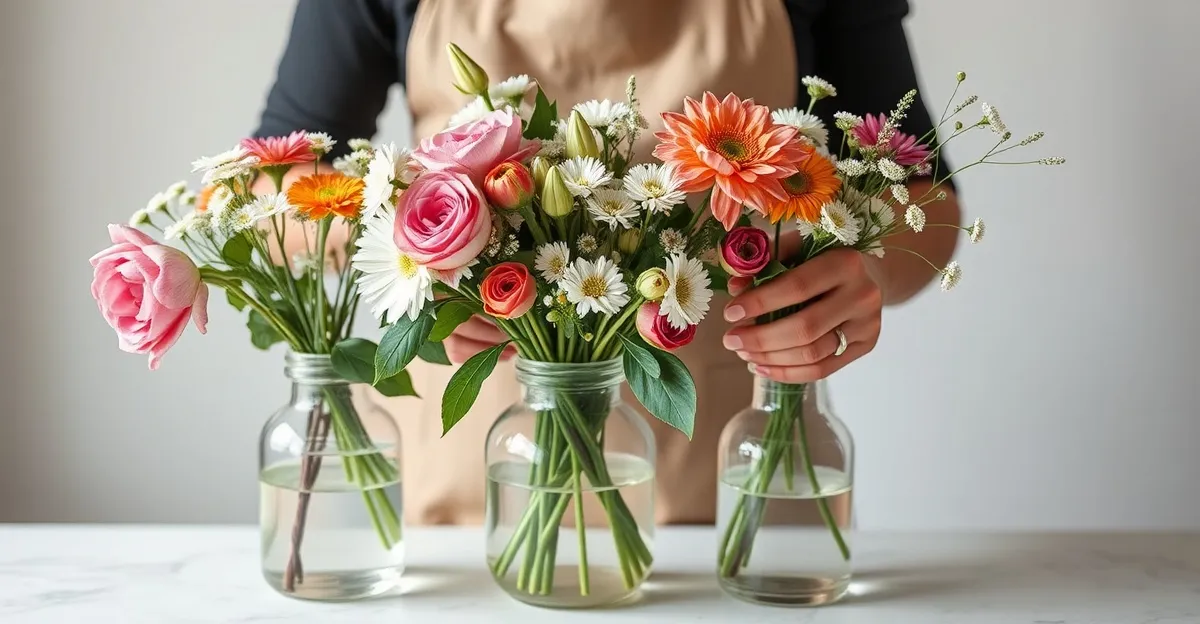
A single bouquet delivered to your Bali villa doesn't have to live in one vase in one room. Professional florists — and experienced home arrangers — know that most delivered arrangements contain enough material to create two, three, or even four distinct displays, each sized appropriately for a different spot in the home.
This isn't about making flowers look sparse or stretched thin. It's about the principle that a well-placed small arrangement in the right spot has more visual impact than a single, larger arrangement that the house swallows.
Think before you split: assess your bouquet first
Before cutting anything, lay the bouquet out on a clean surface and group stems by type. This assessment step is important — you want to see what you're working with and plan how to divide it before making irreversible cuts.
Most delivered mixed bouquets contain:
- A few dominant focal stems (roses, anthuriums, heliconias, or larger blooms)
- Multiple medium filler stems
- Background or texture stems (smaller flowers, greenery, interesting shapes)
Each arrangement you create should, ideally, contain at least one element from each category. An arrangement made of only filler stems looks thin; an arrangement made of only focal blooms looks sparse and unfinished.
Think about the spots in your home or villa where you want flowers: the entry table, the dining table, the bathroom ledge, the bedroom dresser. Assess how large each spot is and how many stems are needed for the right scale.
The primary arrangement: keep your best material for the most important spot
The most-viewed spot in your home gets the best material. For most people, this is a dining table, a living room coffee table, or a villa entryway. This primary arrangement should use your best focal stems and have the most density.
Don't try to make this one perfect and then divide what's left — that approach gives you one good arrangement and one or two thin, unconvincing ones. Instead, plan all three arrangements simultaneously and allocate stems thoughtfully across all of them.
A primary dining table arrangement might need seven to ten stems to look right. Plan for that from the start.
The secondary arrangement: bud vases and single stems
Individual stems in single-stem vases — bud vases — are one of the most effective uses of overflow flowers from a bouquet. One rose in a slender glass vase on a bathroom shelf. A single heliconia stem in a tall cylindrical vase in a hallway. Three stems of the same filler flower grouped in a small vessel for a bedside table.
These minimal arrangements look intentional and deliberate, not like overflow from something bigger. They're a very current aesthetic — the kind of thing you see in boutique hotels along Jalan Petitenget in Seminyak or in the minimalist villa interiors of Pererenan. The key is using a matching or complementary vessel and not overfilling it.
Good bud vases are worth investing in if you receive flowers regularly: tall cylindrical glass, small ceramic bottles, simple terracotta pots, and even recycled sauce bottles from the kitchen all work. In Bali, the craft markets in Ubud and the homeware shops along Jalan Raya Seminyak have excellent options for Rp 30,000–100,000 each.
The tertiary arrangement: a floating bowl or flat display
For very short stems or blooms that have been cut very low, a floating bowl arrangement is a beautiful option that requires almost no height. Fill a wide, shallow bowl with water and float individual flower heads on the surface. Frangipani blooms (which fall from trees and have very short or no stems) are the classic example of this in Bali, but it works with roses, hibiscus, and any bloom that looks good from above.
A floating bowl arrangement on a coffee table or dining table center can be surprisingly striking. The reflective water adds dimension, and the overhead view of the blooms shows a different angle than you'd see in a vase.
This approach is also ideal for petals that have been bruised slightly in transit — a bruised petal looks fine floating in water with its best face up.
Matching the stem length to the vessel
This is the critical practical step. When dividing a bouquet, you'll need to cut stems shorter than they came to fit secondary and tertiary vessels appropriately.
Always cut more than you think you need. A stem that's clearly too long for a bud vase and needs to be cut dramatically shorter should be cut all at once rather than incrementally — each cut stresses the stem slightly. Make one confident cut at the right length rather than three tentative shorter cuts.
Use the one-and-a-half to two times vase height proportion (the total arrangement should be 1.5–2x the vase height) as your guide for how much stem is appropriate for each vessel. A 15cm bud vase works best with a stem that gives you a 20–25cm total arrangement height.
Keeping divided arrangements cohesive
When you split a bouquet across three vases, they should still feel connected as part of the same home's aesthetic. The easiest way to achieve this is color repetition — make sure at least one element from the primary arrangement's color palette appears in each secondary arrangement too.
If your main arrangement uses deep red roses with tropical greenery, each secondary arrangement should have either a red element or the same greenery. This creates visual unity across different rooms without the arrangements being identical.
Another approach: use the same vessel style for all three arrangements. Three white ceramic vessels in different sizes, all holding different portions of the same bouquet, feel like a considered installation rather than leftover overflow.

The team
your florists
weekly subscription · Bali
We write about flowers because we love them. We deliver them because someone should — properly, weekly, across Bali.
— heyflowerPay once for 3, 6, or 12 months, no auto-renewal.
When to split: fresh versus slightly older flowers
The best time to split a bouquet is when it first arrives — before the stems have been in one vase for multiple days. Freshly conditioned stems that go into a new arrangement have the best vase life ahead of them.
If you want to split an older arrangement, check each stem before committing it to a new vessel. Stems that are more than four days old and have been in one vase may not have much life left — moving them to a new vessel is worth trying but may not add many additional days.
See our guide on when to toss wilted flowers vs. restore them for how to assess which stems are worth saving and which are past the point of recovery.
FAQ
How do I know if I have enough flowers to split into three arrangements? A standard medium bouquet (15–20 stems plus foliage) is comfortable as two arrangements and possible as three. Larger arrangements (25+ stems) divide into three or four displays comfortably. Smaller bouquets (under 12 stems) are best kept as one display.
Should I use the same vase style for all three arrangements? Consistency in vessel style creates a cohesive feel. But contrasting vessel styles can be equally beautiful if the flowers within are from the same palette. There's no strict rule — let your home's existing aesthetic guide you.
Can I add foliage from my garden to extend the flower material? Absolutely. Tropical foliage from garden plants — monstera, palm, ferns, tropical grass — extends arrangements beautifully and for free. Make sure garden foliage is free of pests (inspect both sides of leaves) before adding to a vase with flowers.
What's the minimum stems per arrangement to still look good? Three stems of the same flower in a bud vase can look intentional and beautiful. Five stems of a mixed selection is enough for a small secondary arrangement. Below three, consider a floating bowl rather than a vase arrangement.
Does splitting a bouquet affect how long the flowers last? It can actually improve individual stem longevity slightly — each stem has more access to clean water in a less crowded vessel. The main consideration is making sure each new vessel is clean and the water is managed properly.
Fresh flowers for every corner of your home
A weekly subscription gives you enough material to fill multiple spots in your villa beautifully. Explore our weekly flower subscription and get handpicked Bali blooms delivered to your door every week — enough for the whole home.



