Dahlia in Balinese ceremonies: traditional uses in Bali
How dahlias fit into Bali's rich ceremonial flower tradition — their role in offerings, festivals, and daily spiritual life on the island.
Flowers are not decorative in Bali. They are devotional. Every morning across the island, millions of women and men weave canang sari — small palm-leaf offering baskets filled with flowers, rice, and incense — and place them on doorsteps, at temple shrines, on car dashboards, and beside shop entrances. The flowers are not symbolic in an abstract Western sense; they are literal gifts to the gods and to the spirits that Balinese Hinduism understands to permeate every aspect of daily life.
Into this extraordinarily flower-saturated culture, the dahlia arrived as a relative newcomer — brought to Indonesia via Dutch colonial horticultural networks in the 19th and early 20th centuries. Understanding where dahlias fit into Bali's ceremonial flower tradition means understanding both what the tradition demands and how a non-indigenous flower earns its place.
The Flowers of Balinese Ceremony
Bali's ceremonial flower tradition has deep roots in the Hindu scriptures and in local Balinese religion (Agama Hindu Dharma). Certain flowers carry specific ritual meanings and are considered appropriate for specific offerings and ceremonies.
Frangipani (jepun) is the most sacred and ubiquitous — used in nearly every offering, woven into hair for ceremony, and placed on altars throughout the island. Its white petals with yellow centres represent purity and the divine.
Marigold (jempiring gede) brings vibrant orange-yellow colour to offerings and is associated with spiritual protection and prosperity.
Hibiscus — particularly the red pucuk merah — is offered to certain deities and appears in specific ceremonial contexts.
Jasmine and kamboja (another frangipani variety) feature heavily in woven offerings and garlands.
Celosia (jengger ayam) — the feathery, flame-shaped flower — appears in colourful ceremony decorations.
These are the core ceremonial flowers, used because they are locally available, because they have deep roots in Balinese Hindu practice, and because their colours align with the cosmological colour system of Balinese Hinduism.
Where Dahlias Fit In
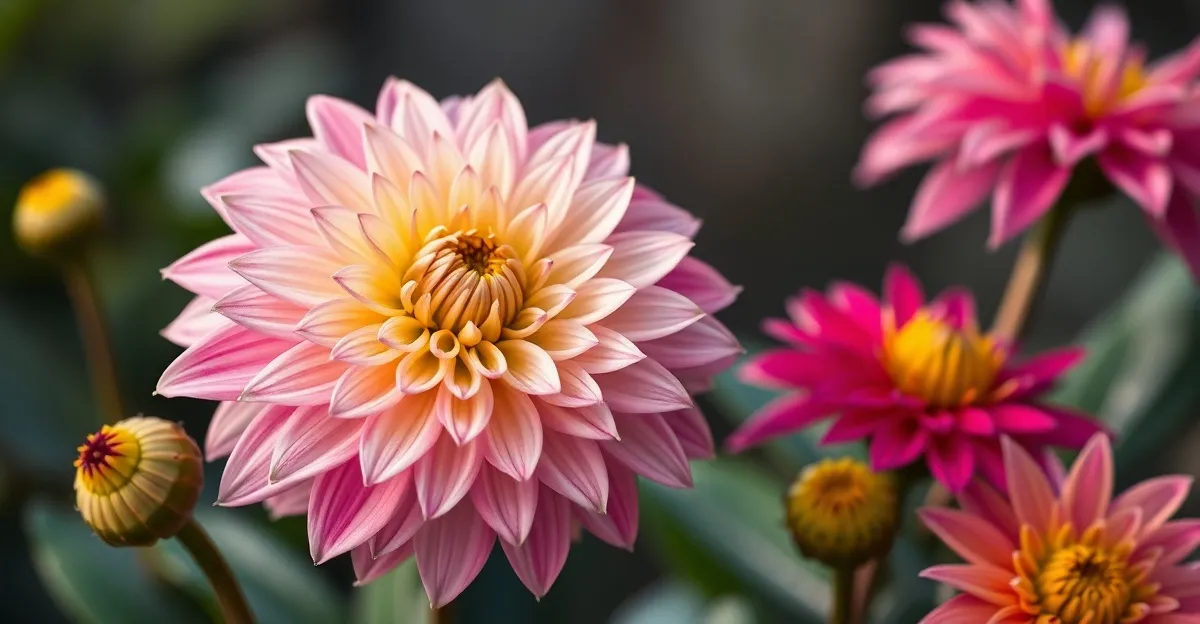
Dahlias occupy an interesting in-between space in Bali's flower culture. They are not traditional ceremonial flowers — they carry no specific ritual designation in Balinese Hindu texts or oral tradition. But they are also not excluded. In Bali's syncretic, adaptable ceremonial culture, flowers that are beautiful and available tend to find their way into celebrations.
Festival and Ceremony Decoration
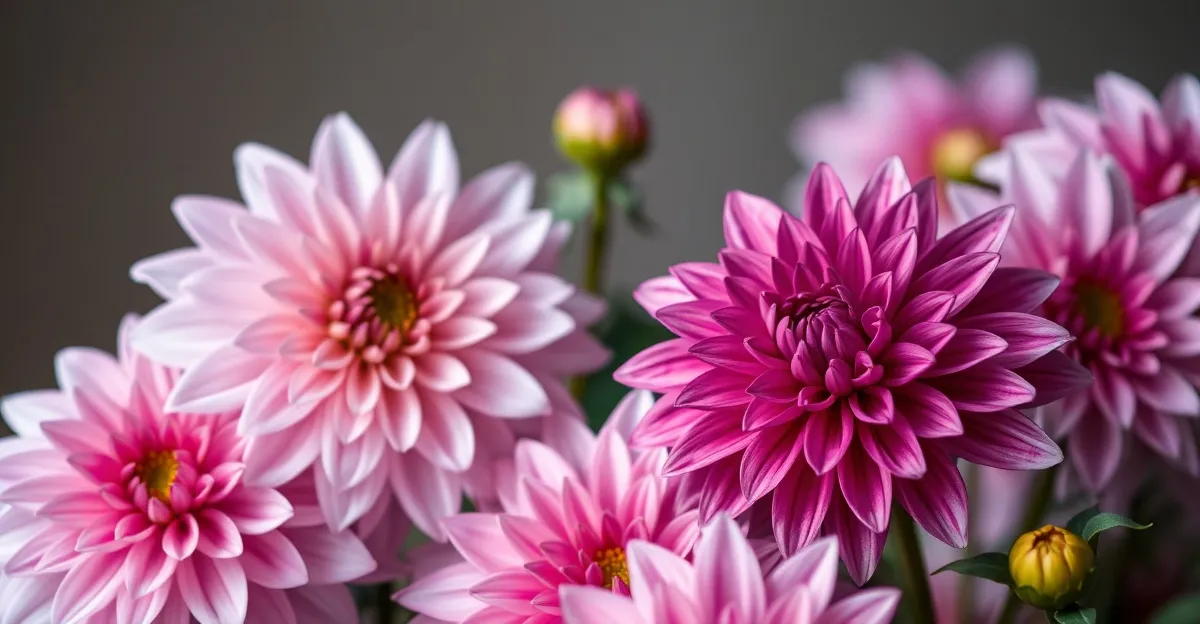
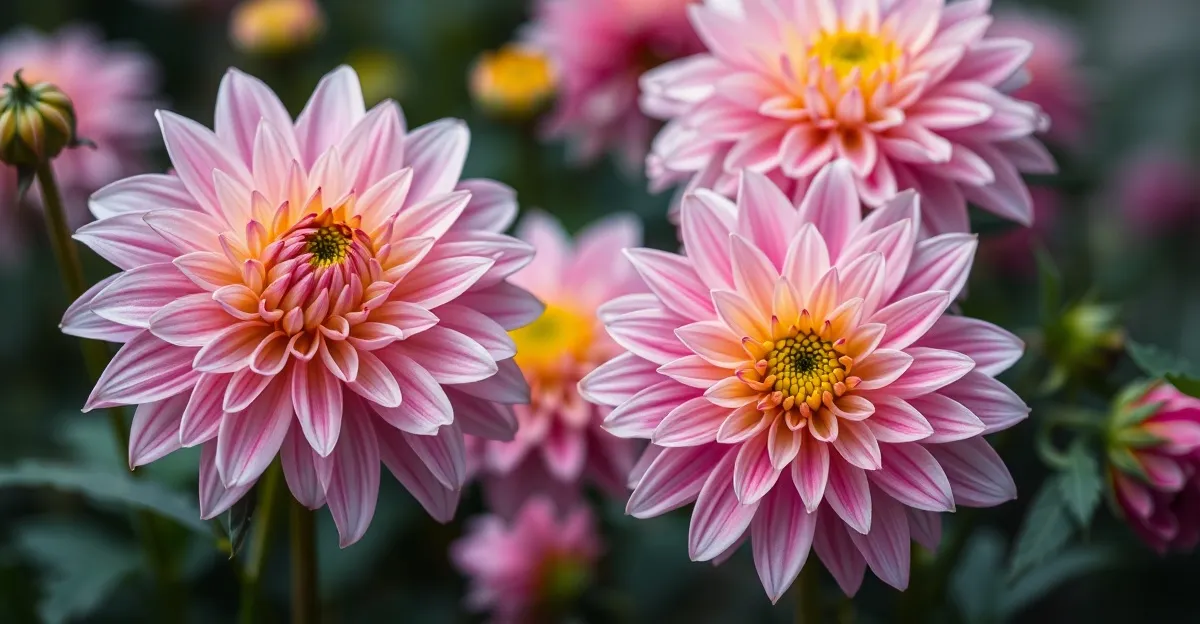
Dahlias are used extensively in Bali for the decorative aspects of ceremonies and festivals — not in the core ritual offerings (canang sari, banten), but in the visual decoration of ceremony spaces. At temple anniversaries (odalan), at community gotong royong preparations, and at village ceremonies, you'll see dahlias woven into large decorative arrangements, hung in garlands, and used to embellish temporary shrines and ceremony structures.
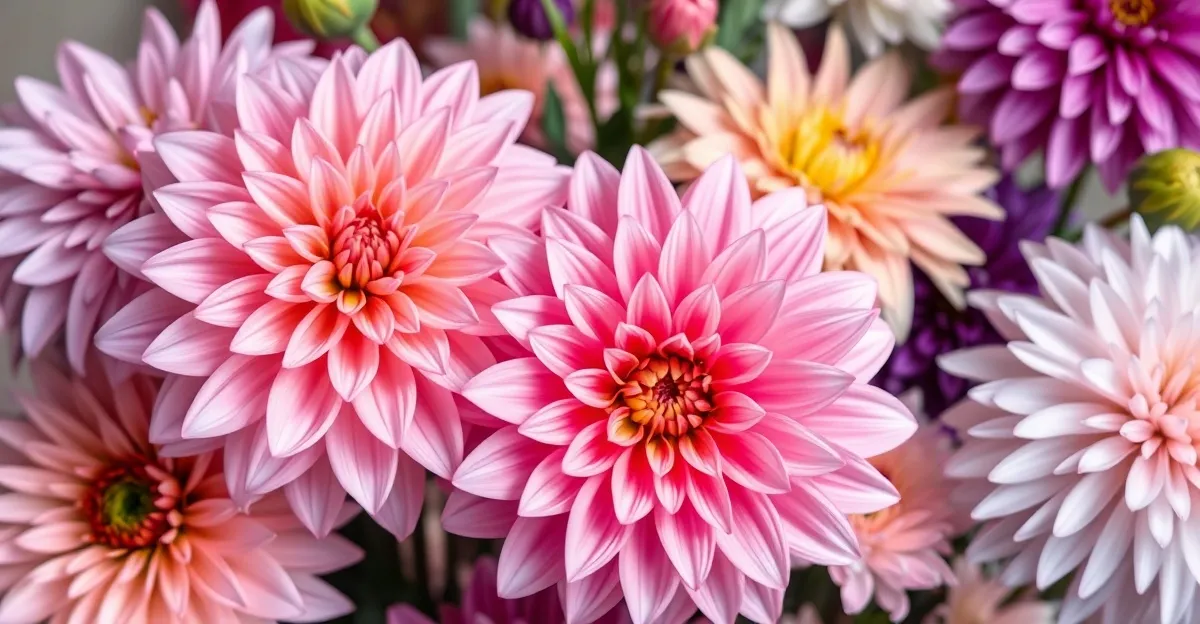
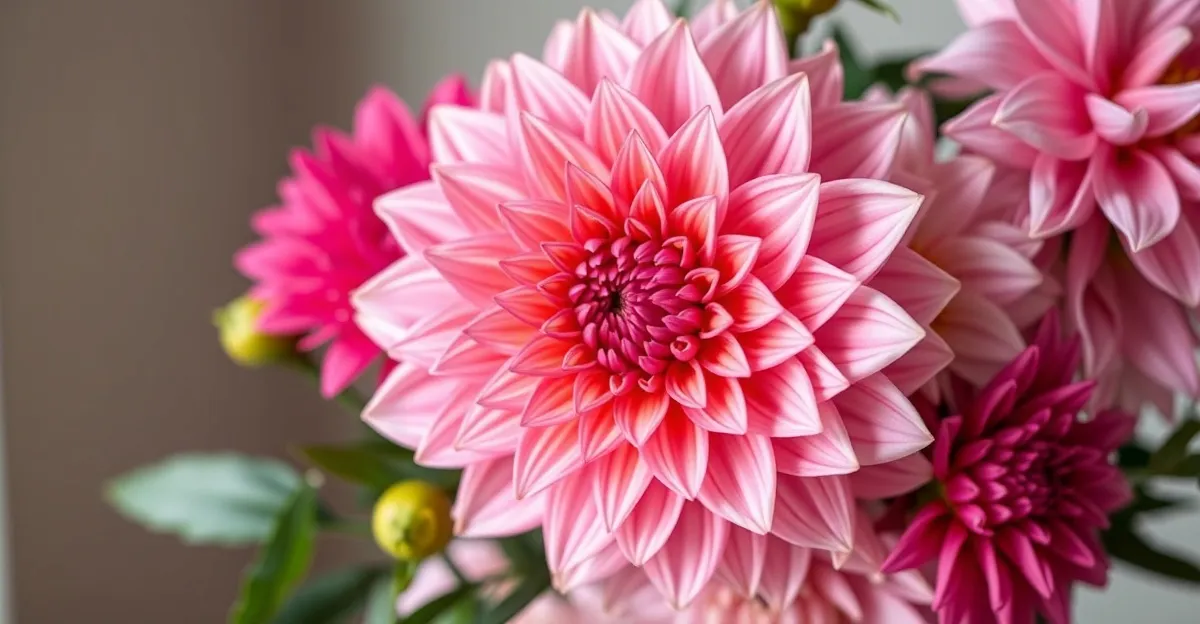
Their large, dramatic blooms fill visual space beautifully and add a sense of abundance and celebration. The scale of a dinner-plate dahlia is well-suited to the large, dramatic aesthetic of Balinese ceremonial decoration.
Galungan and Kuningan
Galungan — Bali's most important festival, celebrating the triumph of dharma over adharma — fills the island with penjor (ceremonial bamboo poles) and elaborate household and temple decorations. Flowers of all kinds are used to decorate these celebrations.
While frangipani and marigold remain the ceremonial heart of Galungan decoration, dahlias (particularly yellow and orange varieties) appear in the decorative flower arrangements that accompany family ceremonies, feast preparations, and offering tables. They complement the warm, celebratory palette of the festival beautifully.
Galungan falls every 210 days in the Balinese Hindu calendar — our guide on Galungan flower subscription ideas that keep giving has inspiration for using flowers throughout this extended celebration period.
Weddings and Life Ceremonies
Balinese weddings (pawiwahan) and the various life-stage ceremonies (manusa yadnya) that mark key transitions — from pregnancy ceremonies through the first birthday (otonan) to tooth-filing (metatah) and more — all involve flowers as decorative elements alongside the ritual offerings.
For the non-ritual decorative elements of these ceremonies, dahlias are entirely appropriate and increasingly popular. Wedding reception tables in Bali commonly feature dahlia centrepieces, particularly in modern Balinese ceremonies where couples want the visual drama of large-headed flowers alongside traditional decorative elements.
The Ngaben Cremation Ceremony
The ngaben is one of Bali's most important and visually spectacular ceremonies — a cremation ritual that marks the soul's liberation from the physical body and its journey toward rebirth or moksha. The ceremony is a celebration, not a mourning, and is characterised by extraordinary decoration and colour.
Dahlias, with their abundance and visual generosity, are used in some families' ngaben decorations. Their colours — particularly white (representing purity and spiritual passage), yellow (representing the spirit's journey toward the divine), and red (representing vitality) — align with the ceremony's complex colour symbolism.

The team
your florists
weekly subscription · Bali
We write about flowers because we love them. We deliver them because someone should — properly, weekly, across Bali.
— heyflowerPay once for 3, 6, or 12 months, no auto-renewal.
Dahlias in Contemporary Bali Ceremony Culture
Modern Bali occupies a fascinating space between deep tradition and international influence. Many Balinese families plan ceremonies that honour traditional practice while incorporating contemporary aesthetics, and flowers are part of that negotiation.
For younger Balinese families and for international couples marrying in Bali, dahlias often feature in hybrid ceremonies that combine traditional Balinese ritual elements with contemporary Western or international aesthetics. A ceremony might begin with a traditional melukat (purification ritual) decorated with traditional flowers and transition into a reception space festooned with dahlia arrangements.
This hybridisation isn't a departure from Bali's tradition — Balinese culture has always been remarkably absorptive and adaptive, taking what serves it from outside influences and integrating it into local practice. The dahlia's incorporation into Bali's celebratory flower culture is, in this sense, entirely in character.
Sourcing Dahlias for Bali Ceremonies
Dahlias for ceremonies and celebrations in Bali come primarily from highland growers in Java and from Bedugul in northern Bali. They're available year-round through Bali's flower markets, with the best quality typically arriving in dry season when highland growing conditions are optimal.
For events and ceremonies across Bali, our team at heyflower.co can help with both the traditional local flowers that ceremonies require and the contemporary dahlia arrangements that add visual drama to celebrations.
Frequently Asked Questions
Are dahlias used in Balinese Hindu offerings?
Not typically in the core ritual offerings like canang sari, which use specific traditional flowers. But dahlias appear in decorative ceremonial arrangements, festival decorations, and celebration spaces across Bali.
Can I bring dahlias as a gift to a Balinese ceremony?
A dahlia bouquet won't cause offence, but it may not feel culturally in step with the ceremony. If you're attending a traditional Balinese ceremony, contributing toward ceremonial flowers or asking your host what's appropriate shows more cultural awareness.
Do dahlias have any meaning in Balinese Hindu tradition?
Dahlias don't carry specific designation in Balinese Hindu religious texts. They're appreciated for their beauty and abundance in decorative contexts but don't carry the same ritual weight as frangipani or hibiscus.
Where can I buy dahlias for a Bali ceremony?
Bali's main flower market in Denpasar (Pasar Bunga) stocks dahlias regularly. For premium quality and delivery across the island, heyflower.co sources from highland growers directly.
Are dahlias ever used in daily canang sari offerings?
Occasionally, particularly if locally available. Balinese canang sari traditionally use whatever beautiful local flowers are at hand. While frangipani dominates, resourceful daily offering makers use what's available and affordable.
For events, ceremonies, and everyday floral beauty in Bali, heyflower.co brings the island's best blooms — including dahlias from highland growers — to your door. Our subscriptions ensure you always have fresh flowers on hand, whether for daily appreciation or for Bali's many ceremonial celebrations throughout the year.
More on Dahlia