Banyan tree flowers and their spiritual role in Bali
The banyan tree is sacred in Balinese Hinduism, and its small flowers and fruit have ritual significance. Learn why banyans are venerated and how they connect to ceremony life.
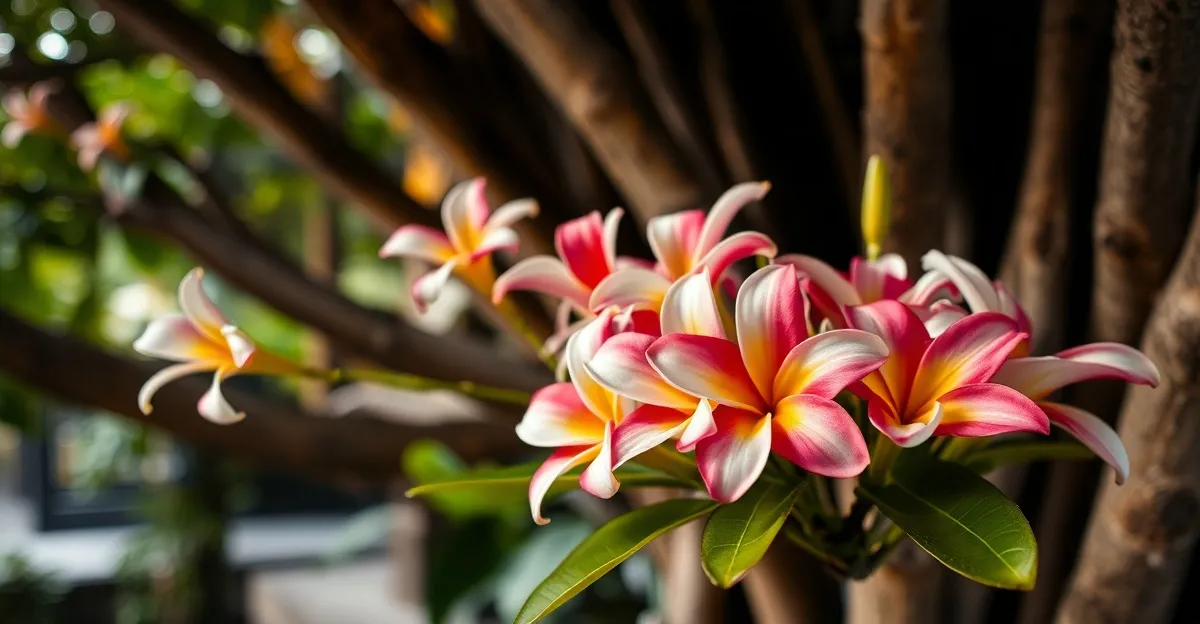
In Bali, you don't just walk past a banyan tree. You notice it. The great strangler figs that dominate temple courtyards, village crossroads, and ancient roadsides in places like Ubud, Tabanan, and Besakih are not simply large trees. In Balinese Hindu cosmology, they are occupied by spirits, protected by ceremony, and central to the religious geography of the island.
Most visitors know the banyan as a striking visual — the cathedral-like curtain of aerial roots, the dense crown blocking the sky. Fewer know that the banyan produces flowers and fruit, and that these have specific roles in Balinese ceremony. Even fewer know what it means to encounter a tree draped in a black-and-white poleng cloth, the checkerboard pattern that marks sacred space in Bali.
The banyan in Balinese cosmology
The banyan (Ficus benghalensis and related species; called beringin or bringin in Balinese and Indonesian) is considered a home for spirits (bhuta kala) and a meeting point between the human world and the unseen. This isn't unique to Bali — banyans carry spiritual associations across South and Southeast Asia — but in Balinese Hinduism, the association is particularly specific and active.
Trees considered spiritually powerful are marked with poleng cloth (the black-and-white checkered fabric that also appears at temple gates and on sacred objects) and given regular offerings. Crossroads, where banyan trees often grow, are understood as liminal spaces where the spirit world and human world overlap. A large banyan at a crossroads can accumulate enormous spiritual energy over centuries.
Pura Kehen in Bangli has one of Bali's most celebrated ancient banyans growing within the temple courtyard. The great banyan tree in the central market area of Ubud is another example — it has been standing for centuries and is regularly given ceremony attention.
Banyan flowers: small but significant
The banyan tree doesn't produce obvious flowers in the way that frangipani or orchids do. Its "flowers" are actually minute structures hidden inside its fig-like fruit (technically a syconium). To the untrained eye, the tree just produces figs. But botanically, banyan figs contain thousands of tiny flowers on their inner surface, fertilised by specific species of fig wasps that enter through a tiny opening.
In Balinese ceremony, it's the fig fruit itself (along with, occasionally, new leaf shoots and smaller aerial root tips) that carries ritual significance, rather than the flowers in the conventional sense. Some ceremonial offerings include the small fig fruits of the banyan — they appear in sesaji (sacred offerings at spirit-inhabited locations) alongside incense, palm leaf weavings, and other ritual objects.
The aerial roots, bark, and leaves of the banyan are used in traditional Balinese herbal medicine (usada). Root preparations are used for certain ailments; leaf preparations for others. This medicinal relationship reinforces the banyan's status as a plant that gives generously to human life.
Offerings made at banyan trees
In Bali, you'll regularly see offering trays placed at the base of significant banyan trees. These are not left randomly — they're deliberate engagement with the spirits understood to inhabit the tree. The offerings vary in scale:
Canang sari: The simplest daily offering — a woven palm leaf tray with marigolds, frangipani, and incense. Placed at the base of trees near homes or businesses as part of daily ceremony routine.
Sesaji for specific purposes: More elaborate offerings placed when someone needs to negotiate with or acknowledge the spirit energy at a specific location. These might include specific ritual foods (rice, fruits, palm wine), more elaborate flower arrangements, and incense.
Ceremony-scale offerings: When a temple near a significant banyan has its odalan (anniversary ceremony), or when a banyan is to be involved in ceremony work, much more elaborate offerings may be prepared — potentially including priest-blessed holy water, special flower arrangements, and full banten structures.
The flowers in these offerings are the same ceremony staples as elsewhere in Balinese practice: marigolds for the offering base, white frangipani for purity and divine invitation, champak for fragrance and prayer-carrying. But the specificity of placement — directly at the tree's base — gives them a different context from altar offerings.
Why banyans appear at temple entrances and crossroads
Balinese temples are positioned deliberately in the landscape. The pura tri khayangan system of three temples per village (origin temple, centre temple, cemetery temple) is oriented in relation to Gunung Agung (the sacred mountain, kaja direction) and the sea (kelod direction). Banyan trees often grow at the crossroads between these three orientations — and their spiritual energy is considered appropriate for these liminal spaces.
At temple entrances, banyans provide shade, scale, and spiritual weight. Their deep root systems (both underground and in the aerial root curtains) symbolise connection between worlds: roots reaching into the earth (underworld), trunk in the human world, canopy touching the sky (divine realm). This three-world cosmology (tri loka) is central to Balinese Hindu spatial thinking.
The poleng cloth and how it marks sacred trees
The black-and-white poleng cloth wrapped around significant trees is the visual indicator that this is a spiritually active site. Poleng represents the balance of opposing forces — light and dark, good and evil, order and chaos — that must be maintained in harmony. A tree wrapped in poleng is telling passers-by: this is a sacred space, be respectful, be conscious of what you say and do here.
If you're walking or cycling through Bali's interior — particularly in areas like Tabanan, Bangli, or the villages around Ubud — you'll encounter poleng-wrapped trees regularly. These trees should not be climbed, carved, or have anything attached to them beyond offerings. Loud behaviour near them is considered disrespectful.
For context on the broader system of flower etiquette at sacred sites in Bali, balinese temple flower etiquette for visitors provides a useful overview of how to navigate these spaces.

The team
your florists
weekly subscription · Bali
We write about flowers because we love them. We deliver them because someone should — properly, weekly, across Bali.
— heyflowerPay once for 3, 6, or 12 months, no auto-renewal.
Banyans in Balinese art and culture
The banyan tree appears in Balinese paintings, carvings, and performance arts. In Kecak dance, the performance often takes place in the outer courtyard of a temple, frequently near a banyan tree — the tree's presence is understood to amplify the spiritual energy of the performance. In Wayang Kulit (shadow puppet theatre), the cosmic tree (kayonan) that appears at the beginning and end of each performance has banyan-like imagery in its roots and branches.
Balinese painters from the classical Kamasan style and the modernist Ubud school both paint banyans as spiritually charged presences — not just background vegetation but active characters in the landscape.
FAQ
Can I make offerings at a banyan tree if I'm not Balinese? Yes, respectfully. Placing a simple canang sari (available ready-made from local markets) at the base of a significant banyan is a way to engage with Balinese spiritual culture thoughtfully. Avoid touching poleng cloth or tying anything to the tree.
What does it mean when a tree in Bali is wrapped in poleng cloth? It's a marker of spiritual significance — the tree is understood to be inhabited by or associated with spiritual energy that deserves respect. This could be an ancestral spirit, a nature spirit (bhuta kala), or general sacred energy accumulated over time.
Are all banyan trees in Bali considered sacred? Not all, but many significant ones are — especially old, large trees at crossroads, within temples, or in village centres. Smaller or younger banyans growing wild aren't necessarily given ceremony attention.
Why do banyan trees grow so large compared to other trees? The banyan's growth strategy involves sending aerial roots down from branches, which then root into the soil and become new trunks. This allows a single tree to cover enormous ground areas over centuries. The great banyans of Bali may be hundreds of years old and cover areas larger than a tennis court.
Do the figs (fruit) of the banyan tree get used in cooking in Bali? Generally no — the small figs of most Bali banyan species are not commonly eaten. They're primarily used in specific ceremony contexts and as bird and wildlife food. Some related Ficus species produce larger edible figs, but the ceremonial banyan varieties are not typically part of Balinese cuisine.
Ready to bring fresh flowers to your Bali home or event? Explore our weekly flower subscription and get handpicked blooms delivered to your door every week.



