Balinese Hindu weddings: flower traditions from engagement to reception
A complete guide to the flower traditions in Balinese Hindu weddings, from the masakapan engagement through the pawiwahan ceremony to the reception celebration.
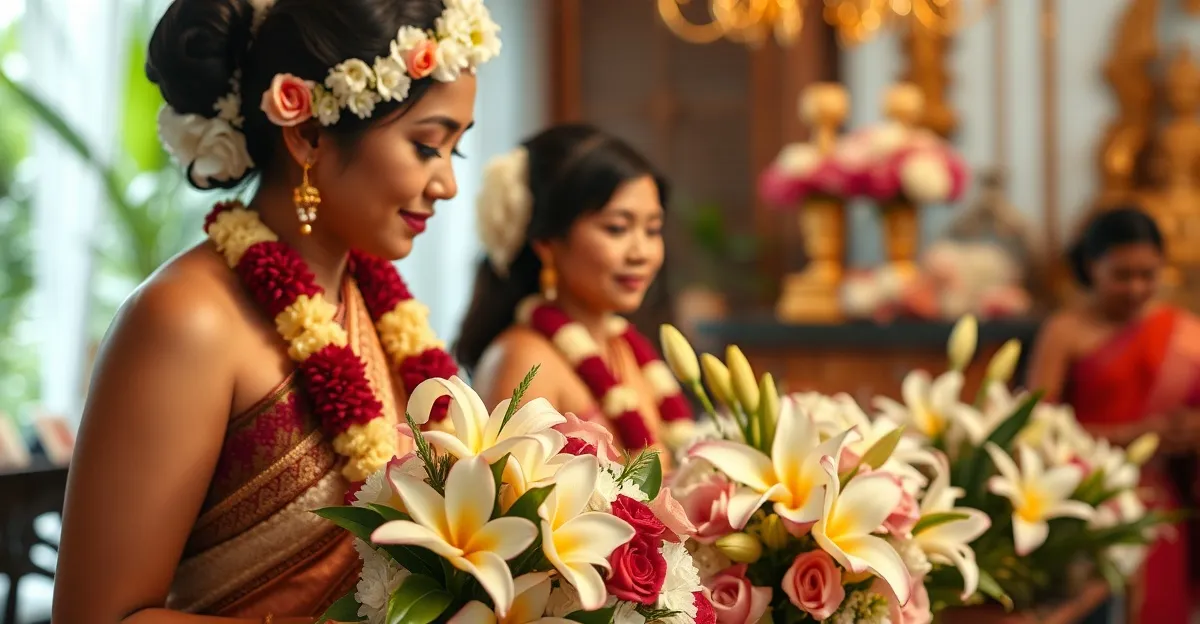
A traditional Balinese Hindu wedding is not a single event — it's a sequence of rituals spread across days, sometimes weeks, each with its own flower requirements, meanings, and protocols. From the first formal engagement ceremony to the final reception feast, flowers mark every threshold, every prayer, every change of spiritual status.
Understanding these flower traditions helps whether you're planning your own wedding in Bali, attending a Balinese friend's ceremony, or simply curious about why the floral choices at a Balinese wedding are so specific.
Masakapan: the engagement ceremony
Before the wedding itself, the formal engagement — masakapan — involves the groom's family visiting the bride's family compound with offerings. These offerings include specific flower arrangements that signal intention and respect.
The engagement offerings (banten masakapan) include:
- Yellow flowers (frangipani, chrysanthemum, marigold) symbolising prosperity and auspiciousness for the union
- White flowers at the crown of the offering tower, representing purity of intention
- Red flowers (hibiscus, carnation) for Brahma — the divine force of creation being invoked
The quantity and quality of these offerings communicates something about the seriousness of the groom's family. A modest masakapan offering uses market flowers; an elaborate one might incorporate rare blooms and professionally assembled banten.
The pawiwahan: the main ceremony and its flowers
The pawiwahan is the core Balinese Hindu wedding ceremony. It takes place in the family temple compound — usually the groom's family's sanggah — and is led by a pemangku (priest). The ceremony's key floral elements:
The sekar tegeh (flower crown or floral headdress): Traditional Balinese brides wear elaborate floral headdresses incorporating fresh flowers, gold ornaments, and carefully placed frangipani. The white and yellow frangipani positioned in the hair have spiritual significance — they indicate the bride's readiness and her invocation of Dewi Sri and other protective goddesses.
Flower offerings at the shrine: The padmasana shrine in the family temple receives the most elaborate flower offering of the ceremony — typically a tall banten incorporating white frangipani, cempaka, kenanga, marigold, and red hibiscus in their respective directional positions.
Tirtha water flowers: The pemangku prepares holy water (tirtha) for the couple using flowers, particularly frangipani and cempaka, which are submerged in the water to infuse it with their sacred fragrance and essence.
Ngejot flower gifts: Neighbours and family members invited to participate often bring offerings that include fresh flowers — particularly during the food-distribution (ngejot) phase of the wedding ceremony.
Flower headdresses at Bali weddings: symbolism and making explores the craft of the Balinese bridal crown in detail.
Flowers worn by the wedding party
The flower use isn't limited to offerings — it's worn by the participants.
The bride: White and yellow frangipani positioned in the hair (typically right side, indicating devotional direction), sometimes supplemented with jasmine or kenanga for fragrance. In more elaborate ceremonies, fresh flower garlands may be worn around the neck.
The groom: Simpler flower placement — typically a white frangipani behind one ear, or woven into the udeng headband.
Female family members and guests: Women attending a Balinese wedding traditionally place a flower in their hair. During the ceremony, this is usually white frangipani or jasmine. The collective fragrance of a full wedding ceremony with dozens of women wearing fresh flowers is something quite specific to Bali.
The pemangku: Priests conducting the ceremony may have additional flowers placed on their officiating garments — these are prescribed by the ceremony's requirements rather than personal choice.
Floral decorations at reception celebrations
Many Balinese families also hold a more public reception (resepsi pernikahan) after the religious ceremony — either on the same day or the following day. This is where external florists' work is most visible.
Reception flower arrangements in Bali follow a mix of traditional Balinese and contemporary decorating styles:
- Gateway arches: Fresh flower arches at reception entrances using tropical flowers — heliconia, anthurium, ginger flower, and frangipani are all common
- Table centrepieces: Low arrangements of mixed tropical blooms, often in terracotta pots or tropical leaf wraps
- Buffet table decoration: Marigold strings and fresh flower bed arrangements across food tables
- Photo corners: More elaborate fresh flower backdrops using imported roses combined with local tropical flowers
Colour schemes vary by family preference, but gold and white (representing auspiciousness and purity) are the most traditional Balinese wedding palette. Some contemporary families opt for more saturated tropical colours — coral, deep orange, and magenta.
Luxury wedding flowers: what to send in Bali covers the contemporary end of Bali wedding floral design.

The team
your florists
weekly subscription · Bali
We write about flowers because we love them. We deliver them because someone should — properly, weekly, across Bali.
— heyflowerPay once for 3, 6, or 12 months, no auto-renewal.
Practical considerations for Balinese wedding flowers
Timing and heat: A Balinese wedding typically begins in the morning and extends through the afternoon. Flowers placed at 6am may be wilting by noon in Bali's 30°C heat and high humidity. The most experienced local florists know which varieties hold up — marigold and chrysanthemum last well, while hydrangea and delicate imported roses require shade.
Budget ranges: A traditional ceremony's flower requirements might run from Rp 500,000 for a modest family ceremony to Rp 5–10 million for an elaborate multi-day celebration. Reception decoration is separate and can range from Rp 3 million for simple fresh decoration to Rp 50 million or more for a professionally styled event.
Sourcing: Most Balinese families buy ceremony flowers from the central markets (Pasar Badung, Pasar Gianyar) in the days before the wedding. Reception decoration is increasingly commissioned from florists in Seminyak, Ubud, or Canggu, where imported flowers supplement local tropical varieties.
FAQ
Which flowers should I bring as a gift to a Balinese wedding? A fresh arrangement featuring yellow and white flowers — frangipani, chrysanthemum, marigold — is always appropriate. Avoid white lilies or all-white arrangements, which are more associated with mourning in some contexts. A vibrant mixed tropical bouquet or a professionally assembled banten is ideal.
Can a non-Balinese person have a traditional Balinese Hindu wedding ceremony? This is a sensitive topic. Many elements of the pawiwahan have specific religious prerequisites. Some Balinese families welcome mixed-heritage couples with adapted ceremonies; others maintain stricter religious requirements. It's best to have an honest conversation with the officiating pemangku and the families involved.
What happens to all the wedding flowers afterward? Ceremonial offerings are typically composted or returned to nature after the religious purpose is fulfilled. Decorative fresh flowers from the reception are often redistributed — given to family members, used for ongoing household canang sari, or donated to nearby temples.
Do Balinese weddings have Western-style bridal bouquets? Traditional ceremonies don't typically involve a hand-carried bouquet — the bride's flowers are in her hair and in the offerings. However, for contemporary Balinese-Western hybrid weddings (common in Seminyak and Ubud villa weddings), a bridal bouquet is often incorporated.
How far in advance should I order wedding flowers in Bali? For traditional ceremony flowers, 1–2 weeks is usually sufficient. For elaborate reception decorations with specific imported flowers, 4–6 weeks is safer, especially during peak wedding season (July–September and December–January in Bali).
Ready to bring fresh flowers to your Bali home or event? Explore our weekly flower subscription and get handpicked blooms delivered to your door every week.



