6 flowers that signify strength during recovery
Six flowers whose symbolism speaks to resilience, healing, and strength — ideal for gifting to someone recovering from illness, surgery, or a difficult period.
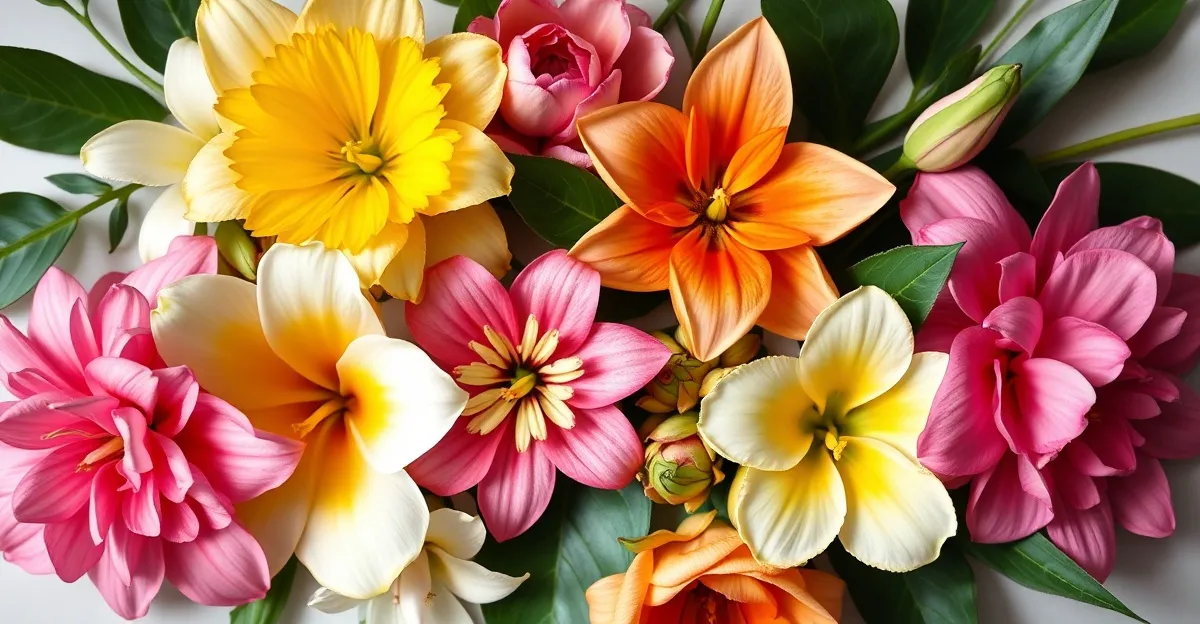
When someone is going through recovery — from illness, surgery, a mental health period, a loss, or the grinding difficulty of a long convalescence — the flowers you send or bring carry meaning beyond their visual beauty. A get-well bouquet is not just decoration; it is a physical symbol of support, presence, and the expectation that better days are ahead.
The flowers in this guide are chosen specifically for the qualities their symbolism communicates: resilience, the ability to rise from difficult conditions, persistence, and the long view. All are available in Bali and all are appropriate for a recovery context — culturally sensitive, genuinely meaningful, and practically suited to a sick room or convalescence space.
1. Lotus — Rising from Difficult Conditions
No flower is more apt as a symbol of recovery than the lotus. The lotus grows from mud — from genuinely difficult, murky conditions — and produces one of the most pure and beautiful flowers in the natural world. This growth pattern has made it the central flower of spiritual aspiration across Hinduism, Buddhism, and several other traditions, and it is particularly significant in Bali's Balinese Hindu context.
In Balinese Hinduism, the lotus represents the soul that rises above worldly difficulty toward spiritual clarity. Given to someone in recovery, a lotus carries the message: "You are capable of rising from this." It is not false comfort — it acknowledges the difficulty of the conditions while asserting the possibility of emergence.
Lotus blooms are more difficult to source than most flowers on this list. They are available through specialty florists and from growing areas in Bedugul. For the full cultural context of the lotus in Bali, lotus in Balinese Hinduism: meaning and ritual use provides detailed background.
Presentation: A single pink or white lotus in a shallow ceramic bowl of water. Simple, clean, and deeply intentional.
2. Orchid — Resilience and Endurance
Orchids in nature grow in some of the most challenging environments imaginable — attached to bare rock faces, in deeply shaded forest understories, in extremely nutrient-poor conditions. Despite this, they produce some of the most complex and beautiful flowers in the plant world. The orchid's survival strategy is based not on abundance of resources but on extreme efficiency and adaptive resilience.
As a symbol for someone in recovery, orchid communicates: "You have what it takes to survive in difficult conditions, and you will come out of this producing something beautiful." In Bali specifically, the island's own orchid cultivation (in the Bedugul highlands) provides consistently fresh orchids that last 2–3 weeks as cut flowers — a practical consideration in a recovery context where you want the flowers to stay fresh and encouraging.
Presentation: A white or soft pink Dendrobium spray in a simple terracotta pot, or a Phalaenopsis orchid plant (blooms for months with minimal care — good for longer recoveries).
3. Sunflower — Turning Toward the Light
Sunflowers track the sun — a behaviour called heliotropism — moving through the day to face the light source. The cultural association between sunflowers and optimism, persistence, and the active pursuit of light makes them a powerful recovery symbol: the flower that does not simply receive light but seeks it out.
The vivid yellow of sunflower is also empirically mood-positive. Research on colour and emotion consistently suggests that yellow-orange tones in an environment contribute to lighter mood states. In a recovery room where someone might be spending many hours, a sunflower's colour works as active medicine alongside its symbolism.
Sunflowers are available in Bali through wholesale florists who import from Java's highland growing regions. They are seasonal in availability (most reliably in the dry season) but generally accessible through specialist florists.
Presentation: Three to five sunflowers in a simple glass vase — the stems and the large open faces need visual space. Pair with a few stems of eucalyptus for contrast.
4. Anthurium — Durability and Persistent Beauty
Anthurium is included here for a specific practical reason as much as for symbolism: it lasts 3–4 weeks in a vase without any special care. In a recovery context — where the person may not have energy for flower maintenance, and where hospital stays or home recovery periods can be long — anthurium is the flower that will still be beautiful weeks after it was given.
The symbolism aligns too. Anthurium's waxy spathe is specifically evolved to resist moisture loss and survive conditions that would wilt more delicate flowers. Its durability is built into its biology. For someone who needs a reminder that beauty can be durable — that recovery is not about a single burst of effort but about persistent, sustained process — anthurium makes this point without requiring words.
Presentation: A red or deep pink anthurium in a dark ceramic vessel. The combination of deep colour and clean form reads as both beautiful and quietly powerful.
5. Chrysanthemum — Health, Longevity, and Restoration
In several East Asian traditions, chrysanthemum is specifically associated with health, longevity, and restoration — it is the flower of hospitals and of recovery in the Chinese cultural calendar. In Japan, chrysanthemum appears on the imperial seal and is associated with long life. In Bali's Chinese Balinese community, the symbolic connection between chrysanthemum and health is well understood.
Large white chrysanthemum pompoms in a recovery context carry the message of restored health and long life ahead. They are also exceptionally long-lasting as cut flowers (10–14 days in Bali's climate) and have a cheerful, clean quality that suits a convalescence space without being cloying.
For someone from a Chinese, Japanese, or Korean background, the chrysanthemum has a specific cultural resonance that makes it a particularly thoughtful choice.
Presentation: A generous bunch of white chrysanthemum pompoms in a clear glass vase. Unpretentious, durable, and meaningful.
6. Bird of Paradise — Seeing the Full Picture
The bird of paradise flower is associated in many traditions with perspective, the ability to see the full horizon, and freedom. The flight metaphor embedded in the flower's form — its emergence from the spathe like a bird taking off — has made it a symbol of transcendence and forward movement across cultures.
For someone in recovery, bird of paradise says: "You will fly again. This is not where the story ends." It is a bolder, more assertive flower symbolically than the others on this list — less about the quiet persistence of orchid or lotus, more about the confident expectation of eventual emergence into a freer state.
As a practical gift, bird of paradise lasts 2–3 weeks with stem trimming and fresh water, and the progressive emergence of new "birds" from each spathe means the arrangement actively evolves — a good metaphor for a recovery that is itself a process rather than a single moment.
Presentation: One or two stems in a tall narrow vase or dark ceramic cylinder. The stem height and architectural form need space — do not crowd them.

The team
your florists
weekly subscription · Bali
We write about flowers because we love them. We deliver them because someone should — properly, weekly, across Bali.
— heyflowerPay once for 3, 6, or 12 months, no auto-renewal.
What to Consider When Gifting Flowers to Someone in Recovery
Fragrance sensitivity: People in hospital or recovering from illness, surgery, or chemotherapy often develop heightened sensitivity to strong scents. Avoid tuberose, jasmine, and any heavily fragrant flowers for hospital or immediate post-surgery gifts. The flowers on this list are all low-fragrance or neutral in scent.
Pollen concerns: Some hospital policies restrict flowers with heavy pollen for immune-compromised patients. Chrysanthemum is not typically pollen-problematic. Orchids and anthurium produce very little pollen. Sunflowers have more pollen — if the recipient is immunocompromised, ask a florist to source pollen-free varieties or have the stamens removed before delivery.
Long-lasting vs. fragile: Choose flowers with long vase lives (anthurium, orchid, chrysanthemum, bird of paradise) rather than short-lived flowers (frangipani, jasmine, lotus) for recovery contexts where the person needs to benefit from the gift over days and weeks rather than a single afternoon.
Plant vs. cut flowers: For longer recoveries, a living plant — a potted orchid, a small succulent arrangement — is often a better choice than cut flowers. It continues to grow and flourish alongside the recipient's recovery, and requires only minimal care. For the practical gifting dimension, 9 flowers for new parents recovering postpartum covers a specific recovery context with useful parallel advice.
FAQ
Is it appropriate to send flowers to someone in hospital in Bali? Yes, though some private hospitals (BIMC Kuta, Siloam hospitals) may have specific policies about flowers in certain wards (ICU, oncology). For general wards and private rooms, flowers are usually welcome. Check the hospital's policy if you are unsure.
Which flower on this list is most appropriate for someone recovering from a mental health period? The sunflower and the lotus are both particularly well-suited. The lotus for its specific symbolism of rising from difficult conditions; the sunflower for its empirically mood-positive colour and its association with seeking the light. Pair either with a genuinely personal card note — the written message matters as much as the flower choice in this context.
Are there flowers to avoid in a recovery gift? Avoid flowers with heavy religious or ceremonial association that might be misread — a large canang-sari-style arrangement of marigolds might be confusing in a recovery context. Avoid strongly fragrant flowers for anyone with nausea, post-surgical sensitivity, or chemotherapy-related scent sensitivity. Avoid flowers that imply endings (heavily dark-toned, all-black arrangements).
How do I send flowers to someone in recovery if they are in a hospital outside of Bali? For hospitals elsewhere in Indonesia, contact a local florist in that city directly. For overseas recipients, international florist networks (Interflora, 1-800-Flowers) can facilitate delivery, though the tropical flowers available in Bali may not be available in temperate destinations — choose flowers suited to the destination's availability.
Is it appropriate to send flowers to someone who does not believe in the symbolic meanings you have described? Completely. Flowers communicate care regardless of whether the recipient consciously engages with their symbolism. The symbolism enriches your choice and gives you something true to say in the card — "I chose lotus because of what it means in Balinese tradition, and I thought it suited this moment" — but the primary gift is the care expressed through the gesture, not the symbolic content.
For everyone you care about in Bali — recovering or thriving — beautiful flowers are available every week. Explore our weekly flower subscription and get handpicked blooms delivered to your door every week, ready whenever you need them.



