5 flowers to avoid gifting during Nyepi
Nyepi, Bali's Day of Silence, comes with cultural nuances around gifting flowers. Learn which five flowers to avoid and what to send instead.
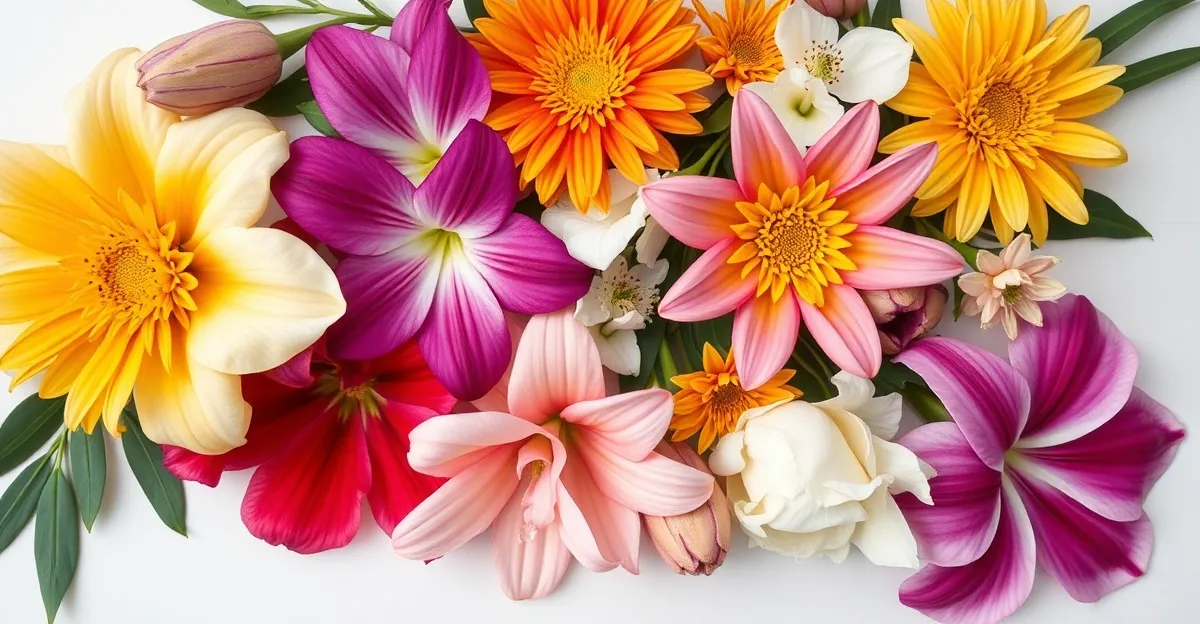
Nyepi — the Balinese New Year and Day of Silence — is one of the most remarkable days in the entire Balinese calendar. Unlike New Year celebrations elsewhere, Nyepi is defined by its absence: no lights, no movement, no cooking, no noise. The entire island falls quiet. Ngurah Rai Airport closes for 24 hours. Roads empty. Even the ocean seems calmer.
For visitors and expats living in Bali, Nyepi raises practical and cultural questions about how to behave, what to give, and what is appropriate in the days surrounding it. Flower gifting is one area where getting it right matters — not because there are severe penalties for mistakes, but because flowers carry genuine cultural weight in Balinese Hindu tradition, and the symbolism around Nyepi is specific enough to warrant care.
This guide focuses on the five flowers that are best avoided when gifting around Nyepi, the cultural reasons behind each, and what makes a far more appropriate floral choice for this unique time.
Understanding Nyepi's Floral Context
Nyepi falls on the day after the dark moon (Tilem) of the ninth Balinese month (Kasanga), typically in March. The days immediately preceding Nyepi involve active ceremonial life: Melasti purification rituals at the sea, Mecaru earth-purifying offerings, and the famous Ogoh-Ogoh parade on Pengrupukan Eve. Flowers are central to all of these — but the specific flowers used are ritually prescribed.
The day of Nyepi itself is Catur Brata Penyepian: four observances of silence, fasting, no fire, and no festivity. Gift-giving is not appropriate on the day itself. But in the days before and after Nyepi, when Balinese families are in ceremonial mode, flower gifts from outsiders can be either warmly received or culturally awkward depending on what you choose.
The flowers to avoid are those that carry associations that feel discordant with Nyepi's themes of purification, spiritual renewal, and reflection — or flowers that are culturally used primarily in contexts that do not fit the moment.
1. Red Roses — Too Romantically Coded for a Spiritual New Year
Red roses carry a universal association with romantic love, and that singular association makes them an odd gift during a period of spiritual seriousness. Nyepi is a time of self-reflection and prayer for Balinese Hindus — presenting red roses to a Balinese family or colleague in the days around Nyepi reads as socially tone-deaf at best.
This is not about any specific cultural prohibition against roses in Balinese tradition. Roses do appear in Balinese ceremonial contexts (they are used in some temple offerings). The issue is the dominant association that a bunch of red roses carries for the recipient — and for a deeply spiritual new year observation, the romantic overtone is simply inappropriate.
If you want to send flowers around Nyepi, choose white or pale-toned options that convey purity and good wishes rather than romance.
2. Bright Orange and Red Marigolds in Festive Arrangement
Here the cultural nuance is more specific. Marigolds — gemitir — are deeply integral to Balinese ceremonial life. They appear in canang sari, in offerings for Melasti and Mecaru ceremonies, and throughout the Nyepi period. You might think this makes them appropriate gifts.
The issue is presentation and framing. Marigolds are not typically given as decorative gifts between people — they are sacred flowers used in religious contexts. Presenting someone with a festive bouquet prominently featuring marigolds in a gift-giving frame can feel like you are treating a sacred material as decoration. It is not an offensive mistake — most Balinese would not be upset — but it lacks the cultural literacy that makes a flower gift genuinely meaningful.
If you want to incorporate marigolds, include them as part of a modest arrangement where they are not the dominant element, and present it in a context that acknowledges their ceremonial significance.
3. Yellow Chrysanthemums — Associated With Funerals in Chinese Balinese Culture
Bali has a significant Chinese Balinese community (Bali-Chinese, or often referred to as Peranakan), particularly in commercial areas like Denpasar, Kuta, and Singaraja. In Chinese cultural tradition, yellow and white chrysanthemums are strongly associated with funerals and mourning — presenting them as a gift to a Chinese Balinese family is genuinely poor etiquette.
During Nyepi, which is a community-wide observance affecting all Balinese residents regardless of ethnicity, the sensitivity around this association is heightened. When in doubt about the cultural background of the recipient, avoid yellow chrysanthemums for any gift in the Nyepi period.
White chrysanthemums can also carry some of this funerary association, though the connection is less universal. If you choose chrysanthemums for a Nyepi period gift, pink or purple varieties are safer.
4. Large, Dramatic Tropical Statement Flowers (Heliconia, Bird of Paradise)
This is more about appropriateness of scale than cultural prohibition. Nyepi's period — and particularly Nyepi itself — is a time of quietude and inwardness. Large, dramatic statement flowers like Heliconia or Bird of Paradise have a visual energy that feels mismatched with the meditative quality of the occasion.
More practically: during Nyepi and the days immediately around it, many Balinese families are focused on ceremony, fasting, and spiritual practice. Receiving a dramatic arrangement that requires attention and vase care is an imposition during a time when people are deliberately not thinking about domestic tasks.
Choose flowers that are smaller in scale, more self-contained, and do not require active maintenance — a small thoughtful arrangement rather than a dramatic statement piece.
5. Any Flowers Bearing Obvious Pests or Disease
This sounds basic, but it is worth stating explicitly in the context of Nyepi. The Melasti ceremony — the purification ritual performed at the sea or rivers in the days before Nyepi — is fundamentally about cleansing impurity. Mecaru offerings at the neighbourhood crossroads are about purifying the earth of negative forces. The entire sequence of pre-Nyepi ritual is about removing taint and preparing for renewal.
Gifting flowers that are visibly diseased, insect-affected, or past their prime during this period carries a symbolic weight that is uncomfortable in this context. It is always worth checking the quality of cut flowers before gifting, but around Nyepi the symbolic dimension of presenting something impure is particularly acute.
What to Give Instead
If you want to send flowers to a Balinese friend, colleague, or host around Nyepi, the most appropriate choices lean toward white and pale colours, modest scale, and flowers that carry connotations of purity and spiritual sensitivity.
White frangipani — The single most appropriate flower for the Nyepi period. It is used in purification ceremonies, it carries a sweet fragrance that is simultaneously sacred and calming, and its white form conveys purity. A small arrangement or a single bloom placed thoughtfully is a genuinely meaningful gesture.
White or pale orchids — Clean, refined, and spiritually appropriate. White Dendrobium sprays are widely available and feel right for the occasion.
White cempaka (champak) — Deeply sacred in Balinese Hindu tradition and specifically used in temple contexts. A small bunch of white cempaka flowers is one of the most culturally literate flower gifts you can give a Balinese family around Nyepi.
Pale lotus if available — The lotus is the preeminent spiritual flower in Balinese Hinduism, representing purity emerging from murky water. A white lotus flower, if you can source one, is the most symbolically resonant flower for a Nyepi gift.
For a deeper understanding of the lotus's significance, lotus in Balinese Hinduism: meaning and ritual use provides the full cultural context.

The team
your florists
weekly subscription · Bali
We write about flowers because we love them. We deliver them because someone should — properly, weekly, across Bali.
— heyflowerPay once for 3, 6, or 12 months, no auto-renewal.
Timing Your Gift Around Nyepi
A few practical notes on timing:
- Do not attempt delivery on Nyepi day itself. No delivery services operate. Roads are closed to vehicles. Attempting to send anything on Nyepi day is not possible and is culturally inappropriate.
- Delivery on Pengrupukan Eve (the day before Nyepi) is possible but not ideal — the family will be focused on the Ogoh-Ogoh parade and final ceremonial preparations.
- Two or three days before Nyepi is the most appropriate window for a pre-Nyepi gift.
- The day after Nyepi (Ngembak Geni) is also an excellent time — it marks the first day of the Balinese New Year, family visits are customary, and a beautiful flower arrangement is a genuinely welcome gift.
For more context on how Balinese ceremonies and the ritual calendar affect flower gifting throughout the year, the guide on last-minute Galungan flower ideas for Bali covers a similarly important ceremonial context.
FAQ
Is it offensive to give flowers to a Balinese Hindu during Nyepi? No, as long as you avoid the day itself (when no exchanges are possible or appropriate) and choose flowers thoughtfully. Most Balinese people appreciate the gesture of a flower gift and will not take offence at a minor cultural misstep — but making the effort to choose appropriately is noticed and appreciated.
Can I still order a flower subscription delivery for the week of Nyepi? Most reputable flower delivery services in Bali will adjust delivery schedules around Nyepi day. Deliveries will typically be rescheduled to the day before or two days after. It is worth confirming with your delivery service how they handle the Nyepi closure.
Are there flowers that are always appropriate in Bali regardless of ceremony? White frangipani, white orchids, and white cempaka are safe choices for virtually any ceremonial context in Bali. When in doubt, choose white flowers — they convey purity and respect across multiple cultural contexts simultaneously.
What is Ngembak Geni and is it appropriate to give flowers then? Ngembak Geni is the day after Nyepi — the "reopening of fire." Family visits and mutual forgiveness (saling subakti) are customary. It is an excellent time to give flowers, particularly to Balinese friends and colleagues. The day has a warm, celebratory quality that makes flower gifts genuinely welcome.
Do the restrictions around flower gifting during Nyepi apply to non-Balinese friends? For expats and visitors who are not Balinese Hindu, the ceremonial restrictions obviously do not apply in the same way. But since Nyepi affects the entire island, practical constraints (no deliveries, closed markets) apply to everyone. The cultural sensitivity around what flowers you choose matters most when the recipient is Balinese.
For every other occasion in Bali's rich ceremonial calendar, fresh flowers are always a welcome gift. Explore our weekly flower subscription and get handpicked blooms delivered to your door every week — adjusted around Bali's ceremonial calendar.



