13 tropical flowers every florist in Bali loves
The 13 tropical flowers that Bali's most experienced florists reach for first — reliable, beautiful, and perfectly suited to the island's climate and aesthetic.
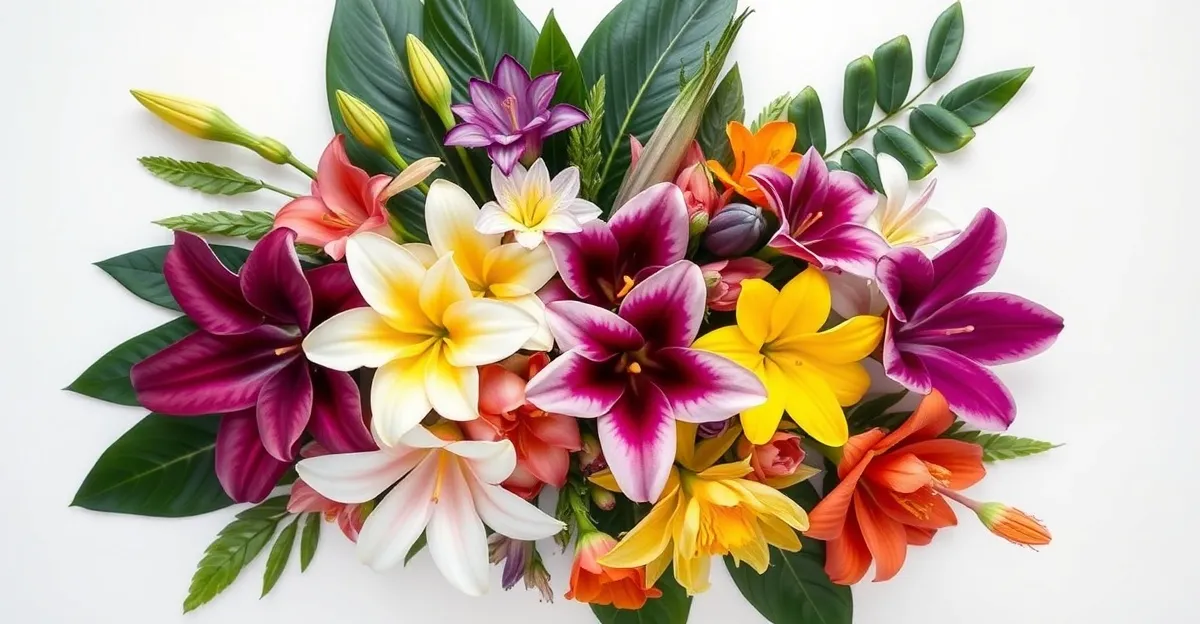
Ask a Bali florist what they actually like working with — not what their clients request, not what the wedding magazines show, but what they genuinely find beautiful and reliable in this specific climate — and a list emerges that is different from the typical flower guide. These are the thirteen tropical flowers that experienced Bali florists reach for repeatedly, whether for hotel lobbies in Seminyak, wedding arches in Ubud, or weekly home delivery bouquets in Canggu.
The reasons are a combination of aesthetics, practical longevity in heat and humidity, and the specific visual quality that tropical light in Bali brings out in certain flowers better than anywhere else. Here is what the professionals love and why.
1. Anthurium — The Reliable Centrepiece
Every Bali florist has a relationship with anthurium because it never lets you down. Three to four weeks of vase life, a lacquered appearance that photographs superbly, available year-round, and suitable for both formal arrangements and organic tropical composites. Red anthurium is the workhorse; white and green are the design-forward choices.
The waxy spathe catches Bali's intense equatorial light in a way that soft-petalled flowers do not. Where a rose in midday Bali sun can look washed out or wilted, an anthurium glows.
2. Dendrobium Orchid — The Local Luxury
Grown in the Bedugul highlands and available fresh every morning, Dendrobium orchids are beloved by Bali florists because they are simultaneously accessible and beautiful. A spray of 12–15 florets progressively opening over two to three weeks gives arrangements a lifespan that justifies their use even in everyday bouquets.
Florists love the range: white for elegance, purple for drama, yellow for warmth, pink for softness. Mixed-colour Dendrobium sprays in a single arrangement give textural progression that no other flower provides the same way.
3. Heliconia — The Architectural Statement
No other tropical flower commands space the way heliconia does. The large waxy bracts — in combinations of red, orange, yellow, and chartreuse — function architecturally: they define the vertical and horizontal structure of an arrangement before any other flower is added.
Bali florists love heliconia because it does not require supporting players to look good. A single stem in a tall floor vase is a complete design statement. It also holds up in both the wet and dry season without wilting, which matters when you are decorating an open-air venue during the afternoon heat of Bali's dry season.
4. Vanda Orchid — The Hotel Lobby Flower
The large, flat-faced Vanda orchid — in electric purple, orange, bi-colour spotted, and white — is the signature flower of Bali's luxury hotel and resort market. Florists who work with five-star properties in Nusa Dua, Jimbaran, and Seminyak know Vanda well: it is dramatic, photogenic, and has genuine staying power in arrangements.
Growing in hanging baskets without soil, Vanda orchids absorb moisture from Bali's humid air, which actually makes them ideal for the island's climate. Florists often use Vanda as the dominant statement flower in hanging installations, where its large face reads from a distance.
5. Torch Ginger (Kecombrang) — The Bali-Specific Beautiful
Torch ginger is one of those flowers that international clients rarely request by name but fall in love with when they see it. The waxy cone-shaped pink or red flower heads have an almost plastic perfection — smooth, symmetrical, and deeply tropical. They are unmistakably from this part of the world.
Florists love torch ginger because it is sturdy (a week or two in a vase without drama), locally grown, and visually distinctive. It is the flower that makes a Bali-composed arrangement look specifically from Bali rather than generically tropical.
6. Frangipani (Jepun) — The Scent and Spirit
No florist in Bali can talk about their favourite flowers without frangipani. It is the scent that defines the island, the flower of temples and offerings and morning walks past family compounds. In arrangements, white frangipani placed on a water surface, scattered as table decoration, or woven into ceremony garlands creates the most specifically Balinese visual atmosphere of any flower.
The challenge for florists is frangipani's relatively short cut life and its dry-season limitation, but within those parameters it is irreplaceable. The fragrance dimension alone — which fills an entire room — sets it apart.
7. Bird of Paradise (Strelitzia) — The Global Favourite
Bird of paradise is beloved by Bali florists partly because it is beloved by their international clients — who know it from high-end florists in Europe and the US — and partly because it genuinely thrives in Bali's climate in a way it cannot in those places.
The emerging blue "tongue" and the orange sepals of the mature flower are visually extraordinary. New birds emerge progressively from the boat-shaped spathe over 2–3 weeks, which means the arrangement evolves rather than declining. Florists use bird of paradise as a lead design element in contemporary tropical arrangements that want to avoid looking purely local.
8. Celosia — The Texture Flower
Celosia might be cheap at Pasar Badung, but experienced Bali florists know exactly what it adds to a composition. The velvety, ridged surface of the cockscomb variety catches light unlike any other flower — it absorbs it, rather than reflecting it, which gives arrangements a depth and warmth that is hard to achieve otherwise.
In deep red and burgundy, celosia reads as opulent. In orange and gold, it reads as warm and celebratory. In vibrant magenta, it is exciting and modern. The plume variety adds a feathery, soft texture that contrasts beautifully with structural flowers like heliconia or anthurium.
9. Lotus — The Sacred Centrepiece
Lotus is not an everyday commercial cut flower even in Bali, but every florist knows where to source it and reaches for it when the occasion calls for something with genuine spiritual and cultural weight. Pink lotus for traditional Balinese ceremony setups; white lotus for moments of purity and simplicity.
The flower head changes through its bloom — opening each morning, closing at night — which means a lotus arrangement is alive in a way that most cut flowers are not. For one-day events, this liveliness is a feature rather than a limitation. The cultural significance of lotus in Balinese Hinduism gives it a depth that purely decorative flowers cannot match. Learn more at lotus in Balinese Hinduism: meaning and ritual use.
10. Protea — The Botanical Drama
Protea arrived in Bali's florist vocabulary relatively recently, carried in by the global wave of Australian and South African botanical aesthetics that swept wedding design over the past decade. But florists who have started working with it are committed fans.
The large, architecturally complex flower heads — particularly King Protea — hold for 3–5 days in Bali conditions and hold even longer as they dry in place. They photograph superbly and create a visual drama that neither tropical exotics nor European classics achieve in quite the same way. The rough, textured outer bracts against the dense inner flower create a contrast that is endlessly interesting to work with.
11. Globe Amaranth (Bunga Kenop) — The Small But Mighty
Globe amaranth seems too small and too simple to feature on a professional list, but florists know better. The tight, jewel-like heads — in magenta, pink, white, and lavender — create visual punctuation in mixed arrangements. They add the kind of tightly controlled colour that large, open flowers cannot provide.
They also last extraordinarily long — 3–4 weeks in Bali conditions — and hold their colour beautifully as they dry in the arrangement. Florists use globe amaranth as the final layer that pulls disparate elements together into a composition.
12. Tropical Greenery — Monstera, Heliconia Leaf, and Palm
Every experienced Bali florist will tell you that greenery is at least as important as flowers. Tropical Bali offers a greenery palette that temperate florists dream about: large monstera leaves with their dramatic split-leaf structure; the long paddle shapes of heliconia leaves; the arching elegance of Areca palm; the graphic simplicity of a single banana leaf used as a base layer.
These are not "fillers" in the pejorative sense — they are structural elements that define the aesthetic of a Bali composition. An arrangement made only of flowers looks different and often less interesting than one where dramatic tropical foliage is given equal visual weight.

The team
your florists
weekly subscription · Bali
We write about flowers because we love them. We deliver them because someone should — properly, weekly, across Bali.
— heyflowerPay once for 3, 6, or 12 months, no auto-renewal.
13. Marigold — The Cultural Foundation
Last on the list but never least important: marigold. Bali florists understand that gemitir is the most culturally embedded flower on the island — it is the flower of daily offerings, of ceremonial gates, of Galungan decorations that transform the island twice a year. Using marigold in an arrangement makes a statement about understanding where you are.
In large-scale event and wedding decoration, marigold provides colour at a cost that makes abundance possible. A floor or aisle covered with marigold heads — in the manner of traditional South Indian and Balinese ceremonial decoration — costs a fraction of what the same area of roses or orchids would require, and has an authenticity that no imported flower can match.
What This List Reveals
Looking across these thirteen flowers, a pattern emerges: the flowers that experienced Bali florists love most are predominantly locally grown, climate-adapted, and carrying genuine cultural resonance with the island. There is a reason for this. Florists who work in Bali long enough develop a visual and aesthetic sensibility that is shaped by the island — by its volcanic stone architecture, its rice field greens, its terracotta and dark teak interiors, and its particular quality of equatorial light.
Flowers from elsewhere — imported roses, peonies, hydrangeas — have their place in Bali arrangements, particularly for international clients who request them. But the thirteen flowers on this list are what makes a Bali flower arrangement specifically, undeniably from Bali.
For help sourcing the right florist to work with these flowers in the right way, how to choose a florist in Bali: 10 things to check provides a practical guide.
FAQ
Which of these flowers are easiest to find at Bali's daily markets? Marigold, celosia, globe amaranth, and Dendrobium orchids are available at Pasar Badung and most roadside flower stalls every morning. Anthurium, heliconia, and torch ginger are slightly more wholesale-oriented but available at most florist-specific suppliers in Kerobokan. Protea, Vanda orchid, and lotus require specialist sourcing.
Which flowers on this list are best for a home arrangement that lasts two weeks? Anthurium (3–4 weeks), Dendrobium orchid (2–3 weeks), heliconia (2–3 weeks), globe amaranth (3–4 weeks), and celosia (2–3 weeks). These five together would create a long-lasting arrangement with colour, texture, and structure.
Can I buy all 13 of these flowers in one place in Bali? No single market or florist will stock all 13 on any given day. Pasar Badung covers the everyday market flowers well. Wholesale florists in Kerobokan add heliconia, anthurium, and orchid. Specialist highland florists and importers cover protea and premium orchids. A good florist consolidates all these sourcing relationships for you.
Do these flowers work well together in a single arrangement? Not all thirteen at once — that would be overwhelming. But combinations of 4–6 from this list consistently produce beautiful results. Anthurium + orchid + celosia + monstera leaf is a classic Bali tropical arrangement. Heliconia + frangipani + lotus (when available) is more ceremonial. Bird of paradise + protea + eucalyptus has a contemporary botanical quality.
Are these flowers appropriate for gifting to Balinese friends and colleagues? Most yes. Lotus has the most sacred cultural associations — it is more appropriate in ceremonial contexts than as a casual gift. Marigold is most meaningful in offering contexts rather than gift bouquets. The others (anthurium, orchid, frangipani, heliconia, celosia) are all appropriate and warmly received as gifts.
Want these professional-quality tropical flowers delivered to your home every week? Explore our weekly flower subscription and get handpicked blooms delivered to your door every week — curated by people who know Bali's flowers deeply.



