11 flowers locals use in Canang Sari and why
The 11 flowers Balinese Hindus use in their daily canang sari offerings — with the spiritual meaning behind each choice and why the colours and placement matter.
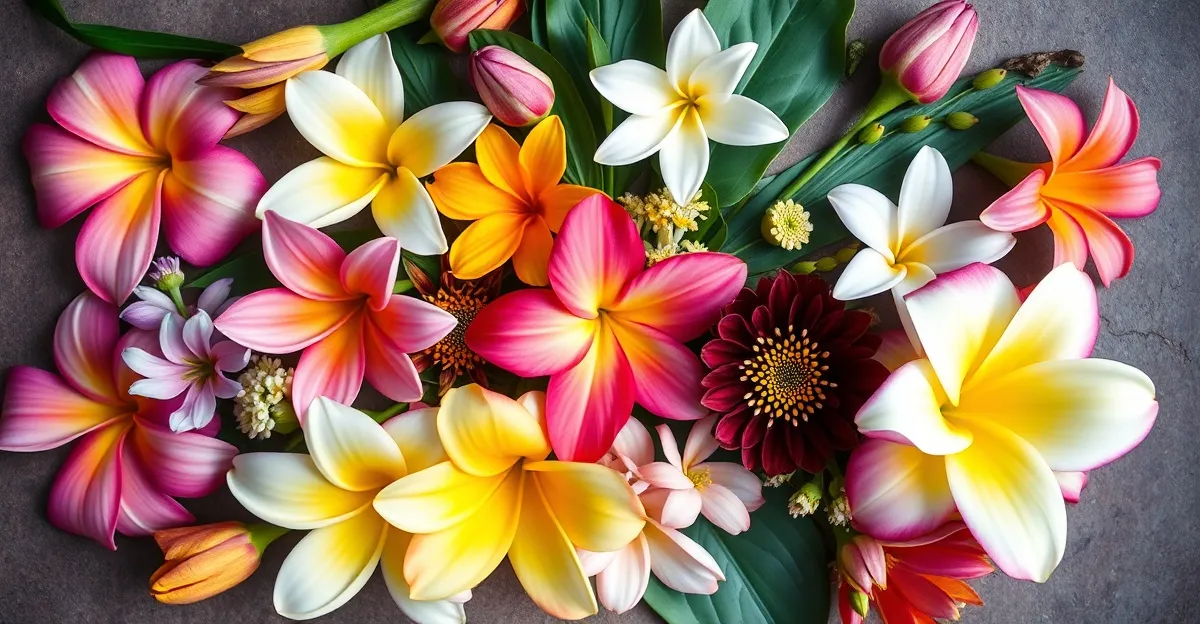
Walk through any Balinese family compound, past any shop, along any village road early in the morning, and you will see them: small, square palm-leaf trays placed on the ground, on steps, on shrines, sometimes floating in pools. These are canang sari — the most common form of daily Balinese Hindu offering. They appear every day, made fresh each morning, placed to thank the gods, to maintain cosmic balance, and to fulfil the daily spiritual obligation of many Balinese Hindu practitioners.
At the centre of each canang sari are flowers. Not random flowers — specific flowers in specific positions, each carrying specific meaning. The practice is governed by longstanding tradition, rooted in the Tri Murti (the Hindu trinity of Brahma, Wisnu, and Siwa) and in the spiritual colour system that maps the cardinal directions to divine forces.
This guide covers the eleven flowers most commonly used in canang sari, why each is chosen, and what their presence in daily Balinese life means for anyone spending time on the island.
The Structure of Canang Sari
Before the flowers: canang sari has a specific structure. The base is a small tray woven from coconut palm leaf (janur), typically square. Inside, a base layer of white lime (chunam) is sometimes applied. Then a circular arrangement of banana leaf or palm leaf sections creates the inner tray. On top of this goes a layer of offering materials — sometimes rice, sometimes lime, betel nut, and tobacco — and then the flowers, arranged by colour to correspond with directions and spiritual forces.
The arrangement system follows the Hindu cardinal direction colour mapping used throughout Balinese Hinduism: white to the east (Iswara), red to the south (Brahma), yellow to the west (Mahadewa), and blue/black to the north (Wisnu). In the centre: multicolour for Siwa, the supreme deity.
This means every flower placed in a canang sari is chosen both for its physical beauty and for the role its colour plays in the offering's spiritual geography.
1. Frangipani (Jepun) — Plumeria
The most iconic offering flower in Bali. White frangipani petals are placed facing east (the direction of Iswara/Isvara). The flower carries associations with purification, the spiritual life of the deceased, and communication between the human and divine worlds. It appears in virtually every canang sari because its white form, its fragrance, and its cultural ubiquity make it the foundation of the floral offering.
Yellow frangipani (jepun kuning) faces west, associated with Mahadewa. Different frangipani colours serve different directional and divine purposes within a single offering.
2. Marigold (Gemitir) — Tagetes
Marigolds are the dominant red and orange flowers in canang sari, placed facing south to honour Brahma, the god of creation. The vivid orange-gold colour of marigolds visually "fires" in the southern position in the same way that Brahma's element — fire — defines that direction in the Balinese Tri Sakti system.
Marigolds are available in enormous quantities daily in Bali because of this demand. The agricultural system of the island partly exists to supply the daily offering market. Millions of individual marigold stems are used in canang sari across Bali every single day.
3. Kenanga (Champak / Cempaka) — Magnolia champaca
Cempaka provides the yellow or golden element for the western position (Mahadewa). The small flowers — either orange-yellow or white-yellow depending on variety — have a rich, honeyed fragrance that adds a sensory dimension to the offering alongside its visual colour contribution.
Cempaka is considered among the most sacred flowers in Balinese temple life and appears not only in canang sari but in larger ceremonial offerings, in hair adornments for ceremonial dress, and in temple decoration. The tree often grows in or near temple compounds specifically because of this ritual significance.
4. Bougainvillea (Bunga Kertas)
The paper-thin bracts of bougainvillea are used for colour contribution — particularly the magenta, pink, and purple varieties that fill the colour spectrum between the primary directional colours. Bougainvillea is used pragmatically: it grows freely across Bali and is easy to gather, and its bracts hold their colour well even after cutting.
In canang sari, bougainvillea bracts often fill positions in the centre of the arrangement, contributing to the multicolour section associated with Siwa.
5. Hibiscus (Pucuk) — Bunga Sepatu
Hibiscus — particularly the red varieties — serves the southern, fire-direction position in some regional canang traditions. The large red blooms are used either whole (for larger offerings) or as petals scattered across the offering surface. Hibiscus is also significant in the Balinese Hindu concept of feminine divine energy and appears frequently in offerings specifically to goddess aspects of the divine feminine.
The white hibiscus variety appears in east-facing positions in some traditions. Regional variations across Bali — between Denpasar, Ubud, Karangasem, and Buleleng — mean that the specific flowers chosen may vary while the underlying directional colour logic remains consistent.
6. Jasmine (Melati) — Jasminum sambac
White jasmine provides the white-east element in canang sari when frangipani is not available or when a smaller, more delicate white flower is appropriate. The intense fragrance of jasmine has deep meaning in Balinese Hinduism — it represents the purification of the senses and the drawing in of divine attention through scent.
Jasmine is also used extensively in temple offerings, in ceremonial dress (as hair garlands), and in purification rituals. The combination of white colour and sweet scent makes it one of the most spiritually loaded flowers in the Balinese offering system.
7. Plumeria (Pink Varieties) — Jepun Merah Muda
Pink frangipani occupies a position between the white (east) and red (south) directional colours. In canang sari design, pink varieties bridge these two zones and are placed accordingly. Pink frangipani is also associated with love and harmony — not romantic love in the Western sense, but the harmonious relationship between human society and the divine order.
Different families and different priests may position pink frangipani differently based on regional tradition and personal teaching lineage, which illustrates the living, practised nature of this tradition rather than a rigid textbook system.
8. Cockscomb (Celosia / Jengger Ayam)
Red cockscomb celosia serves a similar directional purpose to marigold — the southern/Brahma position — and is often combined with marigold in the same canang to provide textural contrast. The velvety, dense texture of celosia adds visual richness to the offering surface and the deep red colour reads as intensity and devotion.
In larger ceremonial offerings (not everyday canang sari but special occasion banten), celosia appears in greater quantity as part of more elaborate floral arrangements.
9. Globe Amaranth (Bunga Kenop) — Gomphrena globosa
The small, round, jewel-like heads of globe amaranth — in magenta, pink, white, and purple — appear in canang sari as accent flowers that fill directional colour needs without the large surface area commitment of marigold or frangipani. They are particularly valued in the purple-to-north/Wisnu position when small blue or purple flowers are needed.
Globe amaranth's papery texture makes it durable in offerings — it does not wilt as quickly as some softer petals, which matters for offerings placed on hot pavement or in direct sun.
10. Croton Leaves and Pandan Leaves — Non-Flower Elements
While not flowers, croton leaves (Codiaeum variegatum) and pandan leaves deserve mention here because they provide the structural base layer in many canang sari. The multi-coloured leaves of croton — red, orange, yellow, green — contribute directional colours when specific flowers are unavailable. Pandan leaves, green and fragrant, are placed in specific positions related to earth and growth.
Understanding that canang sari is a combination of flowers, leaves, and other natural materials helps explain why the flower selection is never entirely uniform — the whole composition achieves the spiritual colour map together.

The team
your florists
weekly subscription · Bali
We write about flowers because we love them. We deliver them because someone should — properly, weekly, across Bali.
— heyflowerPay once for 3, 6, or 12 months, no auto-renewal.
11. Lotus (Teratai) — Nelumbo nucifera
Lotus petals appear in more significant offerings and in special canang created for major ceremony days rather than in everyday morning canang sari. The lotus carries profound meaning in Balinese Hinduism — it represents spiritual purity rising from earthly conditions, the seat of the divine, and the state of enlightenment.
Pink and white lotus petals are used at the centre of elaborate offerings and around the central deity positions in large temple ceremony arrangements. For the full depth of the lotus's meaning in Bali, the guide on lotus in Balinese Hinduism: meaning and ritual use explores the complete cultural and spiritual context.
Why This Matters for Flower Gifting
Understanding which flowers carry sacred associations in canang sari practice matters when giving or receiving flowers in Bali. It is not that these flowers should not be used decoratively — they absolutely are used in decoration, in wedding flowers, and in home arrangements. But knowing that marigolds, frangipani, and jasmine are first and foremost sacred offering flowers in Balinese culture gives you a different relationship to them.
When you receive fresh flowers in Bali, or when you choose flowers for a gift to a Balinese family, the cultural layer behind each bloom is worth knowing. It is the difference between treating Bali as a backdrop and actually understanding the place.
For the practical side of what flowers work best in different gifting contexts across Bali's ceremonial calendar, last-minute Galungan flower ideas for Bali gives specific guidance for one of the most important celebrations on the Balinese Hindu calendar.
FAQ
Can non-Hindus make or use canang sari? Many Balinese welcome respectful participation and observation from non-Hindus, but the act of making canang sari as a spiritual offering is traditionally a Balinese Hindu practice. Non-Hindus can appreciate and learn about canang sari without appropriating the practice — there is a meaningful difference between buying the same flowers for home decoration and presenting canang as one's own spiritual offering.
Is it disrespectful to step on canang sari? It is respectful to step around canang sari on pavements and roads, but the offerings are placed on the ground with the understanding that life continues around them. Most Balinese will not be offended if a foreigner accidentally steps near a canang — but making the effort to go around them is noticed and appreciated.
How often do Balinese families make canang sari? Observant Balinese Hindus make fresh canang sari every morning, and sometimes additionally around midday and evening. The practice is deeply embedded in daily life. Some families create canang at every ceremonial household shrine; others maintain simpler daily offerings. Practices vary by family, temple affiliation, and personal piety.
Can I buy canang sari pre-made in Bali? Yes — small canang sari are sold pre-assembled at market stalls near temples and at roadside vendors early in the morning, typically for Rp 1,000–3,000 each. These are primarily sold to Balinese people who need a quick daily offering; the practice of making them from scratch remains important, but the pre-made market serves practical daily needs.
Why are canang sari placed on the ground? The ground-level placement honours the earth and the lower spiritual realms, while elevated offerings on shrines honour the divine realms. The complete offering system addresses multiple spiritual layers simultaneously — earth, ancestors, gods — through their spatial positioning.
Bring the beauty of Bali's flower culture into your home every week. Explore our weekly flower subscription and get handpicked blooms delivered to your door every week — fresh, seasonal, and always from the island.



