Weekly flower habit: the mental health benefits
Research-backed reasons why a weekly flower habit improves mood, reduces stress, and supports wellbeing — and why it matters especially for expats in Bali.
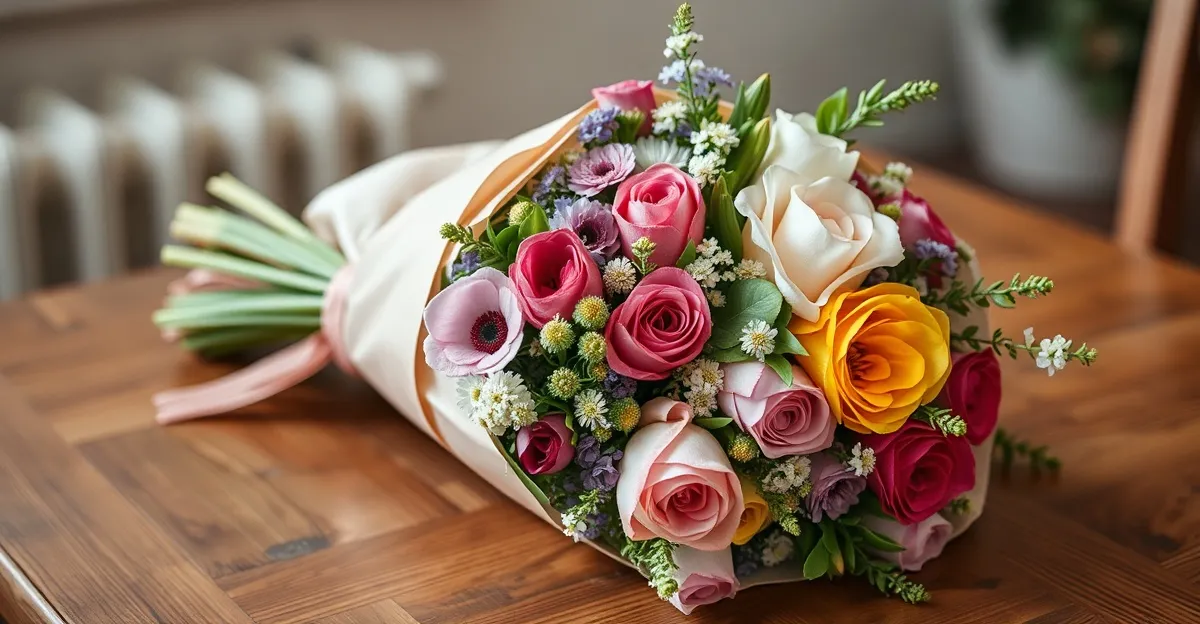
There's a version of this article that would be full of caveats: flowers are nice, but they don't replace therapy, and anyone claiming a bouquet cures anxiety is oversimplifying. That's true and worth saying upfront.
But within those caveats, there's a genuine body of evidence that regular exposure to flowers and living plants does measurable things to human mood, stress response, and cognitive function. And in a specific context — living in Bali as a foreigner, often without familiar social infrastructure, working independently, navigating a complex and beautiful new culture — those benefits matter more than they might in a different setting.
Here's what we actually know about how fresh flowers affect mental health, and how building a weekly flower habit fits into a broader approach to wellbeing.
What the research actually shows
The landmark study most often cited is the 2005 behavioural research from Rutgers University, which found that flowers consistently triggered genuine smiling (Duchenne smiles rather than polite social smiles), elevated mood, and reduced depression scores across multiple demographic groups. The effects weren't subtle — they showed up clearly and consistently across the study population.
Separate research has looked at how plants and flowers in indoor environments affect stress response. Studies measuring cortisol levels in hospital settings found that patients in rooms with plants and flowers had measurably lower stress hormone levels than patients in rooms without. The effect is consistent with what we know about biophilia — the human tendency to respond positively to natural elements, which is thought to be evolutionary in origin.
For cognitive function, Harvard Medical School research showed that people who kept fresh flowers in their homes reported higher energy levels, greater enthusiasm for their work, and less anxiety. This was most pronounced in the morning, when people in rooms with flowers felt more positive than they did in rooms without.
None of this says flowers fix depression or replace clinical treatment. But it does suggest that consistently introducing natural beauty into a living environment has a real, measurable effect on daily mood and energy — which compounds over time.
Why this matters specifically in Bali
Bali attracts a particular kind of person: someone seeking something — a different pace, a creative environment, an escape from a career or location that wasn't working. That seeking is often energising, but it can also come with specific mental health vulnerabilities.
Loneliness is more common than the Instagram version of Bali life suggests. The community can be strong but also transient — friends leave, relationships don't always survive the Bali chaos, and for every person who's deeply settled into a community, there's someone feeling isolated despite the sunshine and rice fields.
Work anxiety is real for digital nomads and remote workers. The absence of office structure, the irregular rhythm of freelance income, the difficulty of switching off when your home is also your office — these are genuine stressors.
The aesthetic overload of Bali is wonderful but also relentless. The island can demand a lot emotionally. Beautiful places aren't necessarily calming places.
In this context, small, consistent rituals that ground daily life have disproportionate value. A weekly flower arrival is exactly this kind of ritual: it's reliable, it marks the week's beginning, it introduces something living and beautiful into the home environment, and it requires a brief, intentional pause when you place the arrangement in its vase.
The ritual dimension
The research on flowers is interesting, but the ritual around them might matter as much as the flowers themselves. The act of receiving something, unwrapping it, choosing a vase, trimming stems, filling water, placing the arrangement — this is a small mindfulness practice. It pulls attention away from screens and tasks and into sensory, present-moment experience.
This is not a grand claim. It's five minutes of doing something with your hands that produces an immediately satisfying result. In a work environment dominated by abstract tasks — writing, coding, designing, client calls — the physical, immediate satisfaction of placing a finished arrangement on a table is genuinely restorative.
Some people extend this into a more deliberate weekly ritual: fresh flowers as a prompt for the week's intention, or as part of a broader Sunday or Monday morning reset. The specific practice matters less than the consistency. A weekly ritual that signals "the week is beginning, I'm showing up for it" has its own psychological value independent of the flowers.
Flowers and the expat home
One specific dimension of the flower habit that gets underappreciated: what it does to the feeling of a home that's not entirely yours.
Many people in Bali rent villas or apartments with someone else's furniture, someone else's art, someone else's aesthetic choices. Making that space feel genuinely like yours — inhabited and personal — takes effort. Fresh flowers are one of the fastest, most effective ways to do it.
A rented villa in Kerobokan with fresh flowers on the kitchen table and a small arrangement in the bedroom feels like a home. The same villa without them can feel like a short-stay rental regardless of how long you've been there. This isn't superficial — feeling at home affects mental health directly. Rootedness, even in a temporary context, reduces anxiety.
Picking the right vase for your villa entryway covers how vessel choice affects how an arrangement makes a space feel — useful reading for the practical dimension of making a rented space feel inhabited.

The team
your florists
weekly subscription · Bali
We write about flowers because we love them. We deliver them because someone should — properly, weekly, across Bali.
— heyflowerPay once for 3, 6, or 12 months, no auto-renewal.
Building the habit sustainably
A weekly flower subscription is the mechanical backbone of a sustainable flower habit. Buying flowers impulsively from the pasar — which requires initiative, transportation, selection under time pressure — is harder to sustain than a delivery that simply arrives each Monday.
The subscription removes friction. The flowers come, you engage with them briefly, and then you benefit from their presence through the week without any further action required. This is the design principle behind habit-building: reduce the activation energy for the behaviour you want to sustain.
For the mental health benefits to accumulate, consistency is what matters. One bouquet every three weeks, when you remember, doesn't build the same rhythm as a reliable weekly arrival. The subscription structure creates the habit scaffolding.
New baby flower subscription ideas that keep giving applies this habit-building logic to the specific context of new parenthood — a period of high stress where consistent small pleasures matter most.
FAQ
Is there evidence that flowers genuinely help with depression? Research shows that flowers consistently improve mood and reduce anxiety scores in study populations. They are not a treatment for clinical depression but may be a useful complementary element alongside proper clinical support.
How quickly do you feel the effect of fresh flowers in a room? The Rutgers research found mood effects from flowers were measurable almost immediately upon receipt. The longer-term effects on energy and anxiety take weeks of consistent exposure to show clearly.
Do fake flowers have the same effect? The evidence is less strong for artificial flowers. The biophilia research suggests that the living quality of fresh flowers and plants — their growth, change, and relationship with light — is part of what produces the psychological response.
What's the minimum frequency for a flower habit to have a real effect? Weekly appears to be the threshold. More frequent than weekly has diminishing additional returns. Less frequent than weekly — every two to three weeks — produces some benefit but not the same consistent environmental effect.
Does the type of flower matter, or just having any flower? Some research suggests certain colours have mood-specific effects (yellow and orange flowers particularly associated with energy, white with calm), but the dominant finding is that any fresh flowers produce significant effects compared to no flowers.
Start your own weekly flower habit today. Explore our weekly flower subscription and get handpicked Bali blooms delivered to your door every week.



