Wedding Flower Delivery in Mengwi: A Planner's Guide
Planning a wedding in Mengwi? This guide covers everything from flower selection to delivery logistics, helping you build a floral plan that works for Bali's inland district.
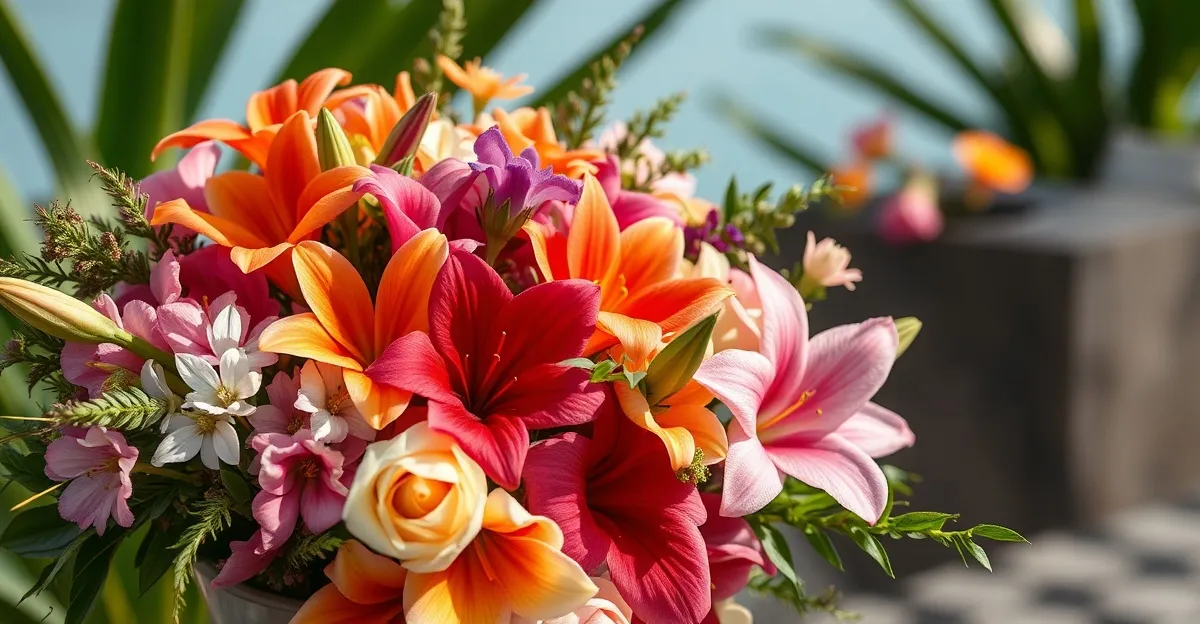
Mengwi is an extraordinarily beautiful backdrop for a wedding. Pura Taman Ayun, one of Bali's most magnificent royal temples, sits in the heart of the district. The surrounding landscape — terraced rice fields, traditional village compounds, towering palm lines — provides a setting that most wedding venues in the world cannot match. For couples who want a Balinese wedding that feels genuinely connected to the island rather than staged in a resort bubble, Mengwi and its surrounding area is a compelling choice.
Flowers for a Mengwi wedding require planning that's specific to the setting: the logistics of delivering to an inland, partially rural location, the variety choices that hold up in Bali's climate through a full ceremony and reception, the aesthetic that feels authentic to the Balinese landscape rather than imported wholesale from a European wedding Pinterest board. This guide addresses all of it.
The Mengwi Wedding Landscape
Before getting to flowers, understand the contexts you're working with.
Private villa weddings are the most common format for international couples choosing Mengwi. The area has a number of stunning private villa properties with ceremony and reception facilities. These offer complete flexibility on flowers — you bring your own florist, style every space to your brief, and the venue works around you.
Semi-traditional ceremonies that incorporate elements of Balinese tradition are increasingly popular for couples who want cultural depth alongside the aesthetic beauty. These involve ceremonial flowers (the specific varieties used in Balinese ritual — marigold, frangipani, champak) alongside the decorative floristry for the reception.
Intimate micro-weddings — ten to thirty guests — are a growing format in Mengwi precisely because the area's villas and natural settings scale down beautifully for small ceremonies without feeling sparse.
Each format has different floristry implications, but the core logistical and variety considerations apply across all of them.
Flower Varieties for a Mengwi Wedding
Ceremony Flowers
Ceremony flowers need to survive outdoor conditions for the duration of the ceremony — typically 30–60 minutes of direct involvement for the couple, followed by the reception period. In Mengwi, ceremony hours are best planned for the morning (before 10am) or late afternoon (after 4pm) to avoid the full intensity of midday heat.
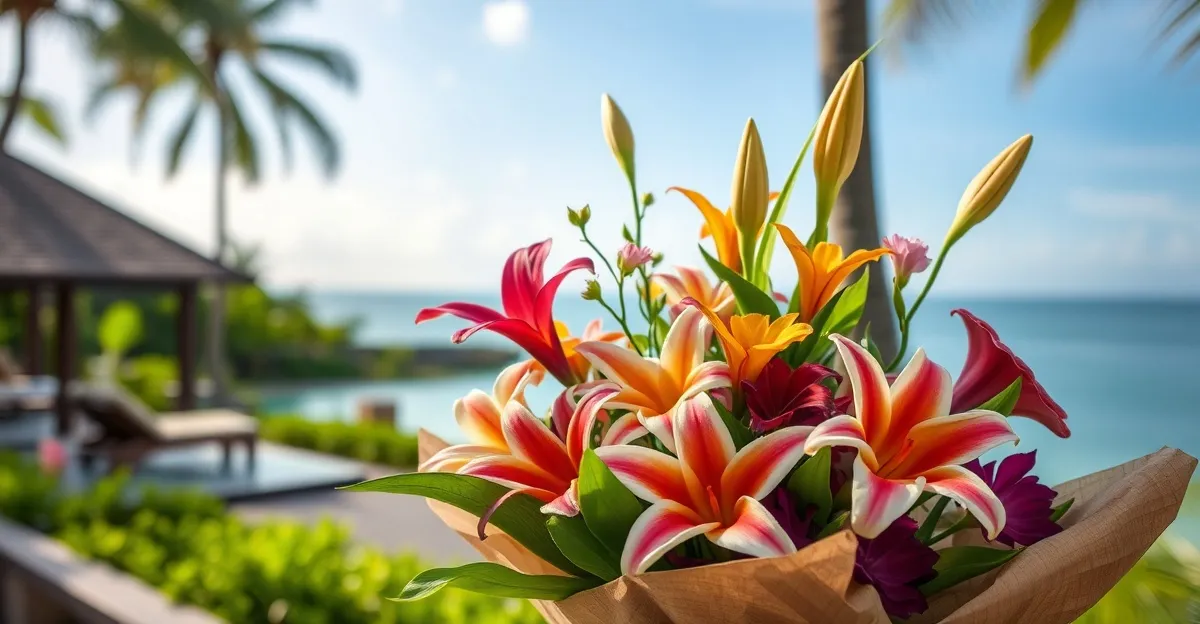
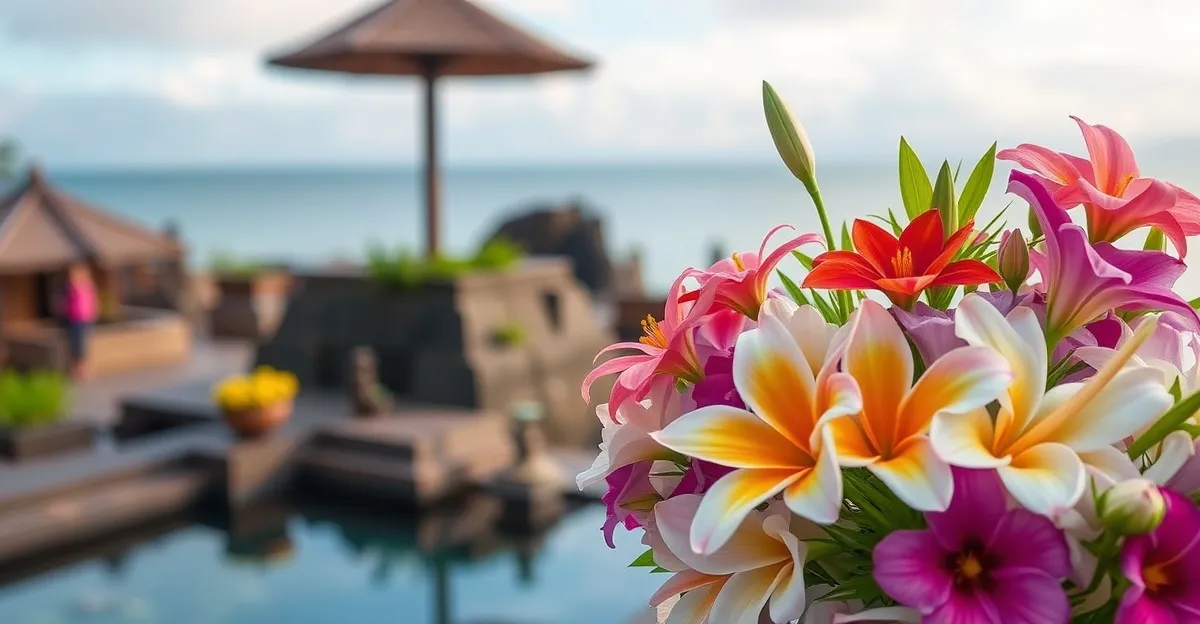
Frangipani is almost mandatory for a wedding in this setting. It's the scent and image of Bali in a single flower. For ceremony arches, aisle decorations, and the couple's arrangements, frangipani brings cultural authenticity and extraordinary fragrance. White frangipani for simplicity; yellow or pink varieties for warmth.
Tropical orchids — particularly white phalaenopsis for formal contexts, or cascading dendrobium sprays for more flowing, romantic arrangements — are the backbone of the ceremony floral backdrop. They photograph beautifully in natural light and hold their form through a ceremony hour.
Anthuriums in cream or white add architectural structure to ceremony installations. A ceremony arch framed with white anthurium and tropical foliage, with frangipani scattered along the pathway — this is the visual signature of a Mengwi ceremony done well.
Bridal Party Flowers
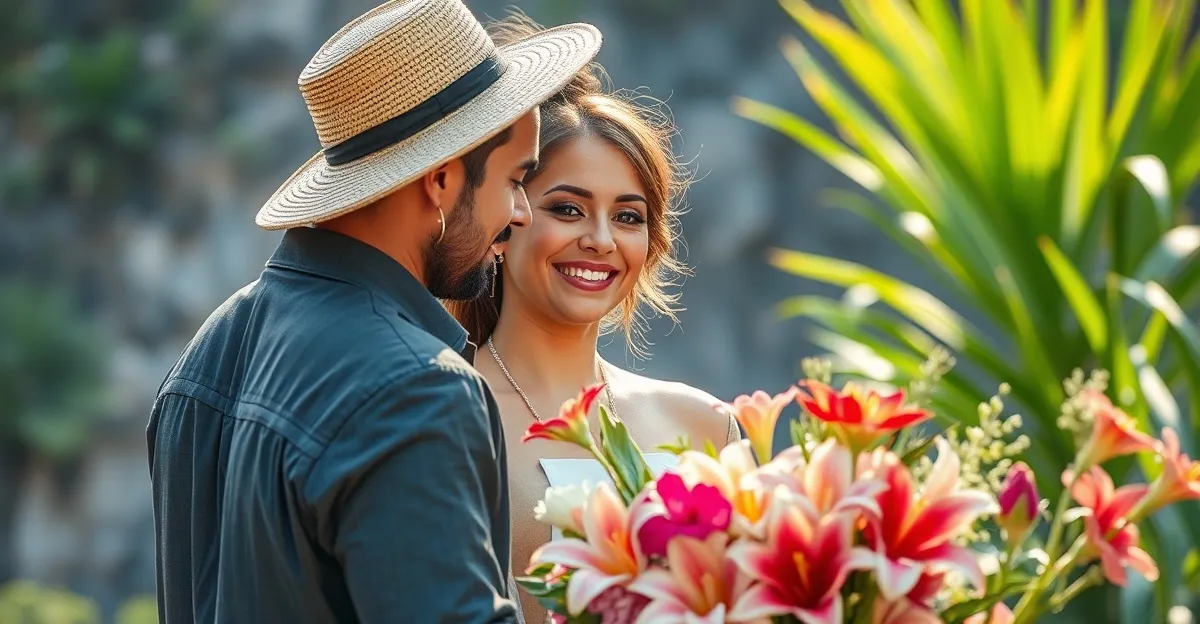
Bridal bouquet: In Mengwi's setting, a cascading bouquet with white orchids and frangipani — loosely tied, slightly trailing — has more visual relationship with the landscape than a tight, round, imported-flower bouquet. It photographs well against the green of the rice fields. If your partner is attached to roses, use them as an accent rather than the primary variety.
Bridesmaid bouquets: Smaller, simpler versions of the bridal bouquet. Single-variety arrangements — all frangipani, or all orchid — are elegant and photograph cohesively in group shots.
Buttonholes and corsages: A single frangipani bloom or small orchid spray. Simple, intentional, appropriate to the setting. Avoid complex buttonhole constructions in Bali's heat — they can look wilted in the ceremony photos if not properly conditioned.
Reception Flowers
Reception flowers have more time and more complexity than ceremony flowers. Table centrepieces, welcome arrangements, bar styling, dessert table displays — each requires a slightly different approach.
Table centrepieces: Low and wide for round tables (as discussed above, sightlines matter). Mixed tropical arrangements with anthuriums, orchids, and generous foliage in terracotta, stone, or ceramic vessels. For a longer wedding timeline, discuss with your florist what refreshing looks like — whether stems can be rehydrated at the midpoint of a long reception.
Welcome and entrance installations: A large floral installation at the villa entrance or the reception entrance is worth allocating proper budget to. A half-moon arch, a suspended cloud of orchids and frangipani, a trellis draped in tropical flowers — these create photography moments that guests use throughout the evening.
Bar and high tables: Single stems or small arrangements in tall vessels. Heliconias or birds of paradise work beautifully on bars, adding height and drama without the width that might interfere with service.
Logistics: Delivering Flowers to a Mengwi Wedding
Wedding flower delivery is more complex than a standard delivery. Multiple vehicle loads may be required for a full wedding. Delivery timing is non-negotiable — everything must be in place by the specified setup time. And the logistical challenges of Mengwi (distance, rural addresses) are amplified by the pressure of a wedding day.
Early Morning Delivery
For a morning ceremony (9–11am), flower delivery should begin at 5–6am. This allows two to three hours of setup time before the ceremony, accommodates any last-minute adjustments, and keeps flowers at their freshest for the ceremony moment.
For afternoon or evening ceremonies, delivery at 8–9am followed by florist setup through the morning gives the same comfortable window.
On-Site Florist Presence
For a wedding, having your florist present on-site throughout the setup — rather than a drop-and-leave delivery — is essential. Arrangements need to be placed in situ, adjusted for the specific space, and sometimes remade partially if something doesn't work as planned. The florist's presence also allows last-minute additions or adjustments based on the actual light conditions on the day.
Route and Access Planning
Discuss the specific villa or venue address with your florist in detail before the wedding date. Do a dry run if possible, or at minimum have the florist visit the venue during the planning phase to understand the setup space, access requirements, and any logistical constraints.
For reference on how similar wedding flower planning works in other parts of Bali, the piece on pastel wedding palette ideas for Bali covers colour selection specifically and is useful for the palette decision that informs all other floral choices.
Budgeting for a Mengwi Wedding
Wedding floristry budgets vary enormously. For an intimate ten-person ceremony with modest decorative floristry, a total flower budget of Rp 5,000,000–10,000,000 is realistic. For a full wedding with elaborate ceremony installation, styled reception tables, welcome arch, and bridal party flowers for twenty guests, Rp 25,000,000–60,000,000 is a more appropriate range.
This sounds like a wide range because it is. The variables are enormous: the number of guests, the complexity of the installation, the varieties chosen (locally grown versus imported), and the hours of florist time required for setup and breakdown.
Allocate budget to the high-visibility pieces first: ceremony arch, bridal bouquet, welcome installation, main table centrepieces. These are what photographs and memories preserve. Secondary placements (bathroom arrangements, subsidiary tables) can use simpler approaches without significantly affecting the overall impression.

The team
your florists
weekly subscription · Bali
We write about flowers because we love them. We deliver them because someone should — properly, weekly, across Bali.
— heyflowerPay once for 3, 6, or 12 months, no auto-renewal.
Working With a Florist for Your Mengwi Wedding
The most important decision in wedding floristry is the relationship with your florist. This is a creative partnership that requires trust, clear communication, and a shared understanding of your aesthetic vision.
Brief early: For a Mengwi wedding, engage your florist at least two to three months in advance. This allows them to source specific varieties, plan staffing for the wedding day, and build the logistics plan for a distance delivery.
Share your vision in images: A mood board of 10–20 images is more useful than a written description. What photographs show is specific in a way that words often aren't.
Be clear about non-negotiables versus preferences: "I must have frangipani" is different from "I'd like frangipani if possible." Your florist can work better when they know what's fixed and what's flexible.
Visit a practice arrangement if possible: For a significant wedding investment, asking your florist to create a scaled test centrepiece in advance is reasonable. It lets both parties confirm the aesthetic is aligned before the wedding day.
Frequently Asked Questions
Can heyflower.co handle a full wedding in Mengwi?
Heyflower.co is based in Canggu and serves clients across southern Bali including Mengwi. For wedding enquiries, reach out early — our capacity for wedding work is limited and we book specific dates in advance. Contact us via heyflower.co to discuss your date and requirements.
What time of year is best for a Mengwi wedding?
The dry season (May–September) offers the most reliably beautiful weather and the best conditions for outdoor ceremonies. The wet season produces stunning green scenery and dramatic light, but requires weather contingency planning. April and October are transitional months that can be beautiful but unpredictable.
Are Balinese ceremonial flowers different from decorative wedding flowers?
Yes. Ceremonial flowers (used in Balinese ritual contexts — banten, canang sari, wedding purification ceremonies) follow specific traditions and use specific varieties. A florist familiar with Balinese ceremonies can advise on appropriate ceremonial elements if you're incorporating traditional Balinese elements into your wedding.
How do we ensure flowers last through an all-day wedding?
Work with your florist to plan a flower refresh for the transition between ceremony and reception if needed. This typically involves replacing any stems that have faded, refreshing water in centrepiece vessels, and touching up any arrangements that need it. Building this into the wedding day plan — with the florist staying on-site or returning at the transition — is the reliable approach.
What's the most sustainable approach to wedding flowers in Mengwi?
Prioritise locally grown tropical varieties over imported stems — they have a fraction of the carbon footprint of air-freighted flowers. After the wedding, donate arrangements to a local community or hospital, or compost blooms that can't be repurposed. Your florist can advise on local partners who accept flower donations.
A wedding in Mengwi, done well, is one of the most beautiful experiences Bali has to offer. Getting the flowers right is a significant part of that. Heyflower.co brings expertise in tropical wedding floristry and reliable delivery across the Mengwi area. For weddings, ongoing villa styling, or any other occasion, we're here. If you'd like fresh flowers regularly delivered to your property in the meantime, start a flower subscription and build the habit of beautiful blooms.
More on Mengwi