Silica gel flower drying: a complete guide
Everything you need to know about drying flowers with silica gel in Bali, including sourcing, technique, and getting vivid colours in tropical humidity.
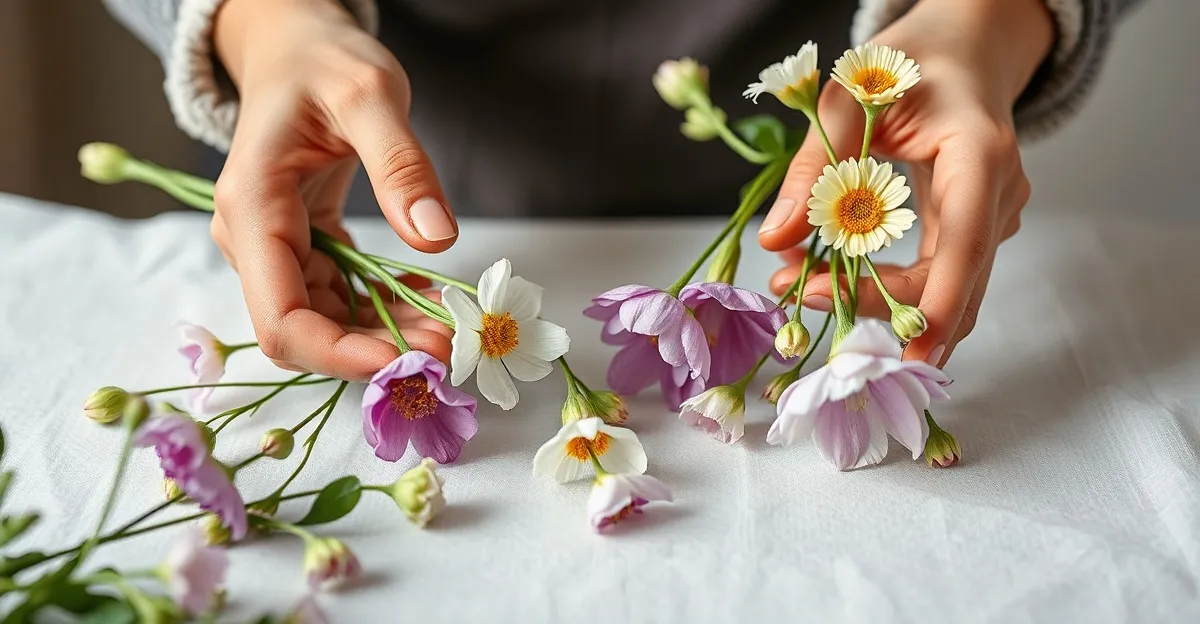
If you've ever tried to air-dry flowers in Bali and ended up with a mouldy, brown disappointment, you're not alone. Our tropical climate — warm and sticky with humidity regularly above 80% — makes slow air-drying genuinely difficult. Silica gel solves that problem by pulling moisture out of flowers rapidly, before mould or colour degradation has a chance to set in. The results are often stunning: preserved flowers that hold their three-dimensional form and colour far better than anything air-drying produces here.
This guide covers everything you need to know about silica gel flower drying, from sourcing the product in Bali to getting the best results from different flower types.
What silica gel actually does
Silica gel is a desiccant — a material that absorbs and holds moisture. The same tiny packets you find in shoe boxes and electronics packaging are made from it. For flower preservation, you bury the flowers completely in silica gel crystals, which draw the water out of the petals over one to three days. Because the process is fast, the flowers have less time to brown or collapse. The structure of the petals is maintained by the crystals surrounding them, so the dried flower retains its three-dimensional shape rather than flattening out.
This makes silica gel particularly well-suited to flowers with complex petal structures — roses, dahlias, peonies, carnations, and most tropical blooms. The fast drying time also preserves pigment much better than air-drying, so your reds stay red, your yellows stay yellow, and your whites stay white rather than going brown.
Where to buy silica gel in Bali
Silica gel for flower drying is sold at craft supply shops and some hardware stores around the island. In Denpasar and Kuta, you'll find it at larger craft retailers and some of the Chinese goods shops along Jalan Gajah Mada. Supermarkets in Seminyak and Canggu occasionally carry small hobby craft sections that include it. Tokopedia and Shopee are reliable for ordering online if you want a larger quantity delivered.
Look for food-grade or floral-grade silica gel crystals, not the tiny industrial packets. The crystals come in white or with colour-indicating beads (typically blue or orange) that change colour when saturated — very useful because it tells you when the gel needs to be recharged. Buy at least 1–2 kg to start; a single large rose requires roughly 500 g to be fully buried.
Silica gel can be reused many times. When the colour-indicator beads show the gel is saturated, spread it on a baking tray and heat it in an oven at around 120°C for an hour or two. The moisture evaporates and the gel returns to its original colour, ready to use again. This makes the initial cost quite economical over time.
Which flowers work best
Almost any flower with relatively flat or manageable petal layers works well. From what's available here in Bali:
Excellent results: Roses (garden, hybrid tea, spray), frangipani, hibiscus, orchids, carnations, gerbera daisies, sunflowers, chrysanthemums. Frangipanis in particular dry beautifully with silica gel — the petals hold their waxy quality and the colour stays vivid.
Good results: Tropical blooms like bird of paradise, anthurium (though the spathe can be tricky), and heliconia bracts. Larger blooms need more gel and careful positioning.
Challenging: Flowers with very tightly packed petals where moisture gets trapped in the centre, or very delicate blooms that don't handle being buried. For these, you may need to try a hybrid approach — drying face-up and adding extra gel around the petals.
If you're working with flowers from our shoulder season blooms, you'll find that the local seasonal varieties like marigolds and jasmine also preserve nicely.
The silica gel drying process
What you'll need: Silica gel crystals, an airtight container (a plastic storage box with a snap lid is ideal), flowers in good condition, a soft brush, and optionally florist wire for reconstructing stems.
Step 1: Prepare your flowers. Start with fresh flowers that are just at or slightly past peak bloom — not tightly budded, but not fully open either. Remove any damaged petals and cut the stem short (about 2–3 cm from the head) since the stem can be replaced with florist wire later if needed for display.
Step 2: Add a base layer of silica gel. Pour about 3 cm of silica gel into your container.
Step 3: Position the flower. For roses and similar upright flowers, place the bloom face-up on the gel base. Gently push the stem stub into the gel so the flower head sits naturally. For flat flowers like gerbera, you can position them face-up or face-down depending on the shape you want to preserve.
Step 4: Cover carefully. This is the most important step for maintaining the flower's shape. Spoon or pour silica gel around and between the petals very gradually, starting from the outer petals and working inward. Use a spoon or your fingers to gently encourage the crystals into the gaps between petals. Don't pour too quickly or the petals will be crushed. Once the petals are supported, you can pour more freely to completely bury the flower.
Step 5: Seal and wait. Seal the container with the lid. In Bali's climate, an unsealed container will simply reabsorb humidity from the air, defeating the purpose. For most flowers, one to three days is enough. Smaller, thinner-petalled flowers may be done in 24 hours. Large roses or thick tropical blooms may need three to four days.
Step 6: Uncover carefully. Tilt the container and let the gel flow away from the flower slowly. Don't pull the flower out directly — let the gel do the work. Use a soft brush (a clean makeup brush works well) to gently sweep remaining crystals from between the petals.

The team
your florists
weekly subscription · Bali
We write about flowers because we love them. We deliver them because someone should — properly, weekly, across Bali.
— heyflowerPay once for 3, 6, or 12 months, no auto-renewal.
Checking for doneness and common problems
The dried flower should feel papery but not brittle when it's ready. If it still feels soft or limp, bury it for another day. If you leave it too long, petals become extremely brittle and will crumble when touched.
Petals that tear or crack during uncovering usually means the flower was buried at the wrong angle or gel was poured too quickly. This gets easier with practice — your first attempt rarely goes perfectly.
Colour spots or blotches on the finished flower can mean residual moisture in certain areas, or that the gel wasn't evenly distributed. Try to ensure even coverage next time.
Attaching stems and displaying
Once preserved, you can display silica-dried flowers in a vase without water, or wire them onto florist stems for arrangements. Insert a length of florist wire into the base of the dried flower head, then wrap floral tape around the wire to create a stem. Handle the finished flowers carefully — a bump or drop can shatter the petals.
Display out of direct sunlight and away from high-humidity areas. In Bali, keep silica-dried flowers indoors, away from open-air pavilions or areas that get damp during rain. For a complementary arrangement, consider pairing preserved blooms with dried ginger flower or dried gardenia — see our guide on pairing gardenia with other blooms for inspiration.
You can also seal preserved flowers with a clear fixative spray (available at craft stores) to add a little extra moisture resistance, though nothing will fully protect them from sustained tropical humidity.
FAQ
Can I use the silica gel packets from food packaging? Those are too small for flowers. You need the bulk crystal form sold for crafting and industrial drying purposes.
How many times can I reuse silica gel? Indefinitely, as long as you recharge it in the oven when it's saturated. Good quality silica gel can be reused for years.
Does silica gel work for preserving whole bouquets at once? You can do multiple flowers in one container if it's large enough, but each flower needs to be fully buried. It's usually easier to do flowers individually and then compose them into an arrangement once dried.
Will preserved flowers last forever? In dry conditions, many years. In Bali's humidity, even well-preserved flowers will gradually soften and fade over twelve to eighteen months. Keeping them in air-conditioned spaces significantly extends their life.
Is silica gel safe to handle? Silica gel crystals are generally non-toxic, but avoid inhaling the fine dust, especially when pouring. Wash hands after handling. The colour-indicator variants contain cobalt compounds and should be kept away from children.
Ready to have fresh, beautiful blooms to work with? Explore our weekly flower subscription and get handpicked blooms delivered to your door every week.



