Sanghyang rituals and the flowers used
An inside look at Bali's Sanghyang trance rituals — the specific flowers involved, their spiritual roles, and how these ceremonies connect to the island's ritual ecology.
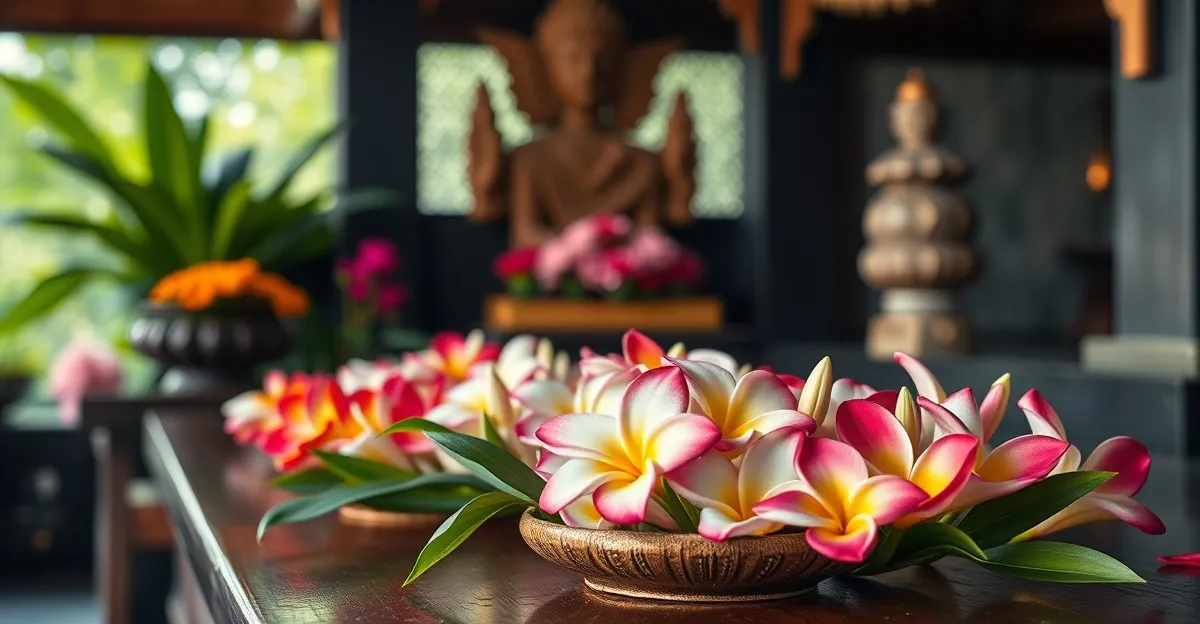
Of all Bali's many ceremonies, few are as striking or as little understood as the Sanghyang rituals. These are trance ceremonies, performed as acts of community protection and spiritual intervention, where participants — often young girls or specific chosen individuals — enter states of deep trance and are believed to channel divine or ancestral energy. The most famous form outside Bali is Kecak, but Kecak is actually a theatrical derivation. The original Sanghyang rituals are quieter, more intense, and still performed in village contexts across the island when needed.
Flowers are not incidental to these ceremonies. They are functional — tools in the ritual process, markers of sacred space, and part of the communication between the human world and the divine that the ceremony enacts. Understanding their role gives a glimpse into how deeply Balinese ritual integrates the natural world into spiritual practice.
What is Sanghyang and when is it performed?
Sanghyang means "the divine who descends" or "the holy one who arrives." Sanghyang ceremonies are performed to invite protective divine energy into the community during times of threat — historically this meant epidemics, crop failure, or unusual spiritual disturbance. They are not calendar-fixed ceremonies; they are responses to need, called for by the village priest (pemangku) or a community spiritual advisor when circumstances require.
The most common forms are Sanghyang Dedari (trance performed by young pre-pubescent girls who are believed to embody the heavenly nymphs called dedari) and Sanghyang Jaran (fire-walking trance where the participant enters a trance and walks over burning coconut husks without harm). Both involve intense preparation, community involvement, and specific ritual objects and flowers.
Sanghyang Dedari, in which two young girls are incensed into trance and perform elaborate movements and songs while in a state of altered consciousness, is the form most likely to incorporate significant flower use throughout.
Incense, smoke, and the gateway to trance
Before the flower discussion, it's worth understanding that incense (dupa) is the primary aromatic vehicle of Sanghyang ceremony — smoke carries prayers upward and is also the medium through which trance is sometimes induced. The girls sit before an incense burner as their eyes close and the ritual chanting begins. But flowers are present throughout this process, not as the primary tool but as part of the ritual environment that prepares the sacred space.
The space where a Sanghyang ceremony is held is prepared with offerings before the ceremony begins. These include standard banten with directional flowers, more elaborate ceremonial offerings specific to the deity or energy being invoked, and the general aromatic and visual environment that signals to participants and deities alike that this space has been made sacred.
Flowers in the preparation offerings
The specific flowers used in Sanghyang preparation offerings vary by village tradition and by the specific form of the ceremony. General patterns observable across multiple contexts include:
White frangipani appears almost universally — its association with Iswara's purity and with the eastern direction makes it appropriate for ceremonies that are fundamentally about inviting divine presence into the human world.
Champaca (cempaka) is prized for its intense fragrance, which in Balinese ritual logic helps maintain the sacred atmosphere. A space that smells strongly of champaca is a space that has been actively prepared for divine contact. In some village traditions, champaca flowers are placed specifically near the head of the trance practitioner as she enters the trance state.
Red hibiscus appears on the southern side of offering arrangements, addressing Brahma's fire energy — appropriate for a ceremony that deals with transformation and the movement between states of consciousness.
Yellow marigold and yellow champaca are consistent with western-direction offerings to Mahadewa, the sustaining deity, which makes sense in a ceremony intended to protect and sustain the community.
Flowers worn by the trance practitioners
In Sanghyang Dedari, the young girls who perform the ceremony are dressed elaborately, and flowers are a central part of that preparation. Their hair is arranged and decorated with fresh flowers — typically white and yellow frangipani flowers and sometimes jasmine, arranged as sanggul (hair ornaments) by the women responsible for their preparation.
The flowers worn by the girls in trance are not decorative in the Western sense — they mark the girls as ritually consecrated, as having been prepared for the divine energy to enter through them. The same logic applies to the flowers worn by temple priests during ceremony: flowers in the hair or at the ear signal ritual preparation and consecration.
After the ceremony, the flowers worn by the girls are treated with respect. They don't become ordinary waste — they're part of the ritual conclusion process. In some traditions they're returned to nature or added to the final closing offerings.
The role of fragrance in Sanghyang
One of the most consistent features of Sanghyang flower use is the priority given to fragrance over appearance. Champaca, jasmine, and specific fragrant frangipani varieties are preferred over showy but unscented blooms. This reflects a theological principle in Balinese Hinduism: fragrance is spiritually active. A scent that pleases humans pleases the divine; a persistent fragrance maintains sacred space over time in a way that a visual decoration cannot.
The smoke of incense and the passive fragrance of flowers work together in Sanghyang spaces to create a continuous aromatic signal that this is consecrated space, active sacred time, with divine presence invited and sustained.
This principle also explains why artificial flowers are considered completely inappropriate in ritual contexts. The fragrance is functional, not symbolic. An artificial flower cannot do the work a fresh one does.

The team
your florists
weekly subscription · Bali
We write about flowers because we love them. We deliver them because someone should — properly, weekly, across Bali.
— heyflowerPay once for 3, 6, or 12 months, no auto-renewal.
Where Sanghyang ceremonies are held today
Sanghyang is still practised in its traditional community-protection form in villages across Bali, particularly in areas with strong traditional governance — many villages in Karangasem, Bangli, Tabanan, and parts of Gianyar still hold Sanghyang when circumstances call for it. The ceremonies are held within the village temple complex, specifically in the pura dalem (temple of the dead/transformation) in some traditions, or at the pura puseh (temple of origin) in others.
Kecak performances at Uluwatu are loosely derived from Sanghyang's choral elements but have been developed as artistic performances since the 1930s — they're not equivalent to the village ritual context and don't involve actual trance. They do, however, create interest in and appreciation for the deeper Sanghyang tradition they draw from.
Frequently asked questions
Can visitors attend a Sanghyang ceremony? Sanghyang ceremonies in their traditional form are community rituals, not public performances. Attendance is generally limited to village members and invited guests. If you have a genuine connection to a Balinese village community and are invited, attending with appropriate dress and behaviour is possible. Treating it as a tourist attraction is inappropriate.
Are the trance states in Sanghyang real or performed? This is a question best answered empirically by watching. Balinese and Western researchers who have observed and studied Sanghyang extensively describe the trance states as genuine altered states of consciousness, induced through rhythmic chanting, incense, and ritual preparation. The physical feats performed (fire walking without injury, for example) under trance conditions are extraordinary enough to have attracted serious academic attention.
What makes certain flowers appropriate for trance ceremony versus everyday offerings? It's less about the flower species and more about the context and quality of preparation. Ceremony flowers should be fresh, properly handled, and prepared with appropriate attention. The same frangipani used in a daily canang can appear in a Sanghyang offering — the difference is in the ritual preparation of the space and the offering, not necessarily the flower itself.
How do flower suppliers prepare for community ceremonies? Village communities preparing for Sanghyang typically source flowers from local gardens, family compound trees, and nearby markets. Advance planning is important because the ceremony happens when it's needed, not on a fixed schedule. Village flower committees or specific families with gardens are often relied upon for bulk flower supply.
Are there Sanghyang-specific flowers that never appear in daily offerings? Not categorically, but some very specific ceremonial offerings use rare or specially prepared plants and flowers that don't appear in everyday canang. These are specialist knowledge, varying by tradition and village, and typically known to the priests and specialist offering makers rather than being general knowledge.
Ready to bring fresh flowers to your Bali home or event? Explore our weekly flower subscription and get handpicked blooms delivered to your door every week.



