How to write a dinner party host gift flower card message
The card on a host gift flower arrangement should feel warm and specific, not generic. Here's how to write something the host will actually remember.
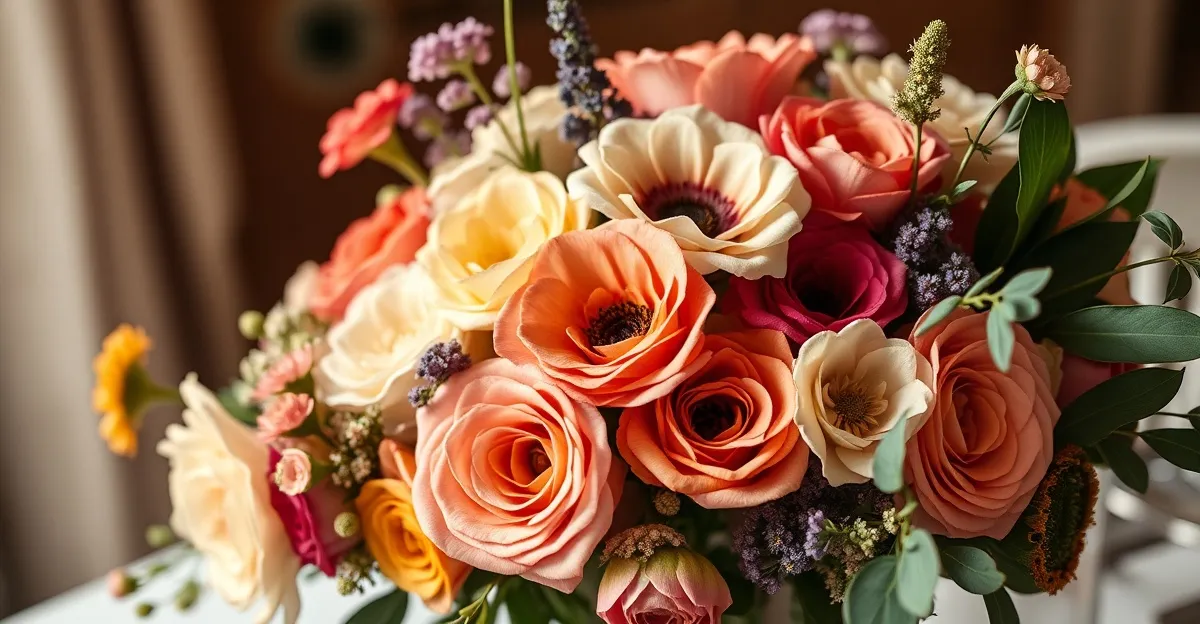
A dinner party host in Bali has put work into the evening — the food, the flowers (likely), the atmosphere, the guest list, probably a playlist, probably a plan for how the evening should feel. The flowers you bring as a host gift acknowledge that effort. The card on those flowers is the moment where you speak to them directly, one human to another, before the evening properly begins.
Most host gift cards are forgettable. They say "thank you" in a way that could have come from anyone, about anything. Here's how to write one that the host sets aside and finds again later, and smiles.
What a host gift card is actually communicating
The card on a host gift isn't a formal thank-you note — the formal thank-you comes after the dinner (or should). The card on the flowers arriving before or at the start of the evening is more like: "I'm thinking about you right now. I know tonight matters to you. I appreciate the effort."
It's a small, early acknowledgment of the gift the host is about to give you — their time, their home, their cooking, their attention. The flowers and card arrive before that gift has been received, which makes them a statement of anticipated gratitude rather than received gratitude. That's a slightly different emotional register, and it calls for warmth and expectation rather than retroactive thanks.
Structure: what goes in, and in what order
Host gift flower cards should be very short — 20–40 words at most. Three elements:
Name: Start with theirs. "To Maya," "For you," "[Name] —" Not "Dear" (too formal), not just diving in without address (slightly cold).
The specific thing: One thing that's true about the host, about their dinners, or about your anticipation for tonight. This is what differentiates a good card from a generic one.
Warm close: Not "Regards." Something that matches your relationship — "with love," "can't wait," "so glad to be here."
That's enough. These cards don't need more.
Message examples for different relationships
Close friend who loves hosting: "Maya — your dinners are one of my favourite things about living here. So glad to be at this one. With love, [Name]"
Newer friend or acquaintance: "To [Host name] — thank you for including us. Really looking forward to tonight. [Your name]"
Someone who has hosted you multiple times: "For [Name] — the third time you've fed us this year, and we're still the grateful ones. Thank you. [Your name]"
Sending flowers ahead, can't be there: "To [Host name] — sorry I can't be there in person. These are in place of me. Have a wonderful evening. With love, [Name]"
Informal, playful relationship: "[Name] — we're coming for the food, staying for the company. So excited for tonight. [Your name]"
When the host is especially good at hosting: "For you — your dinners make Bali feel like home. Thank you for that, and for tonight. [Your name]"
Formal dinner setting: "To [Host name], thank you for this evening. We're very much looking forward to it. With warm regards, [Your name]"
Adding something specific about Bali
If the dinner is at a particularly beautiful Bali setting — a villa with a rice field view, a rooftop in Seminyak, a garden in Ubud — acknowledge it if you genuinely feel it:
"For [Host name] — I can already imagine how tonight looks from your terrace. Thank you for creating that. With love, [Name]"
Or for a host whose approach to Bali-style entertaining is specifically beautiful: "[Name] — nobody does Bali evenings quite like you. We're honoured to be here. [Your name]"
The key is that any specific reference should be genuine — a real observation about this host, this place, this occasion — rather than a generic gesture toward Bali's atmosphere.
Timing and delivery of the card
If you're bringing the flowers in hand when you arrive, the card is part of the moment of giving. Keep it short enough that the host can read it during the brief pause between greeting guests. They're busy.
If you're sending flowers ahead of the dinner, the card is read in the afternoon when they're preparing. It has a little more space — but still, keep it short. A host preparing a dinner party doesn't want to read a letter.
For guidance on writing notes that come alongside gifts more generally, how to write a note that comes with each subscription delivery has principles that apply here too — brevity, specificity, warmth without sentimentality.

The team
your florists
weekly subscription · Bali
We write about flowers because we love them. We deliver them because someone should — properly, weekly, across Bali.
— heyflowerPay once for 3, 6, or 12 months, no auto-renewal.
What not to write
Generic openings: "I just wanted to say..." / "We hope you enjoy these flowers..." These open with a slight hedging that weakens everything that follows.
Referencing the food before you've eaten it: "Can't wait for your famous rendang!" — this presumes the menu, puts pressure on the host, and can feel performative.
Over-formal language: "On behalf of my partner and I, we extend our gratitude for this gracious invitation..." This is not a diplomatic note. Warm, simple, human.
Mentioning the flowers themselves: "We hope these brighten your evening!" The flowers are self-explanatory. The card should add something the flowers don't.
Signing with only a surname: "The Smiths" is cold. "Sarah and James" is warm. Use first names unless the relationship is genuinely formal.
For group gifts from multiple guests
If several guests are contributing to a shared host gift (including flowers), the card can simply list all contributing names at the close:
"[Host name] — from all of us tonight, with thanks. Looking forward to every moment. Love, [Name], [Name], [Name], and [Name]"
Or if there's a natural spokesperson: "With love from everyone you invited tonight. [Lead name]"
FAQ
Should a host gift card be handwritten? Yes, whenever possible. Handwriting communicates that you wrote it yourself, in this moment, for this person. Even imperfect handwriting is warmer than a printed label.
What if I'm sending flowers on behalf of a couple and I'm not sure what to say? Use both names and keep it warm: "For you, from [Name] and [Name] — with much love and many thanks." Including both names is more considerate than a single signature for a couple's gift.
Is it appropriate to mention other guests on the host card? Generally no — the card to the host is between you and them. If other guests are part of a joint gift, include their names in the signature. Otherwise, keep the card focused on your relationship with the host.
Can the card be funny? Yes, if that's genuinely how your relationship works. A well-placed line of warmth-laced humour ("one of us is here for the company, the other is here entirely for the food — I won't say which") can make the host laugh in the middle of a busy evening. The key is knowing the relationship.
What if I arrive and realize I forgot the card? Say it in words. A brief verbal equivalent of a good card — "I just wanted to say, before the evening starts, that we really appreciate tonight" — serves the same purpose.
Ready to always arrive with the perfect flowers and the perfect words? Explore our weekly flower subscription and keep beautiful blooms on hand for every occasion.
More on dinner party host gift