How to revive droopy tulips in humid weather
Practical tips for reviving droopy tulips in Bali's tropical humidity, including cold water tricks, stem cutting techniques, and how long you can realistically expect them to last.
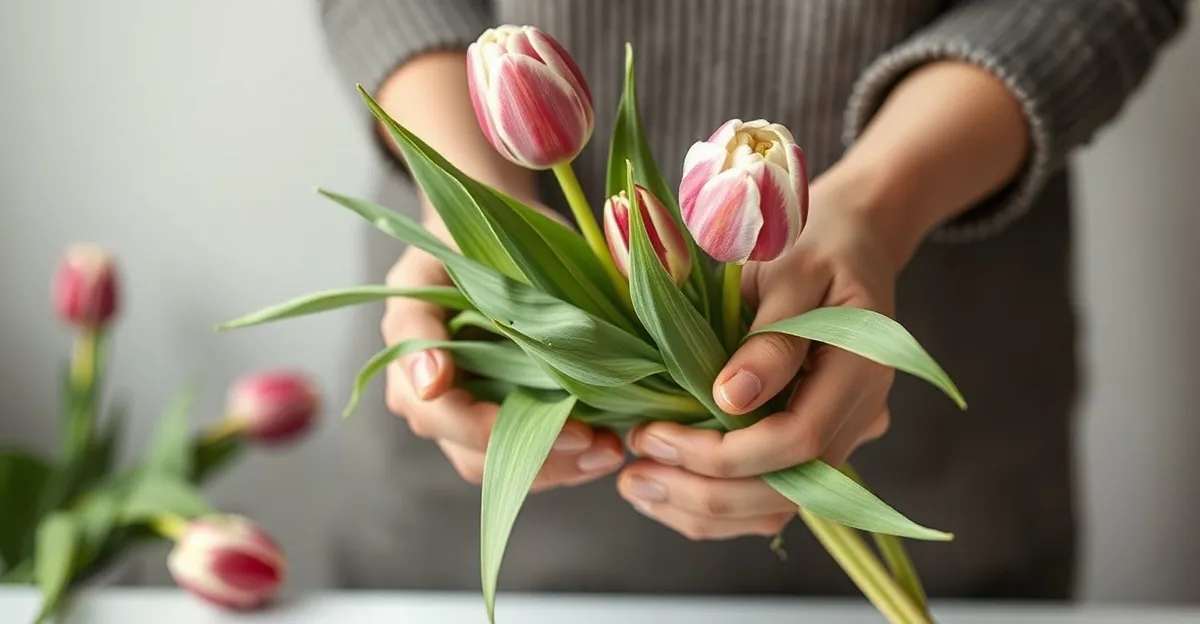
Tulips are one of those flowers that look absolutely beautiful for about two days and then dramatically droop when they're in the wrong conditions. In Bali's heat and humidity, that timeline can compress even further. The stems go soft, the heads hang down, and the whole bouquet loses its elegant upright stance within a day of being unpacked.
Before you throw them out, there are several things you can try. Some work reliably, some are more hit-or-miss, and understanding why tulips droop in the first place helps you pick the right approach.
Why tulips droop specifically in tropical climates
Tulips are cool-weather bulb flowers originally from Central Asia and the mountainous regions of Turkey and the Netherlands. They're grown at altitude or in temperate climates and shipped to tropical destinations like Bali, which means they've already been under stress before they reach your vase.
When tulip stems lose turgor pressure — the internal water pressure that keeps plant tissues firm — the stems go soft and the heavy head pulls them over. This happens faster in warm, humid air for two reasons: the flower is metabolising faster in the heat, using up water more quickly, and warm water in the vase contains less dissolved oxygen, which impairs the stem's ability to transport water up to the head.
High ambient humidity doesn't help the stems stay hydrated — if anything, it slightly reduces the evaporation-driven pulling force that draws water up through the stem (the transpiration stream). So Bali's humid air actually gives tulips less motivation to drink.
The cold water treatment
This is the most effective rescue technique for droopy tulips and it works specifically because it addresses the temperature problem. Here's how:
Fill a vase or bucket with cold water — as cold as your tap or refrigerator produce. If you have ice, add it. Recut the tulip stems at a 45-degree angle with a sharp, clean knife (not scissors, which can crush the vascular tissue). Cut about 2–3 cm off each stem and immediately plunge them into the cold water.
Wrap the bouquet loosely in paper — newspaper works, or the paper from the original wrapping. The paper helps the stems stand upright and also creates a slightly more humid microenvironment around the flowers. Stand the wrapped tulips upright in the cold water and put the whole thing in your refrigerator or the coolest part of your home for two to four hours.
In a proper refrigerator, tulips often revive remarkably well within an hour or two. The cold slows their metabolism, the fresh stem cut opens up new vascular channels, and the cool water travels up the stem efficiently.
If you don't have a refrigerator tall enough, aim your air conditioner at the bouquet set on a low, cool setting and use the ice water in the vase.
Re-cutting the stems correctly
A fresh stem cut is one of the most important variables in flower care, and many people skip it or do it wrong. When a flower stem sits in water, the cut end begins to seal over and develop bacterial biofilm within hours. This blocking of the vascular tissue is a major reason flowers droop and wilt prematurely.
For tulips specifically:
- Use a clean, sharp knife rather than scissors. Scissors crush the stem tissue.
- Cut at a 45-degree angle to maximise the surface area exposed to water.
- Cut under running water or immediately transfer the stem to water — air entering the cut end forms a blockage.
- Cut at least 2–3 cm above the previous cut to get past the sealed tissue.
In Bali's climate, re-cut tulip stems every two days for maximum vase life.
Vase placement matters more than you'd think
Tulips are sensitive to placement in ways that other flowers aren't. A few specifics for Bali homes and villas:
Keep them away from AC vents. Continuous dry airflow accelerates moisture loss from the petals and can cause the heads to dry out and wilt even when the stems are healthy.
Keep them away from fruit. Ripening fruit emits ethylene gas, which accelerates flower ageing. A bouquet on the kitchen counter next to a bowl of mangosteen or salak will age faster than one in the living room.
Avoid direct sun. Obvious in tropical light, but worth saying. A sunny windowsill in Seminyak in January receives intense radiation that will bake tulips within hours.
Consider the room temperature. The difference between a room at 26°C and one at 22°C might seem small, but flower metabolism roughly doubles for every 10°C increase in temperature. Even modest air conditioning makes a real difference to vase life.
Flower food and additives
Commercial flower food sachets, often included with delivered bouquets, contain three things: a biocide to kill bacteria, an acidifier to help water move up the stem, and sugar as an energy source. They do work and are worth using if you have them.
If you don't have a sachet, a very small amount of regular household bleach (one drop per litre) will control bacteria in the water. Sugar alone (a teaspoon per litre) helps but also feeds bacteria, so use it with the bleach.
The aspirin trick — dropping an aspirin tablet into the vase water — has some scientific basis. Aspirin contains acetylsalicylic acid, which mildly acidifies the water and improves water uptake. It's not as effective as commercial flower food but does help slightly.
Change the water completely every two days in Bali's heat. Warm temperatures accelerate bacterial growth in the vase water, which is a major cause of stem blockage and early decline.

The team
your florists
weekly subscription · Bali
We write about flowers because we love them. We deliver them because someone should — properly, weekly, across Bali.
— heyflowerPay once for 3, 6, or 12 months, no auto-renewal.
Realistic vase life expectations
Tulips are simply not well-suited to tropical conditions. In temperate climates, a tulip bouquet typically lasts seven to ten days. In Bali, you're looking at three to five days in good conditions — with cold water treatment, AC, clean vase water, and regular re-cutting.
This isn't a failure of care — it's the reality of asking a cold-weather flower to perform in the tropics. For longer-lasting bouquets in Bali, tropical and subtropical flowers like anthurium, bird of paradise, orchids, and carnations dramatically outperform tulips in our climate. See our thoughts on flower hydration science for tropical climates for more on which flowers last best in heat and humidity.
If you love tulips, enjoy them knowing they're a short but beautiful presence. Display them where they'll be most noticed — a dining table in a villa in Pererenan, a desk in an Ubud workspace — and appreciate them for the few days they shine.
FAQ
Can I put tulips in the refrigerator overnight? Yes, and in Bali this is one of the best things you can do. Remove from the vase, wrap loosely in paper, and lay flat in the vegetable crisper. Re-cut the stems and re-vase in the morning. Keep away from fruit inside the fridge.
Why do my tulips keep pointing toward the light? Tulips are strongly phototropic — they grow toward light. This is a living behaviour, not a sign they're dying. Rotate the vase daily to keep the arrangement upright and symmetrical.
My tulips drooped within hours of delivery — was the bouquet bad? Not necessarily. Tulips often droop during transport and can revive with re-cutting and cold water treatment. It doesn't mean the flowers were old when delivered.
Should I poke a hole in the stem near the head? Some florists swear by poking a pin through the stem just below the flower head to release air pockets. There's limited scientific evidence for this but it doesn't cause harm, so try it if other methods aren't working.
What if nothing works? Accept that tulips have short lives in the tropics and consider pressing the petals while they're still colourful. Pressed tulip petals make beautiful additions to cards, frames, and resin projects.
Ready to receive gorgeous flowers suited to Bali's tropical climate? Explore our weekly flower subscription and get handpicked blooms delivered to your door every week.



