How to photograph your bouquet at home
Simple techniques for photographing flower bouquets at home in Bali, using natural light, backgrounds, and phone settings to capture blooms beautifully.
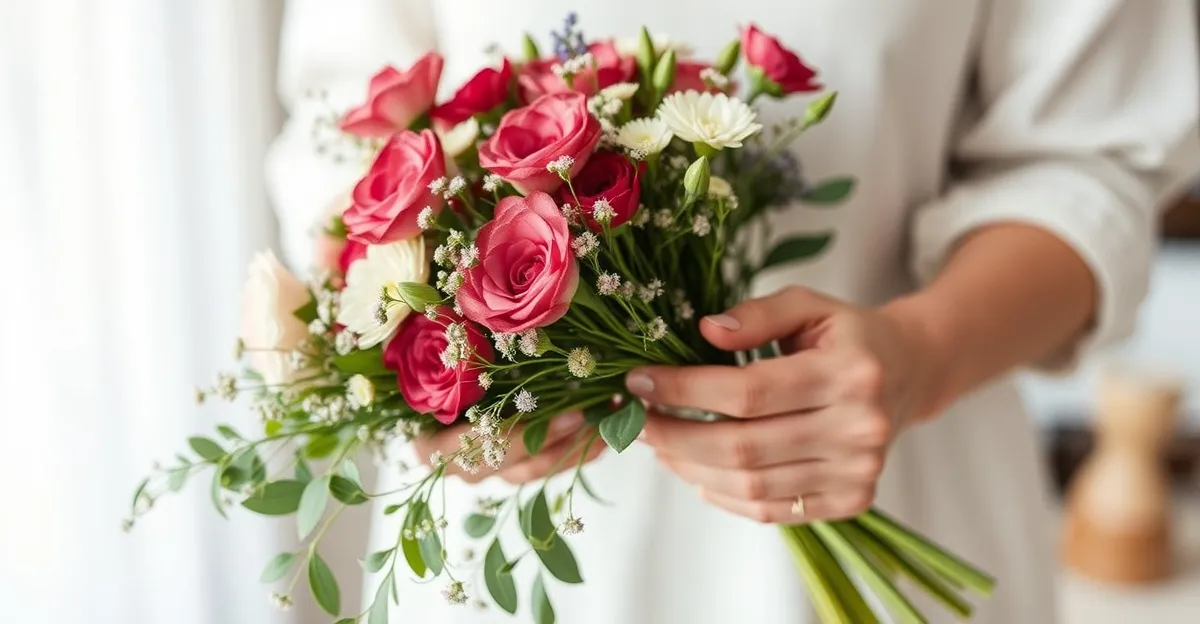
Flowers deserve to be photographed well. Whether you're documenting a special bouquet, sharing on Instagram, or simply wanting a beautiful image to keep, taking a good photo of your flowers at home is genuinely achievable with a smartphone and a little understanding of light and composition.
In Bali, we have a natural advantage: extraordinary light, beautiful architectural backgrounds — carved stone walls, teak wood, terrazzo floors, alang-alang thatch — and the colours of tropical blooms against lush greenery. You don't need a professional setup. Here's how to use what you have.
Understanding and using natural light
Light is everything in flower photography, and Bali's light has specific qualities worth knowing about.
Golden hour light — the hour or two after sunrise and before sunset — is the most flattering for flowers. The light is warm, directional, and low, creating natural shadows and bringing out texture in petals. In Bali, golden hour comes early (around 6–7 am) and late (around 5:30–6:30 pm). If you have east-facing windows, morning golden hour light is spectacular for flowers.
Midday light in Bali is harsh. The sun is directly overhead and intensely bright. This creates blown-out highlights on pale flowers and unflattering shadows. Avoid midday direct sun for flower photography. If you must photograph at midday, move the flowers to a shaded location — an interior room receiving indirect light, or an outdoor shaded terrace.
Overcast light is excellent for flowers. When it's cloudy — which happens frequently during Bali's wet season from October through March — the entire sky becomes a giant soft light source, creating even, shadowless illumination that renders flower colours accurately and beautifully. If you want a clean, studio-like look, a cloudy day is ideal.
Window light is your best indoor option. Place your flowers near a window (but not in direct sunbeam). North-facing windows receive no direct sun and provide consistent, even light all day. South-facing windows in Bali (our equivalent of the northern hemisphere's south light) will get some direct sun in the middle of the day; step back from the window or use a sheer curtain to diffuse it.
Background choices in a Bali home
The background you choose dramatically affects the overall feel of the image.
White or light walls: Clean and minimal. Works for almost any bouquet colour. Most Bali homes and villas have white or off-white rendered walls — use them.
Timber surfaces: The warm tones of teak, bamboo, and other tropical timber surfaces complement warm-toned flowers (yellows, oranges, peach) beautifully. A timber table or wooden floor creates a natural, organic background.
Terrazzo: Ubiquitous in Bali and genuinely gorgeous as a background. The mottled texture provides visual interest without competing with the flowers. Grey or white terrazzo is the most versatile.
Garden greenery: Shoot from above or at a 45-degree angle with your garden or leafy courtyard as background. The green creates a natural context that works particularly well for tropical arrangements.
Dark backgrounds: A dark slate surface, dark timber, or even a dark-painted wall can make brightly coloured tropical blooms pop dramatically. This takes more attention to lighting (you need enough light on the flowers for them to be exposed correctly against the dark background) but the results can be striking.
Avoid busy backgrounds — patterned fabric, cluttered shelving, or walls covered with things. The flowers should be the focus.
Composition basics
Fill the frame. Get closer than you think you need to. Many people photograph flowers from too far away, leaving the bouquet as a small element in a large amount of background.
Choose your angle. Three common approaches:
- Front-on at eye level: Shows the face of each bloom. Classic and clear.
- From above (flat lay): Place the bouquet on a table or floor and shoot directly down. Works particularly well for loose arrangements.
- 45-degree angle: The most natural and common approach. Shows both the face of the blooms and some depth in the arrangement.
The rule of thirds: Mentally divide your frame into thirds both horizontally and vertically. Place the main focal point of the bouquet (usually the largest or most striking bloom) at one of the intersection points rather than dead centre. This adds visual dynamism.
Focus on one bloom. Your phone camera's portrait mode or tapping on a specific bloom to set focus can create a beautifully blurred background that draws attention to one flower while keeping the arrangement in context.
Smartphone settings and techniques
Tap to focus. Tap directly on the bloom you want sharp on your smartphone screen. The camera will focus and expose for that point.
Exposure adjustment. After tapping to focus, most phones allow you to slide a sun icon up or down to adjust brightness. Pull down if bright petals are blown out; push up if the whole image looks too dark.
Portrait mode. Available on most modern smartphones, this artificially blurs the background, mimicking the look of a camera with a wide aperture lens. It works well for close-up flower shots against a simple background.
HDR off for flowers. HDR (high dynamic range) mode can sometimes over-process flower images, creating an unnatural, painted look. Experiment with it off.
Avoid digital zoom. Moving closer is always better than pinching to zoom on a phone camera. Digital zoom degrades image quality significantly.

The team
your florists
weekly subscription · Bali
We write about flowers because we love them. We deliver them because someone should — properly, weekly, across Bali.
— heyflowerPay once for 3, 6, or 12 months, no auto-renewal.
Styling touches for better images
Trim the stems so the vase height looks right. A bouquet where the stems are too long for the vase looks awkward in photos. Trim for proportion.
Remove any wilting or brown elements. One brown petal is more visible in a photograph than in person. Do a quick assessment and remove anything that detracts.
Add context. A coffee cup, an open book, a candle, a piece of fruit from the garden — these props create a lifestyle context around the bouquet. Keep it simple: one or two supporting elements maximum.
Wet the petals for that morning dew look. A tiny spritz of water from a spray bottle adds life and freshness to photos, especially for roses. Don't overdo it — you want a light glisten, not saturated dripping petals.
For ideas on where to display flowers in your home to create beautiful scenes, check our guide on flower arrangement ideas for your living room.
FAQ
What's the best time of day to photograph flowers in a Bali home? Morning, around 7–9 am, when the light is warm and directional without being harsh. Late afternoon (4–6 pm) is the second best window. Avoid 10 am–3 pm when the sun is overhead and intense.
My phone photos always look blue or yellow — what's wrong? White balance is off. Most phone cameras handle this automatically, but in mixed light (e.g., a room with both window light and artificial light) the camera gets confused. Turn off artificial lights and use only window light, or tap on a neutral white or grey area in the scene to help the camera calibrate.
How do I photograph white or pale flowers without them looking washed out? Reduce your exposure slightly (tap to focus, then slide the brightness down slightly). Pale flowers are easily overexposed. A slightly darker background also helps — white flowers against white walls both disappear.
Should I edit my flower photos? Light editing improves almost every photo. Increase contrast slightly, boost the shadows to reveal detail in dark areas, and add a little clarity to enhance petal texture. Avoid heavy colour filters that change the flower colours — you want to represent how the bouquet actually looks.
How do I get a blurry background without portrait mode? Get very close to the flower (a few centimetres) and shoot. The phone camera will naturally blur the background at close distances due to the physics of focus depth. Works best in good light.
Ready to have something beautiful to photograph every week? Explore our weekly flower subscription and get handpicked blooms delivered to your door every week.



