Cutting stems the right way to extend vase life
The way you cut flower stems dramatically affects how long they last. Learn the correct technique and angle to maximize vase life in Bali's tropical climate.
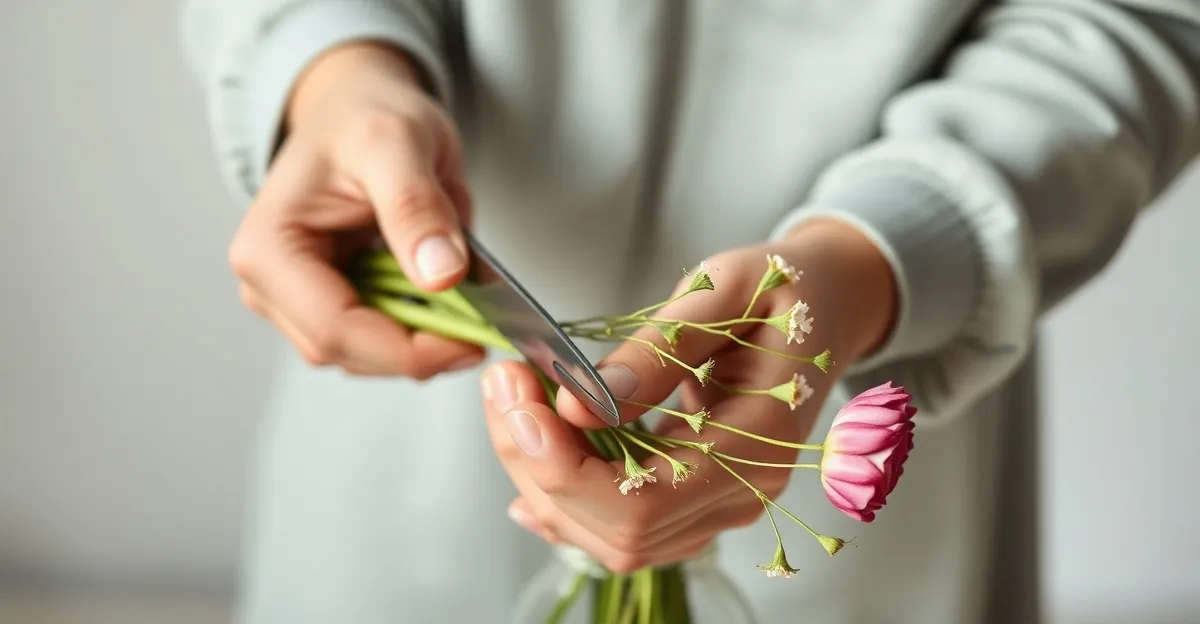
One of the simplest things you can do to extend the life of your flowers is also one of the most commonly done wrong. Cutting stems seems straightforward — you grab a pair of scissors and snip — but the technique, the tool, and the timing all matter, especially in Bali's heat and humidity.
Done correctly, a proper stem cut can add two to four extra days to a bouquet's vase life. In a climate where flowers already face accelerated wilting, that's a meaningful difference.
Why stem cutting matters so much
When a stem is cut and exposed to air, the capillaries at the cut end begin to seal almost immediately. This is a natural self-preservation mechanism — the plant is essentially trying to stop bleeding. But in a vase, this sealing is exactly what you don't want. A sealed stem can't draw water effectively, and a flower that can't hydrate will wilt fast.
A fresh cut reopens those capillaries. The angle of the cut and how quickly the stem goes into water after cutting determines how much hydration the flower can absorb. This is why the "cut and immediately submerge" method works so well — you're preventing any air exposure.
In Bali's climate, where ambient temperatures regularly sit at 30–33°C and humidity is high, flowers are under constant metabolic stress. Their water demand is higher than in a temperate climate, so optimal stem cutting isn't just nice to have — it's essential.
Use the right tool
Scissors are the default tool most people reach for, and they're fine for light stems. But for anything thicker — roses, heliconias, anthuriums, or thick tropical stems — scissors can crush the vascular tissue rather than cut cleanly through it. A crushed stem draws water poorly even after a fresh cut.
A sharp, clean knife is the gold standard. Florists use it for a reason. A single, clean draw of a knife blade through a stem severs the capillaries precisely, leaving them open rather than pinched closed.
If you only have scissors, make sure they're sharp. Blunt scissors are significantly worse than a sharp knife. Craft scissors or old kitchen scissors with dull blades will visibly crush the stem end if you look closely after cutting.
Dedicated flower shears (available at most garden shops in Denpasar or at the Badung market area) are a good middle-ground investment if you receive flowers regularly.
The 45-degree angle cut
Cut your stems at a 45-degree angle. This isn't decorative — it serves a functional purpose. A diagonal cut creates a larger surface area at the stem end compared to a straight horizontal cut, which means more capillary openings available for water absorption.
The angle also prevents the stem from sitting flat against the bottom of the vase, which would block water uptake. A diagonal cut means the stem end is always slightly elevated and surrounded by water on multiple sides.
For thick, woody stems like roses or certain tropical varieties, some florists in Ubud make two cuts — one at 45 degrees and then a small notch or split at the very end to increase surface area further. It's a small extra step but genuinely helps.
Cut underwater if you can
The most effective method — used by most professional florists — is to make the final cut while the stem is held underwater. Submerge the stem in a bowl or bucket of water and cut, then immediately transfer to your vase without lifting the stem end above the waterline.
This eliminates the window where air can enter and cause the capillary sealing response. It's particularly valuable in Bali where the air is so warm — even a 10-second exposure to 30°C air is enough to trigger some sealing.
If you can't cut underwater, at minimum cut the stems right next to the vase and place them in within three to five seconds of cutting.
How often to recut
The initial cut when you receive flowers is critical. But stem ends also need to be refreshed periodically.
Every two days of being in a vase, a thin layer of bacterial buildup forms at the cut end. This blocks water absorption even if the stem was cut perfectly at the start. A fresh cut removes that barrier and gives the flower another hydration boost.
When you recut, remove about a centimeter or two — enough to get past the discolored, slightly slimy zone that forms from bacterial activity. Always recut at 45 degrees, and change the vase water at the same time.
For more detail on water management, see our guide on flower hydration: the science for tropical climates.

The team
your florists
weekly subscription · Bali
We write about flowers because we love them. We deliver them because someone should — properly, weekly, across Bali.
— heyflowerPay once for 3, 6, or 12 months, no auto-renewal.
Timing matters — morning is best
If you're recutting stems at home, do it in the morning. At that time of day, water pressure in the stems is at its highest (a carryover from the cooler overnight temperature), which means flowers are most ready to draw up fresh water. An afternoon recut in Bali heat is less effective than the same action done at 7 or 8am.
This is also why florists receive and process their market flowers early in the morning — the cooler hours aren't just more comfortable to work in, the flowers respond better to handling during that window.
FAQ
Can I use a box cutter or razor blade instead of a knife? Yes, a clean razor blade or box cutter works very well — often better than a kitchen knife because the blade is thinner and sharper. Just be careful handling it safely.
Should I remove leaves below the waterline before cutting? Yes — this is important. Any leaves submerged in water decay quickly and create bacterial growth that clogs stems. Strip all foliage that would sit below the waterline before you place stems in the vase.
Does it matter what temperature the water is? Slightly. Cool water (not ice cold) slows bacterial growth and reduces the rate at which flowers metabolize. In Bali's heat, room temperature water warms up quickly, so fill your vase with water from the tap just before use and keep the vase out of direct sunlight.
Do hollow-stemmed flowers like delphiniums need special treatment? Yes. Hollow stems trap air easily. After cutting, you can hold the stem upright and fill it with water using a small funnel before placing it in the vase. Some florists plug the end with a small piece of cotton wool to hold the water in.
Why do my flowers wilt even though I cut the stems? The most common reasons are: stems not going into water fast enough after cutting, bacteria in the vase water, ethylene gas exposure (from ripening fruit nearby), or heat and direct sun exposure. Check all four if your flowers aren't lasting.
Get flowers that arrive perfectly prepared
Good stem care starts before the flowers reach you. Explore our weekly flower subscription and get handpicked blooms delivered to your door every week — stems already prepped and ready for the vase.



