Bougainvillea in Balinese ceremonies: traditional uses in Bali
How bougainvillea features in Balinese Hindu ceremonies — from canang sari offerings to temple decoration, penjor poles, and Galungan celebrations.
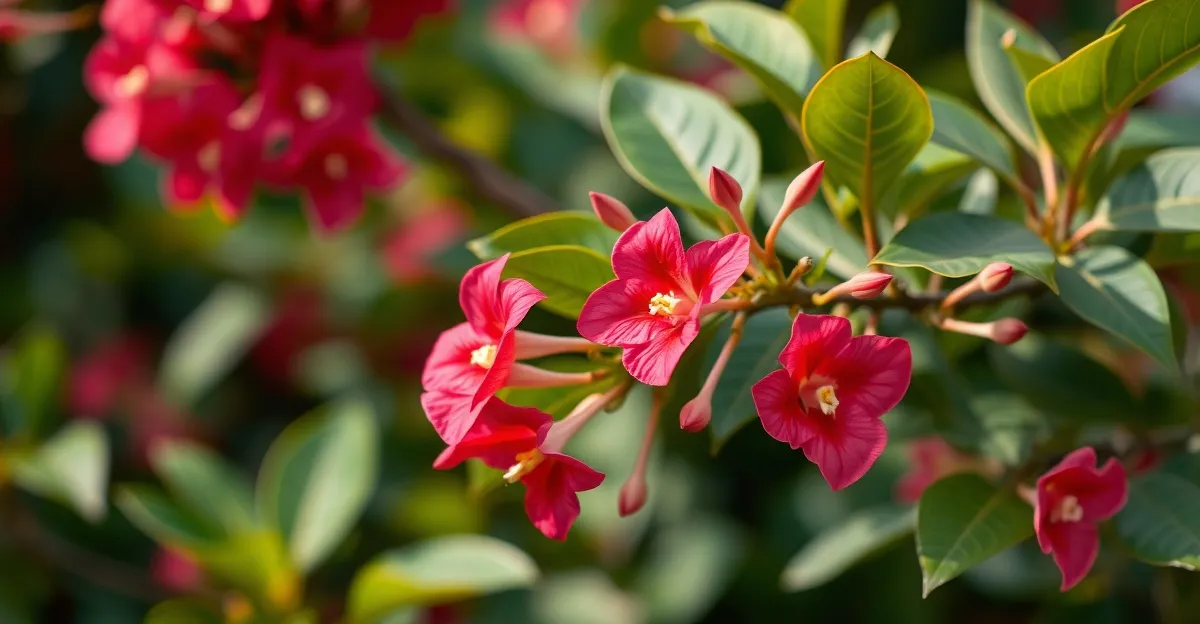
One of the things that strikes visitors to Bali immediately is how deeply flowers are woven into daily religious life. Every morning, small palm-leaf baskets filled with flowers, rice, and incense appear on doorsteps, at shrines, on shop counters, and at road intersections. These canang sari — daily offerings that are the foundation of Balinese Hindu practice — use fresh flowers as their primary visible element, and bougainvillea has become one of the flowers most consistently found in them.
But bougainvillea's ceremonial role in Bali goes well beyond the daily offering. It appears at major temple festivals, in the construction of penjor (ceremonial bamboo poles), in the decoration of ceremony spaces, and in specific ritual contexts across the Balinese religious calendar.
The canang sari and bougainvillea's place in it
The canang sari is a small woven palm-leaf tray holding a symbolic arrangement of flowers and other materials. The flower selection is not arbitrary — different colours and types of flowers are placed in the tray according to a system of directional symbolism rooted in Balinese Hinduism. The four cardinal directions are associated with specific deities (manifestations of Sang Hyang Widi Wasa, the supreme god), and specific flower colours correspond to each direction.
In the traditional system:
- East (Iswara): White flowers
- South (Brahma): Red flowers
- West (Mahadewa): Yellow flowers
- North (Wisnu): Black/dark blue flowers, or dark green
- Centre (Siwa): Varied or multiple colours
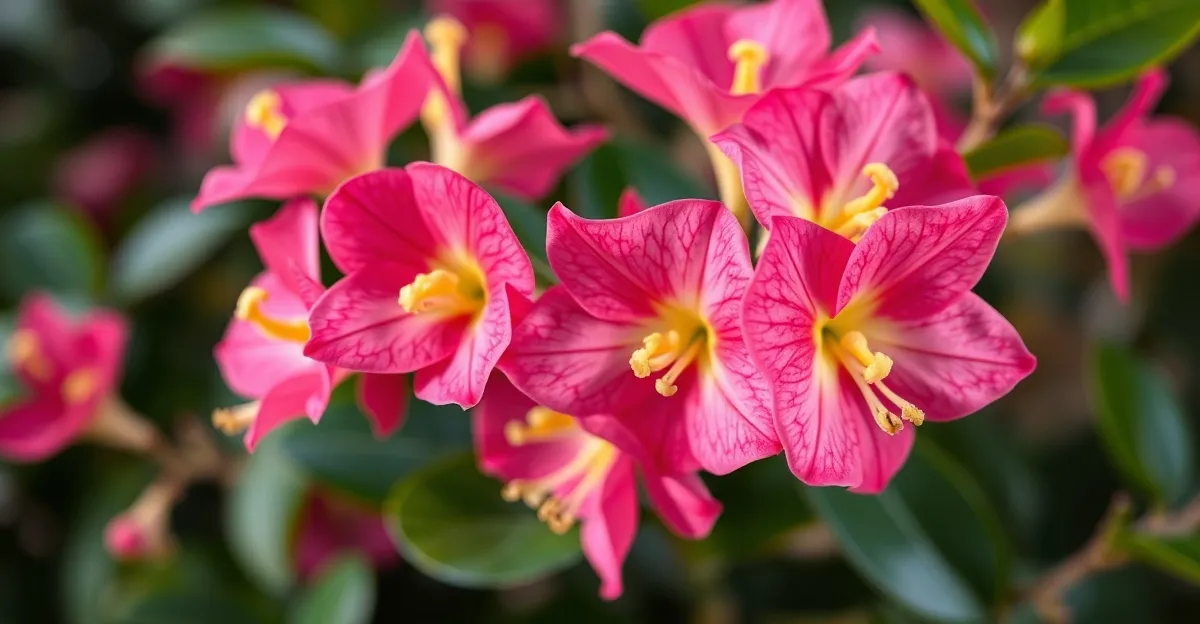
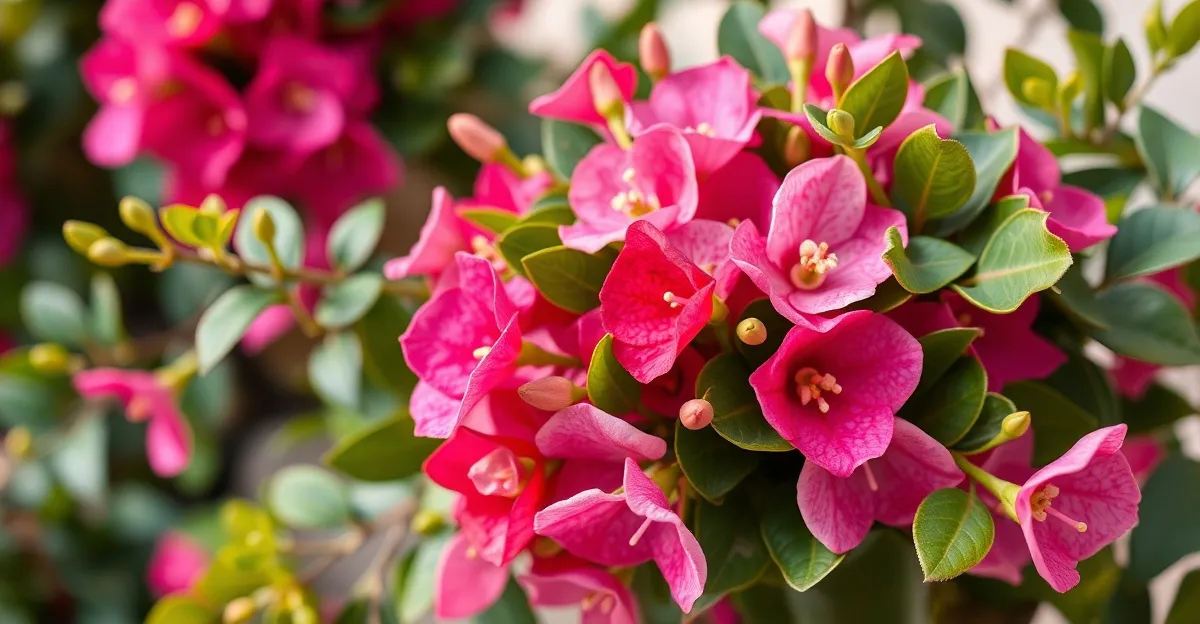
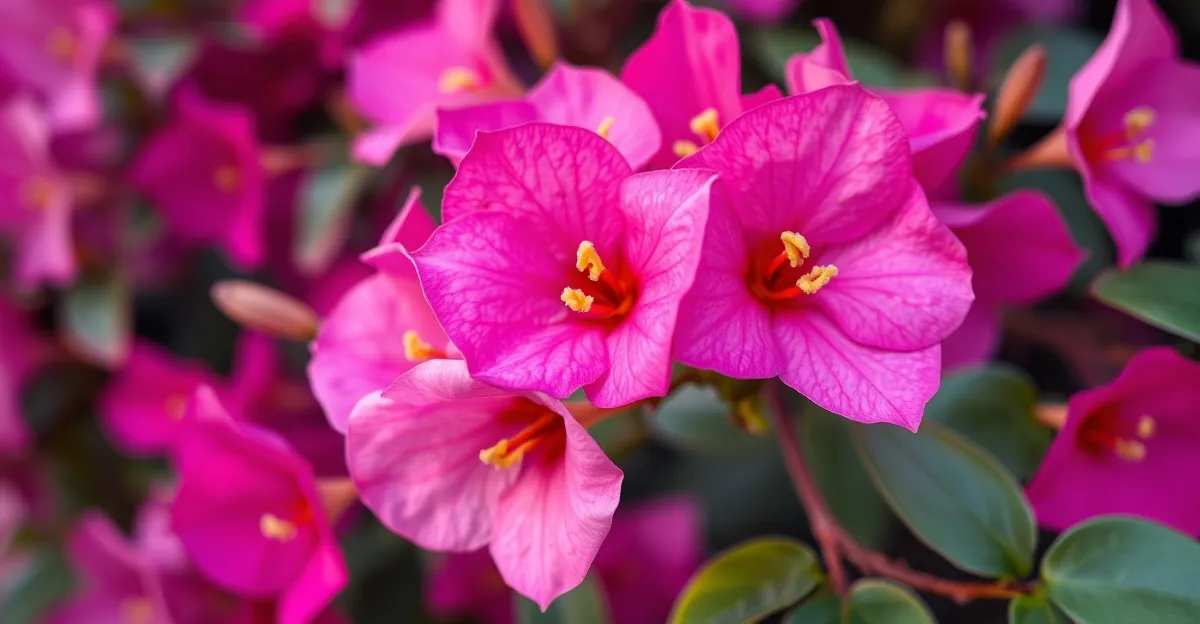
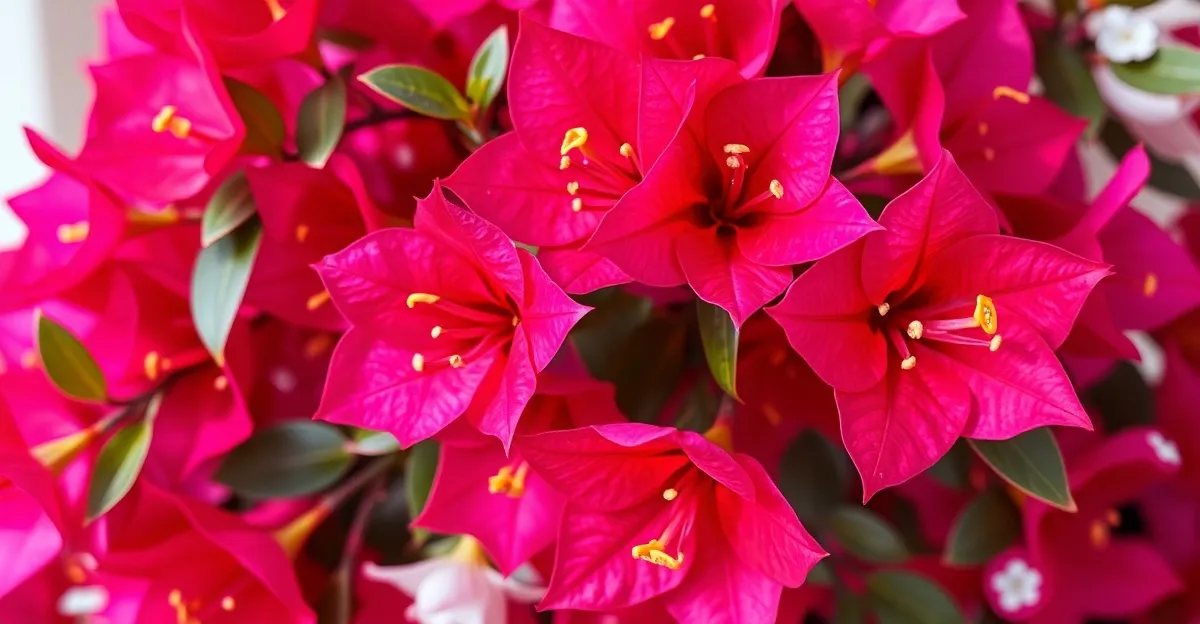
Bougainvillea's deep magenta and fuchsia bracts fit the red/pink requirement for the southern quadrant of the offering, associated with Brahma. This is the most common ceremonial use of bougainvillea in daily offerings. The vivid, locally abundant bracts make practical sense: they're easy to obtain, inexpensive, retain their colour and shape in the small offering tray, and have a visual intensity that satisfies the need for a strong colour element in the arrangement.
Temple decoration during Odalan
The odalan — a temple's anniversary festival, occurring every 210 days in the Balinese Pawukon calendar — is one of the most important ritual events for each temple's community. During odalan, the temple is cleaned, decorated, and filled with offerings over several days of ceremony. Flowers are central to this decoration.
Bougainvillea is used extensively in odalan decoration, particularly for the large surface decorations that cover temple gates (candi bentar), the meru pagoda towers, and the ceremonial pavilions (bale). Branches of bougainvillea are woven into larger floral arrangements or used as fill material to add colour and volume to ceremonial structures. The scale of temple decoration during major odalan is extraordinary — hundreds of kilograms of flowers may be used for a single large temple's anniversary festival.
For families preparing smaller home temple (sanggah or merajan) odalan, bougainvillea cut from the family compound garden is a natural, low-cost source of the colour elements required.
Galungan, Kuningan, and the penjor
Galungan is the most important holiday in the Balinese calendar, occurring every 210 days and celebrating the victory of dharma (good) over adharma (evil). The ten days of Galungan end with Kuningan. During this period, the roads of Bali are lined with penjor — tall bamboo poles with decorated arching tips that line the entrance to every compound and temple.
The penjor is decorated with woven coconut leaf arrangements, young coconut, rice stalks, fruit, cakes, and flowers. Bougainvillea appears in penjor decoration as one of several flowering elements, though its specific role varies by region and family tradition. In some areas of Bali — particularly in parts of Gianyar and Klungkung — bougainvillea features prominently in the flower garlands that hang from the bamboo. In other areas, more traditional flowers take precedence and bougainvillea is a minor accent.
The preparation of penjor is a family and community activity, and the specific materials used often reflect what's available locally. Families with abundant bougainvillea in their gardens will naturally use more of it.
Melasti and purification ceremonies
Melasti is a purification ritual that takes place before Nyepi (the Balinese Day of Silence), typically three to four days before Nyepi falls. Processions carry sacred objects from the temple to the sea or to another significant water source for ritual cleansing. The ceremonial procession is elaborately decorated, and flowers play a major part.
Bougainvillea appears in the floral decorations carried in Melasti processions, though typically as a supporting element rather than the primary ceremonial flower. The vivid colours add to the visual intensity of the procession, which is one of the most photographed events in Bali.
Cremation ceremonies (Ngaben)
Bali's cremation ceremonies (ngaben) are elaborate, expensive, and considered among the most important ritual events in a family's life — they free the soul for reincarnation. The ceremony involves the construction of an elaborate tower (bade) to carry the body, and the symbolic bull-shaped cremation sarcophagus (lembu). Both are lavishly decorated with flowers, cloth, and gold leaf.
Flower colours for ngaben have specific meanings. White is associated with purity and the spirit's journey; yellow, gold, and red appear in the decorations. Bougainvillea in bright colours — particularly the vivid corals and fuchsias — can appear in ngaben decoration, though the specific flower selection varies by family tradition, region, and the financial resources available.
For a family's ngaben, large quantities of flowers are needed. Bougainvillea's abundance and low cost make it practical for filling out large-scale decorations, even if it isn't the primary ceremonial flower.
Saraswati Day and educational ceremonies
Saraswati Day (celebrated every 210 days in the Pawukon calendar) honours the goddess of knowledge and the arts. Schools, temples associated with learning, and family libraries receive offerings and flower decorations. The goddess Saraswati is associated with white lotus, but flowers more generally are offered.
Bougainvillea's cheerful quality and association with the Balinese garden makes it a common presence in Saraswati Day decorations at home shrines and school ceremonies.
The question of authenticity
It's worth noting that bougainvillea is not a native Balinese plant — it arrived in Southeast Asia during the colonial period. Traditional Balinese ceremonial floristry that predates the introduction of bougainvillea would have used different flowers for similar colour requirements. The flowers with the deepest ceremonial roots in Bali are frangipani (jepun), hibiscus (pucuk), lotus (padma), and marigold (gumitir).
Bougainvillea's current prevalence in ceremony is a testament to its practical qualities — abundance, low cost, visual impact — and to the pragmatic approach Balinese Hinduism takes to incorporating locally available materials into ritual practice. What matters is the sincerity and correctness of the offering, not whether the flowers are botanically native to the island.
For those interested in how seasonal availability affects ceremonial flower choices, this guide to Bali's shoulder seasons looks at which flowers are most abundant at different times of year — including how this affects what's available for ceremony.

The team
your florists
weekly subscription · Bali
We write about flowers because we love them. We deliver them because someone should — properly, weekly, across Bali.
— heyflowerPay once for 3, 6, or 12 months, no auto-renewal.
FAQ
Is bougainvillea a sacred flower in Bali? It's not considered sacred in the way that lotus or frangipani are, but it is used regularly in religious offerings and ceremony. Its role is more functional — providing colour and volume — than deeply symbolic.
Can tourists participate in canang sari making? Yes, many Balinese families and cultural workshops invite interested visitors to learn how to make canang sari. The emphasis is on the intention and correctness of the offering rather than on using any particular flower, so learning the tradition with whatever local flowers are available is appropriate.
What colours are required in a canang sari? The traditional canang sari includes flowers corresponding to the four cardinal directions: white (east), red/pink (south), yellow (west), and blue/dark (north). In practice, the specific shade of each colour varies by family tradition and what's locally available.
Are there flowers that shouldn't be used in Balinese offerings? Some plants are considered unsuitable for certain offerings — specific plant species have associations with negative energy or the underworld in Balinese tradition. This is an area where Balinese Hindus with ceremonial knowledge guide selection. For a visitor, focusing on fresh, colourful, fragrant flowers of the appropriate colours is the right approach.
Does bougainvillea feature in temple architecture in Bali? Bougainvillea is used as a decorative element during festivals and ceremonies, but it doesn't feature in permanent temple architecture. The floral elements are temporary — fresh for each ceremony. The permanent decorative carving of Balinese temples typically features lotus, the naga serpent, and other figures from Hindu mythology.
Bougainvillea for Contemporary Bali Events and Celebrations
For residents, villa owners, and event planners working within Bali's ceremonial calendar, understanding bougainvillea's ceremonial role helps in making thoughtful choices about how to use it in contemporary celebrations.
If you're hosting a gathering that coincides with Galungan or another major ceremonial period, incorporating bougainvillea into your décor creates resonance with the festival's visual energy. A table centrepiece with generous magenta bougainvillea, marigold, and tropical foliage during Galungan week feels genuinely connected to the island's celebration rather than disconnected from it.
For villa or home events throughout the year, bougainvillea as part of the entry or reception décor taps into those welcome and hospitality associations that make it so fitting in Bali. The flower marks an entrance as a welcoming place — exactly the right energy for gathering people together.
For regular flower beauty that honours Bali's flower traditions throughout the year, our flower subscription at heyflower.co/#subscriptions delivers hand-arranged, seasonally considered blooms to your door each week. We source with knowledge of what Bali's ceremonial calendar demands and what the island's gardens are producing at any given moment.
For more on how Balinese ceremonies shape the flower calendar, see our guide to Galungan flower subscription ideas that keep giving.
More on Bougainvillea