8 bouquets that look amazing in tropical wood vases
The right flowers in a wooden vase can define a Bali interior. Here are 8 bouquet styles that pair beautifully with tropical wood, from mango to teak.
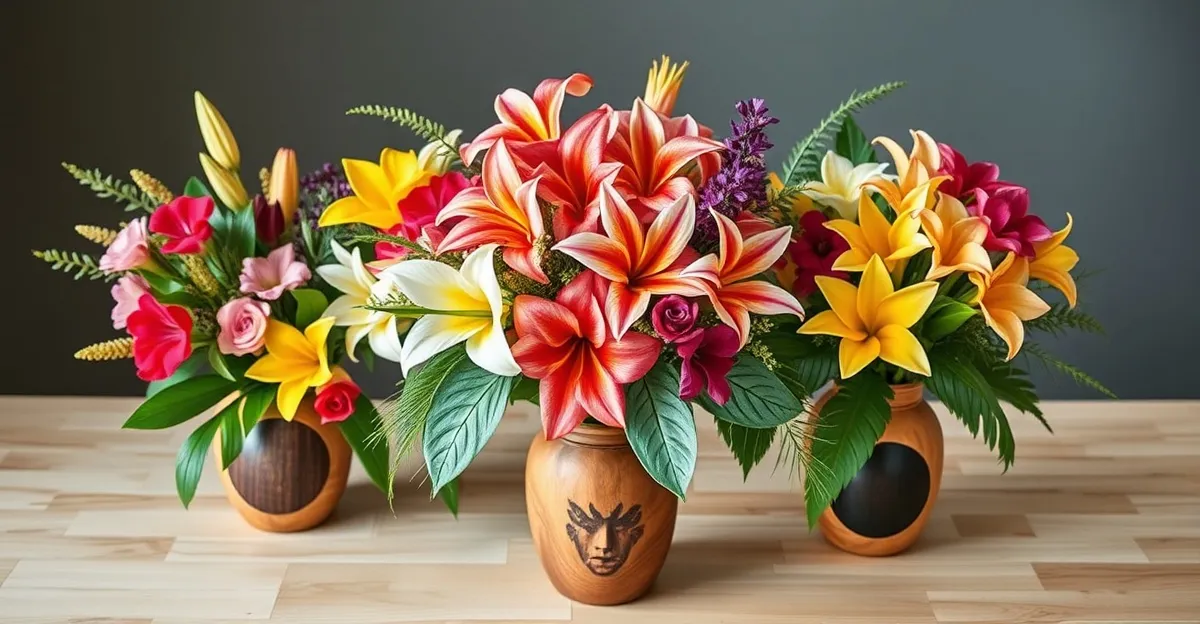
Wood vases are one of those Bali design details that appear in almost every carefully considered interior on the island. The natural grain of locally sourced teak, mango wood, or coconut shell carries an organic warmth that ceramic and glass don't quite replicate in tropical spaces. They're sold at craft markets in Sukawati and Ubud, and many homeowners bring them back from the island specifically because they work so well against open-air architecture and natural materials.
The challenge is knowing which flowers actually belong in a wood vessel. Not every bouquet translates. A tightly wrapped European-style bunch in a slim glass cylinder might look elegant; the same arrangement dropped into a chunky mango wood vase can look awkward and overstuffed. The proportions are different, the register is different, and the materials ask for flowers that share their earthiness, warmth, or architectural quality.
This guide covers eight bouquet approaches that consistently work well in tropical wood vessels, with notes on why the pairing functions and how to source the flowers in Bali.
1. Tropical foliage-forward with heliconia punctuation
The most natural pairing for a wood vase is the tropical foliage arrangement. Start with large leaves — monstera, palm, or banana foliage cut fresh from the garden — and add three to five heliconia stems for structural punctuation. The heliconia's bold red or orange bracts against the dark grain of a teak vase creates a composition that feels completely rooted in place.
This is the arrangement you see in hotel lobby entrances across Ubud and Seminyak for a reason: it photographs beautifully, it holds for weeks with basic water changes, and it looks exactly right in a high-ceilinged, timber-heavy space. There's no fighting with the environment; it extends it.
For smaller wood vases, scale down proportionally: one heliconia stem, two monstera leaves, a few pieces of palm frond for texture.
2. Massed marigold in a low bowl vase
The low, wide bowl shape that's common in carved wood vessels — particularly Balinese bowls that typically serve as offering containers — is perfectly suited to a domed arrangement of marigolds. Pack the flowers in tightly, stem ends in water-soaked floral foam or a small inner container, until the surface of the bowl is covered with orange and yellow blooms.
This approach looks intentionally ceremonial, which connects back to marigold's cultural role in Balinese life. It also photographs with incredible warmth against any warm-toned wood surface. The whole arrangement costs under Rp 100,000 to put together from Denpasar market flowers.
3. Single protea stem with minimal tropical leaves
Protea is an interesting pairing for wood because both materials share a similar quality of rugged, structural beauty. A single King Protea head — those large, dramatically textured blooms — with two or three leaves of tropical foliage in a tall, cylindrical wood vase is a composition with genuine restraint and presence.
The key to making a single-stem arrangement work is the vessel: it needs to be tall enough that the proportion feels intentional rather than empty. A 35–40cm cylindrical wood vase with a single Protea stem at roughly double that height works. In a shorter vessel it tips from considered to sparse.
4. White orchid sprays against dark wood
The contrast of white Dendrobium orchid sprays against the dark grain of a walnut or old teak vase is one of the most striking combinations in tropical floristry. The flowers are clean, structured, and slightly formal; the wood is warm and organic. The tension between these registers is what makes it interesting.
Two or three orchid sprays arranged so they arch out at slightly different angles, with a single piece of tropical foliage at the base for grounding, is all you need. The wood vase provides the colour interest and texture that in another context the flowers themselves might have to supply.
5. Earthy tones: rust, terracotta, deep burgundy
If you're working with a lighter wood — mango wood in its characteristic honey tones, or blonde bamboo — an arrangement in earthy warm tones pulls the composition together convincingly. Think deep rust alstroemeria, burgundy roses, orange sunflowers, and warm yellow chrysanthemums.
The palette echoes the wood rather than contrasting with it, creating a rich, monolithic warmth. Flower arrangement ideas for your living room covers this approach in more detail, with notes on how to calibrate flower-to-vessel colour relationships in different room light conditions.
For Bali interiors with warm artificial lighting (the amber-toned bulbs common in villa dining rooms), this earthy-warm combination is particularly effective.
6. Tropical sculptural — bird of paradise plus aroid leaves
Bird of paradise (Strelitzia) has an inherent sculptural quality that works well in vessels that share that quality. A carved wood vase with interesting negative space, or a solid block vessel with a generous opening, provides a suitable counterpart.
Three to five bird of paradise stems — arranged to lean outward at angles rather than standing straight — with a few large aroid leaves (philodendron, anthurium foliage) at different heights creates an arrangement that looks like botanical sculpture. It works in spaces with architectural ambition: a villa entryway, an office reception, a high-end restaurant table.
7. Wildflower and herb loose arrangement
Wood vases work particularly well with loosely arranged, natural-looking compositions — as opposed to the tightly structured dome arrangements more suited to glass or ceramic. A loose mix of seasonal wildflowers, herbs (rosemary, lavender if available, basil blooms), and meadow-style fillers like statice or dried grass creates an organic arrangement that feels genuinely of a place.
This style is popular in Canggu and Pererenan's café and co-working scene, where the aesthetic tends toward natural, unpolished, and honest. The wood vase is a natural partner because it shares that register. Flower styling ideas for a Bali wellness spa covers the related concept of using natural, unpretentious materials in spaces meant to feel grounded and calming.

The team
your florists
weekly subscription · Bali
We write about flowers because we love them. We deliver them because someone should — properly, weekly, across Bali.
— heyflowerPay once for 3, 6, or 12 months, no auto-renewal.
8. Ivory and green — restrained elegance
Ivory flowers — white lisianthus, cream roses, white ginger lily, white chrysanthemums — against the warm brown of a natural wood vase with a few structural green elements (succulent branches, tropical foliage, eucalyptus) is one of the cleanest and most universally applicable arrangements for this vessel type.
The contrast is soft enough to read as elegant rather than stark. The natural materials work together rather than competing. And the composition functions in almost any space: a bedroom, a living room, an office, a dining table. It doesn't demand attention so much as reward it.
Ivory flower arrangements for villa interiors provides a deeper look at this palette — what vessels it works in, which rooms it suits, and how to source ivory-toned blooms in Bali.
Practical notes on wood vases in the tropics
Wood vases require a liner or insert to hold water. Most purpose-made wooden vases already have a sealed inner container, but if you're improvising — using a carved bowl or a natural piece of driftwood — a glass vase insert or a piece of floral foam sealed inside is essential. Water directly on untreated wood will cause damage, warping, and mould in Bali's humidity faster than you'd expect.
When sourcing wood vases in Bali, Sukawati Art Market south of Gianyar has the widest selection at the most negotiable prices. Ubud's craft area (Jalan Hanoman, the market on Jalan Raya Ubud) has a curated range at higher prices but better quality control. For handmade, artisan pieces, the craft shops along the road between Mas and Ubud are worth the detour.
FAQ
What kinds of wood are Bali vases typically made from? The most common are teak (most durable, darkest grain), mango wood (honey tones, lighter weight), coconut shell (bowls only, very Balinese), and bamboo (light, clean, contemporary). Some pieces use reclaimed wood from old temple structures or boat timber, which gives them considerable character.
Can I put any flowers in a wood vase as long as it has a liner? Yes — the liner or water container means the wood isn't directly affected by the flowers themselves. The constraint is aesthetic rather than practical: some flowers simply look better in certain materials.
How do I stop the wood from warping in Bali's humidity? Most quality wood vases sold in Bali are treated for the climate. Avoid placing them in direct sun or directly under AC vents, which create extreme temperature differentials. Clean the liner rather than the wood itself.
Where do Bali florists typically source sculptural tropical foliage? Most comes from local farms in the Tabanan and Badung highlands, or from larger flower farms in Java. Some is harvested from cultivated garden plants — monstera, heliconia, and bird of paradise are all commonly grown in villa gardens across the island.
Is it better to buy a wood vase in Bali or use something from home? Bali-made wood vases tend to have a warmth and organic quality that's hard to replicate with imported pieces. The materials are genuinely local — teak from Javanese forests, mango wood from Bali's agricultural areas — and the craft tradition is deep. They're also significantly less expensive here than in export markets.
Ready to fill your Bali home with flowers that truly belong here? Explore our weekly flower subscription and get handpicked tropical blooms delivered to your door every week — selected to look beautiful in any space on the island.



